


10 photos
 Ruben Fidalgo
January 30, 2023
There are a few interesting models this year that blow out 30 candles, making them legally historic vehicles and could potentially escape LEZ access limitations. We are going to review some of the most interesting models that this year can be classified as historical.
As we mentioned in our report on how to register a car with historical registration, the first requirement that must be met is to have been registered for the first time at least 30 years before requesting its catalog as a historic vehicle. This year a few models will win the VH title, some really interesting, others very important for what they meant in our country, like the Seat Ibiza II or the Opel Corsa II, etc.
Why do we want to review these cars that are now 30 years old?because indirectly the LEZ (Low Emission Zones) have made them fashionable in cities with more than 50,000 inhabitants and that is that, at least for now, historic vehicles have some perks when it comes to driving through cities, but be careful, because it is not so much hauja as it is spreading in some forums and have their limitations.
We’ll see the main models that this year may be legally classified as historic.
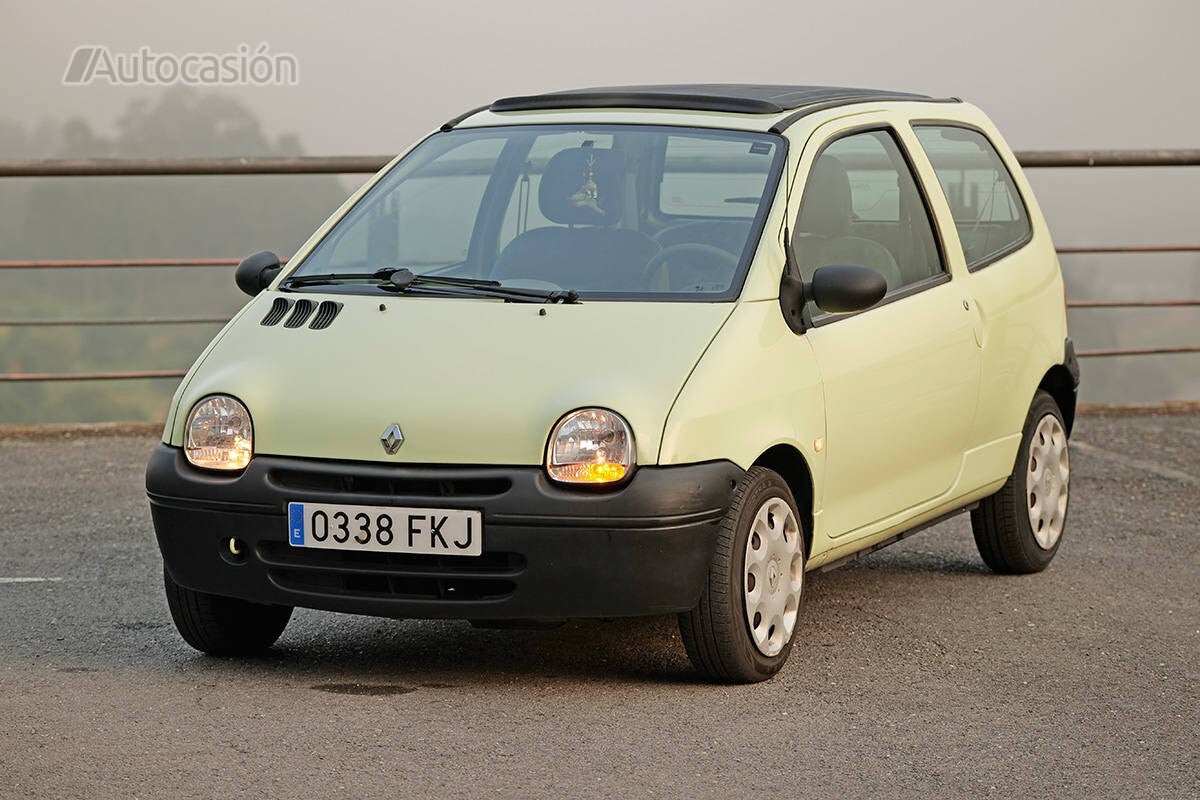
Renault Twingo: even if it weighs on Shakira
10 photos
Renault’s small utility made its debut before the press at the end of 1992, but the renault twingo It would not arrive at dealerships for registration until 1993, so it is this year when the first Twingos will really begin to reach the legal age to be considered historic. Very spacious, reliable, with low consumption and a design with a lot of personality, the Renault Twingo is an almost perfect utility vehicle that can move with total agility in the urban traffic of today’s cities.
Mercedes C-Class: the new “baby benz”

10 photos
In 1993 Mercedes-Benz presented the relay of its first “small” car. Known as “baby Benz”, the Mercedes 190 went down a step in terms of size, but not in quality or technology, to open the doors to a market that until then had been ignored. The Mercedes 190 was replaced in 1993 by its successor, which would adopt the new logic of naming its different classes with letters. If the E-Class was the medium model, the previous rung would correspond to the C-Class.
The leap in technology was the highlight of the new C-Class, with quite continuous lines, but in which aerodynamics continued to sharpen the features, with a more inclined front, flush grille, etc. It would also have the honor of releasing the AMG versions with the most powerful mechanics.
Ford Mondeo: ahead of its time

10 photos
In March 1993 Ford presented its new medium saloon, the Ford Mondeo, a model that imposed a huge leap compared to its predecessor, the Sierra. The Mondeo had a much more modern conception, with front-wheel drive instead of rear-wheel drive and a much more spacious and better-finished interior. With a very complete equipment and multi-valve engines, the Ford Mondeo boasted of offering one of the chassis with the best dynamic behavior in its segment.
In terms of safety, it also marked distances from its predecessor, incorporating anti-intrusion bars on the doors, driver and passenger airbags, and seat belt pretensioners.
Citroën Xantia March 1993: the best of Citroën

10 photos
Also in March 1993, the Citroën Xantia arrived on the market after its presentation in Geneva.a model slightly above the Citroen BX in terms of size and carriage, partly because it had to replace the lightweight BX, but also to cover the huge leap between a BX and a XM in those years. Like its predecessor, the Xantia had a hydropneumatic system that combined steering, brake and suspension assistance in a high-pressure hydraulic system. With top-level comfort and active safety, the Xantia had very reliable mechanics in which the turbo diesel engines stood out for their performance and smooth running.
The Active versions with suspension with active stabilizer bars stood out for their formidable stability and still today they continue to amaze with their advanced technology.
Peugeot 306: reference in its segment

10 photos
Almost at the same time as its cousin with the chevrons, the Peugeot 306 arrived at dealerships, a compact that would have to be born in the shadow of the idolized VW Golf, but with which it could be measured from face to face if it were not for the complexes and prejudices. Its chassis was the reference of the moment in terms of dynamic behavior and still today the most powerful versions of the Peugeot 306 can be considered the best GTi of its time.
The Peugeot 205 has taken the fame, but the Peugeot 306 GTi with its 167 hp 16-valve engine is light years away from the famed 205 and was also clearly a better GTi than the Golf itself.. The HDi versions stood out for their excellent relationship between performance and consumption.
Toyota Supra biturbo: capable of humiliating yet

10 photos
In 1993 the fourth generation of the Toyota Supra arrived. and with it the cascade twin turbo technology. The biturbo Toyota Supra had a small turbo that operated at low revs thanks to its low inertia and improved response at low and medium revs. As soon as the pressure of the exhaust gases was enough to go up in revs, a valve opened the passage of gases to a larger turbine capable of maintaining a good overpressure even if the intake flow of the engine was higher when turning faster. The result was a beast capable of tearing up the asphalt with its recoveries and accelerations.
Its 330 CV and 440 Nm of torque are capable of humiliating many current sports cars and also with a formidable mechanical robustness, to the point of being easy to see examples of this Supra boosted around 1,000 CV.
Fiat Punto: the first with 6 gears

10 photos
In 1993 it was time to retire the helpful fiat uno and they did so with a car of similar proportions but with a sharper, more aerodynamic silhouette and a better-dressed interior. On the outside, its sloping front hood and rear light groups very well thought out for the city were striking. Arranged vertically, they were highly visible in traffic and furthermore, they were far from the most common impact zones.
In the technical section, the Fiat Punto has the peculiar honor of being the first in its category (and even higher levels) to mount a 6-speed gearbox. In this way, the Fiat Punto staggered the gear ratios more and kept its gasoline engines running for longer in their optimal performance zone, which improved consumption and performance.
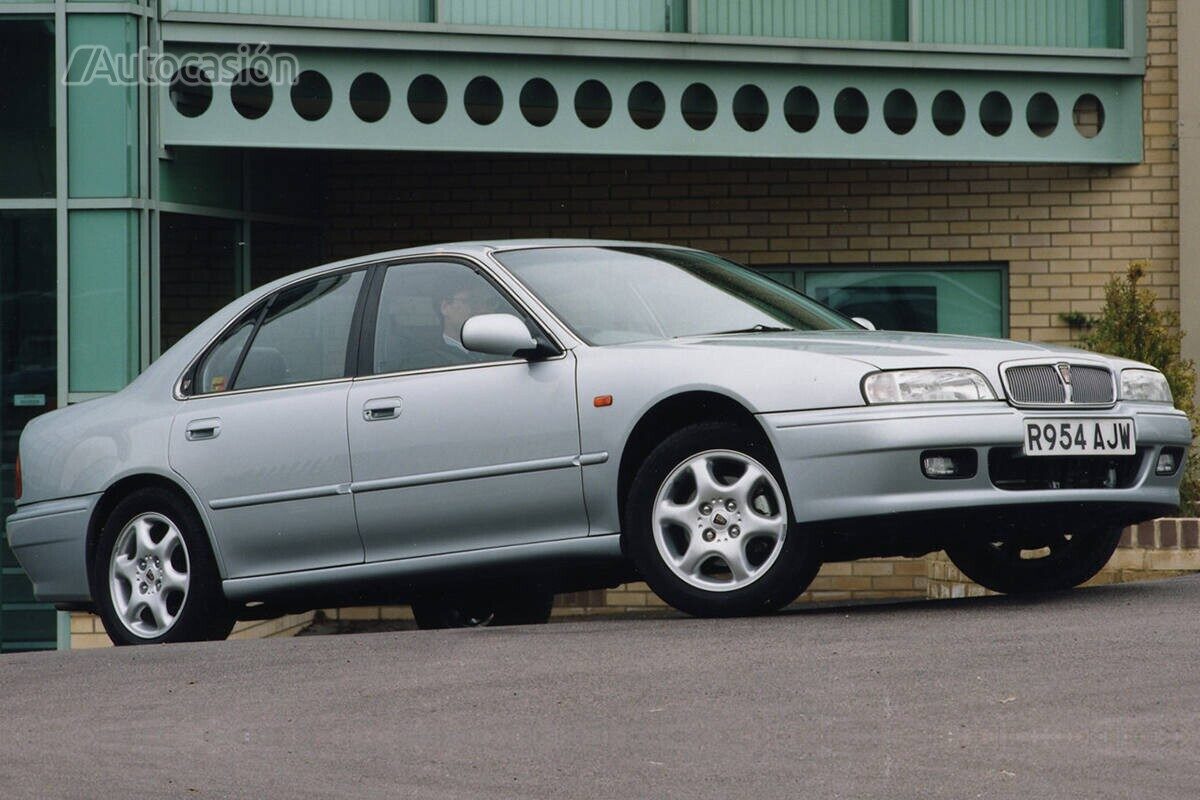
Rover 600: British elegance with a Japanese soul
10 photos
In 1993 Rover presented its new sedan halfway between the small 200/400 and the big 800, although closer to it than to the first. The new Rover 600 drew attention due to the elegance of its lines and, above all, its interior, with that unique British way of finishing off the cabin with large seats and wood trim. Its comfort and appearance were very good and also its technology, inherited in part from the association that years before had been born between Rover and Honda.
Despite its bad reputation, it is one of the best products Rover has ever had.
Seat Ibiza/Córdoba: with a German accent

10 photos
In 1993, what is probably one of the most important models for the Spanish brand arrived on the market. The first model developed under the umbrella of the Volkswagen Group inherited much of the Polo technology, but with a slightly cooler design. The second generation of the Seat Ibiza marked an abyss with respect to its predecessor, with which it only shared the name. Its commercial success guaranteed the survival of the brand and thousands of jobs in Spain. Along with the Ibiza, Seat presented a version with a truncated rear body, the Seat Córdoba, which improved the boot capacity although it lost the practicality of the tailgate and left very little access to a volume that was later very spacious.
Opel Corsa II: three cylinders?

10 photos
Another model of great importance for our market, which is celebrating its 30th anniversary, is the second generation of the opel corsa, presented in 1993. Its rounded design broke with the rectilinear shapes of its predecessor and was very modern and youthful. Even today this generation of the Corsa continues to have its grace. Its gasoline engines gained in efficiency and at the time surprised by being offered with three-cylinder mechanical versions, designed to reduce consumption and emissions, especially in urban use. Yes, you could almost say that the Corsa inaugurated the fashion of what in recent years we know as “Downsizing”.
View model information

