

It took BMW four years to develop Toyota’s new hydrogen-powered iX5, a brand with which they are not only partners for the Supra/Z4 duo. Having concluded the development phase, in 2022 a pre-production process began that resulted in a fleet that is ready to be tested.
The batch of test units, numbering no more than 100, will be used internationally for demonstration and trial purposes for various recipients. This active driving experience will therefore be the first opportunity for people not involved in the process to development team get a direct impression of what the BMW iX5 Hydrogen can offer.
Oliver Zipse, Chairman of the Board of Management of BMW AG, highlighted than hydrogen “it is a versatile energy source, which has a key role to play in the energy transition process and therefore in climate protection”. In this sense, he assured: “We must take advantage of its potential to also accelerate the transformation of the automotive industry.”
BMW’s view is completely opposite to that proposed by Volkswagen, an automaker that does not plan to develop vehicles that include the participation of hydrogen in their motorization. Almost like responding to this, Zipse endorsed the use of hydrogen by noting that “one technology alone will not be enough to achieve pollution-free mobility around the world.”
BMW iX5 Hydrogen: Main features
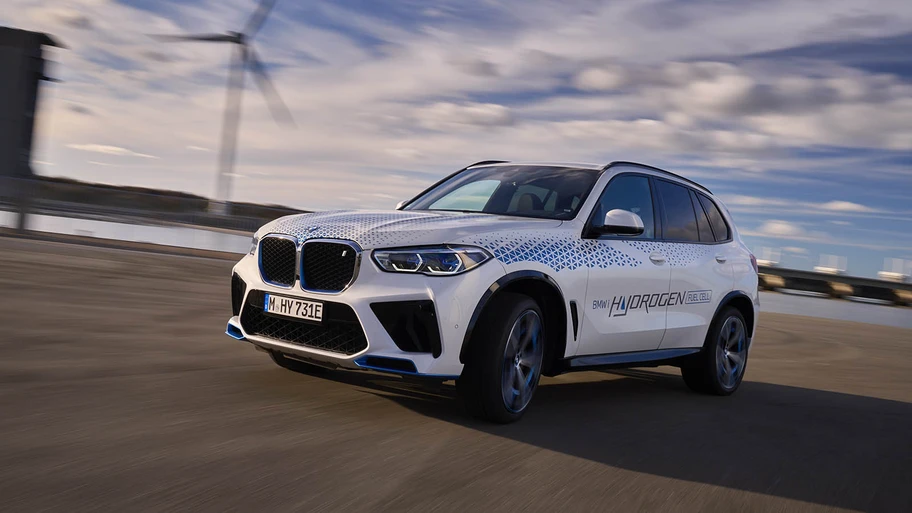
The iX5 Hydrogen, developed on the basis of the current BMW X5, was presented as a concept at the IAA show in 2019. The first prototypes were made available to visitors at IAA Mobility 2021, so that they could experience how it works, beyond the fact that it was in the research phase.
BMW is one of the few brands that decided to bet on hydrogen, knowing that it could be an alternative to allow maximizing the autonomy of an electric vehicle.
How is the BMW iX5 made?
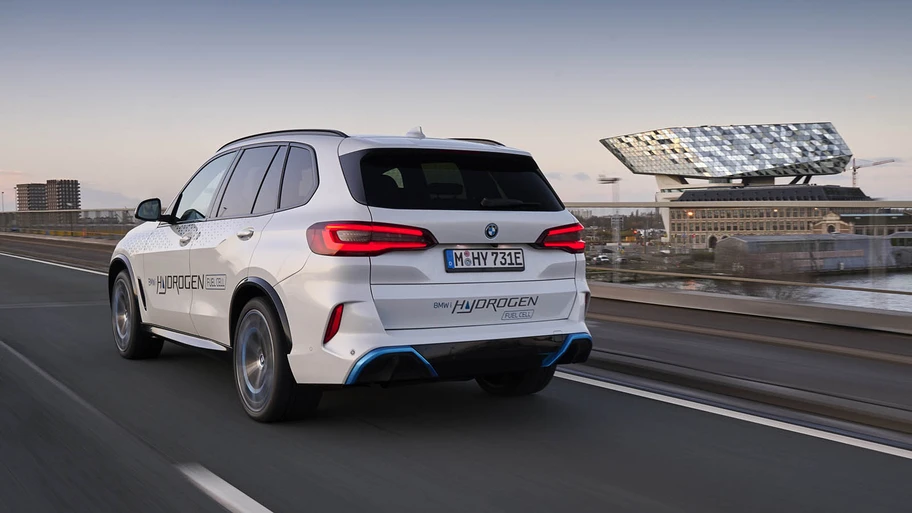
The BMW X5 is manufactured in Spartanburg, USA. The units are sent to the Center for Research and Innovation (FIZ) in Munich, where they are modified to house the new powertrain. The fuel cells are provided by Toyota, a BMW partner in this type of development since 2013.
Fuel cell systems are manufactured in two main stages. Fuel cell stacking is largely a fully automated process. After individual components have been inspected for damage, the pile is machine compressed with a force of five tons and is placed in a casing. The battery housing is produced in the light metal foundry at the BMW Group plant in Landshut using an aluminum sand casting technique.
The pressure plate, which supplies hydrogen and oxygen to the fuel cell, is made of carbon fiber reinforced plastic (CFRP) parts, also from the Landshut plant. The pressure plate forms a gas-tight and water-tight seal around the battery casing.
The final assembly of fuel cells includes a stress test, along with extensive testing of the chemical reaction inside the cells.
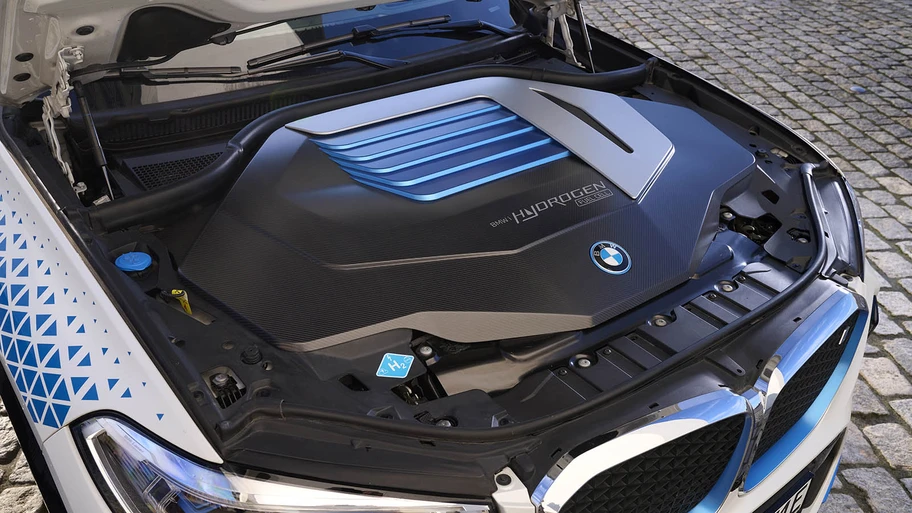
BMW uses its own components and developments, including intercoolersair filters, control units and sensors, high-speed compressors with turbine and the high voltage water pump. To this must be added the anode and cathode of the batteries and a new branch of cables.
With all the components ready, the floor of the X5 is replaced with one suitable for cells. The motor is replaced by the generator which converts hydrogen into electricity, a lithium-ion battery is added and the rear axle is fitted with the BMW eDrive systemwhich concentrates the electric motor, transmission and some electronic modules in a single group.
The BMW iX5, in detail
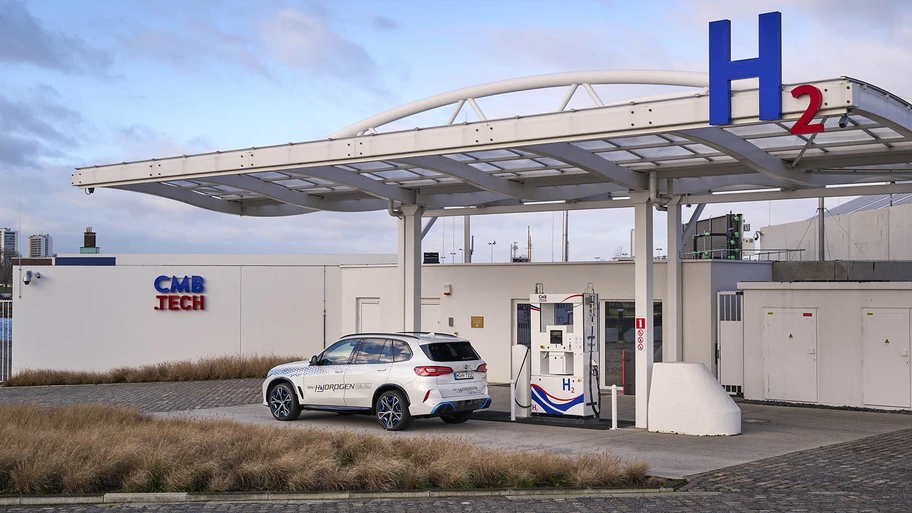
The iX5 offers a maximum power of up to 295 kW (396 Hp), although the continuous power of the batteries (they are not always used to the maximum) is 125 kW for the batteries and 170 kW for the battery.
The hydrogen fuel cells are pressurized to 700 bar and together contain almost six kilograms of hydrogen, enough to give the BMW iX5 Hydrogen a range of 504 km in the WLTP cycle. Filling the hydrogen tanks only takes between three and four minutes, although the truth is that it is easier to get a plug, rather than a hydrogen charging station.

