

40 years have passed since the launch of a vehicle that was a precursor in its time. A copy that to this day is still viewed with some appreciation for all the novelties it introduced and for opening the brand to a larger audience. We are talking about Mercedes-Benz 190, the compact sedan that was positioned as access to the star’s brand. That earned him the nickname “Baby-Benz”, although it is his reputation that precedes him and he knew how to position himself as an elegant, safe and sporty product.
In December 1982, the Mercedes-Benz 190 (W201) with two gasoline engines was released, although it quickly mechanical range was growing. In 1983 the 190 D diesel block would follow and it would not take much longer for a sports version to appear: the 190 E 2.3-16 (because of its 16 valves). In the 190 and 190 E gasoline the engine appeared M 102 2.0-litre four-cylinder, a reliable block that was in use for many years within the brand. The 190 D carried the OM 601 with four cylinders and 1.9 liters.
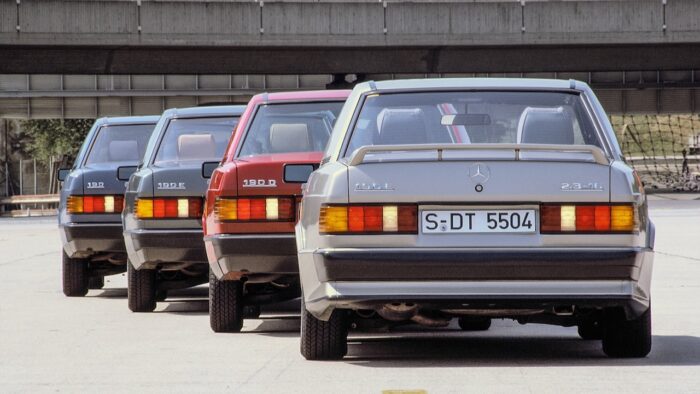
Although before delving into other interesting versions of this model, it should be noted that Mercedes-Benz had been standing out in the most luxurious segment. He made cars for the upper and upper-middle class, but he had never ventured to make a less elite compact. When the oil crisis arose, they decided to make a move and create 190, which would be a long term success. It is the direct predecessor of the Mercedes C-Class, although over time they changed their nomenclature, and their sales levels were very high.
From the beginning the idea was to make a smaller car, but one that held standards such as driving comfort, quality, reliability or durability. The Mercedes-Benz 190 was 4.42 meters long and stood out for an aerodynamic coefficient of 0.34 Cx, the best they had achieved in a saloon to date. That helped them to be more efficient, always helped by the light construction that premiered It was the first to feature a fork carriage structure made of high-strength sheet metal that improved rigidity and reduced weight by 8kg.
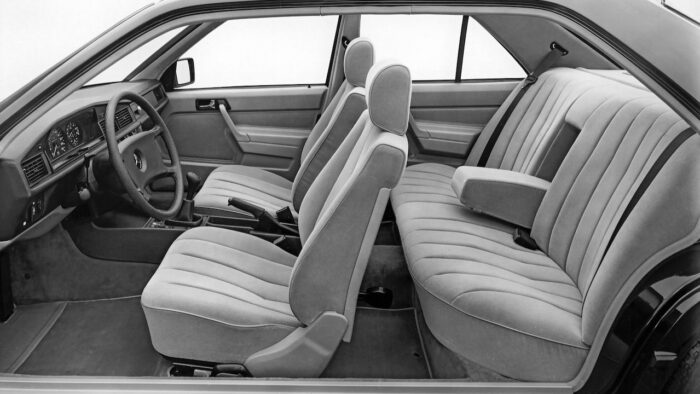
The chassis also featured a notable innovation, a multi-link rear axle that helped him offer a more balanced behavior. In addition, it was accompanied by a good number of versions that were worthwhile. The first 190 from 1982 had 90 CV, while the 190 E resorted to injection to reach 122 CV. The 190 D diesel meant access to the range with its 72 CV. And with the 190 E 2.3-16 things got interesting, since it reached up to 136 CV. In fact, that copy was replaced in 1988 by the interesting 190 E 2.5-16 of 195 CV.
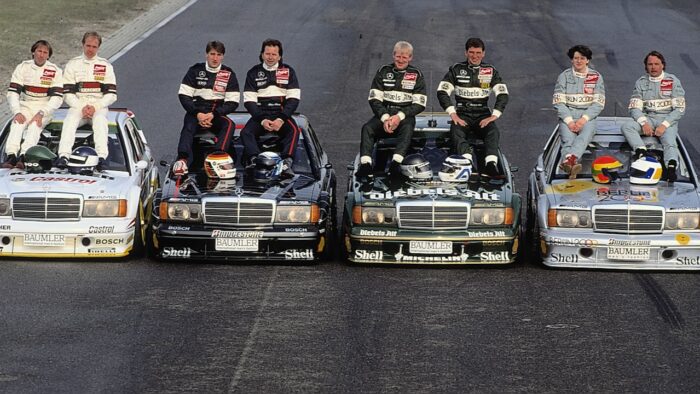
Indeed, that was the germ of the Mercedes 190 E 2.5-16 Evolution that were the homologation to compete. Because the compact sedan also played a fundamental role in the circuits for the brand. The 190 E 2.3-16 set three long-distance driving world records at Nardo before being made into racing versions. He then had a presence in the French Touring Car Championship, was runner-up in the German DTM in 1986 and returned to glory with the EVO II in the 1992 and 1993 seasons.
Photo gallery:
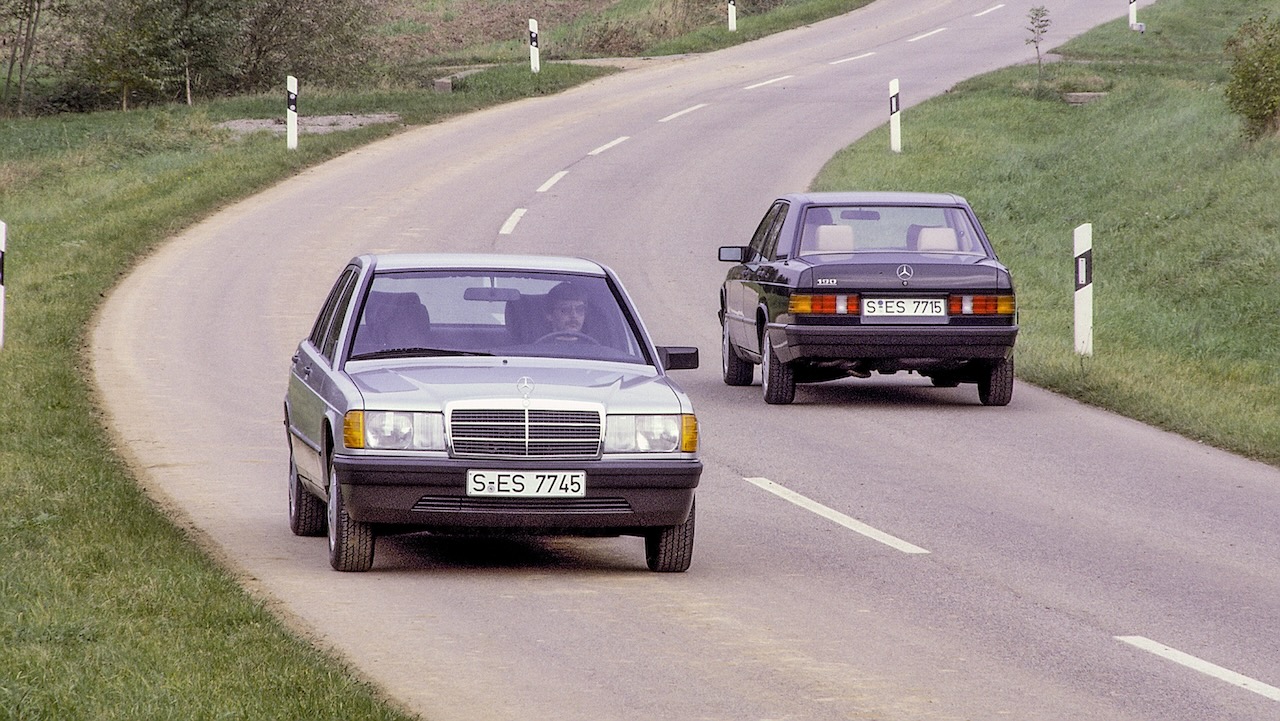 1/10Photos
