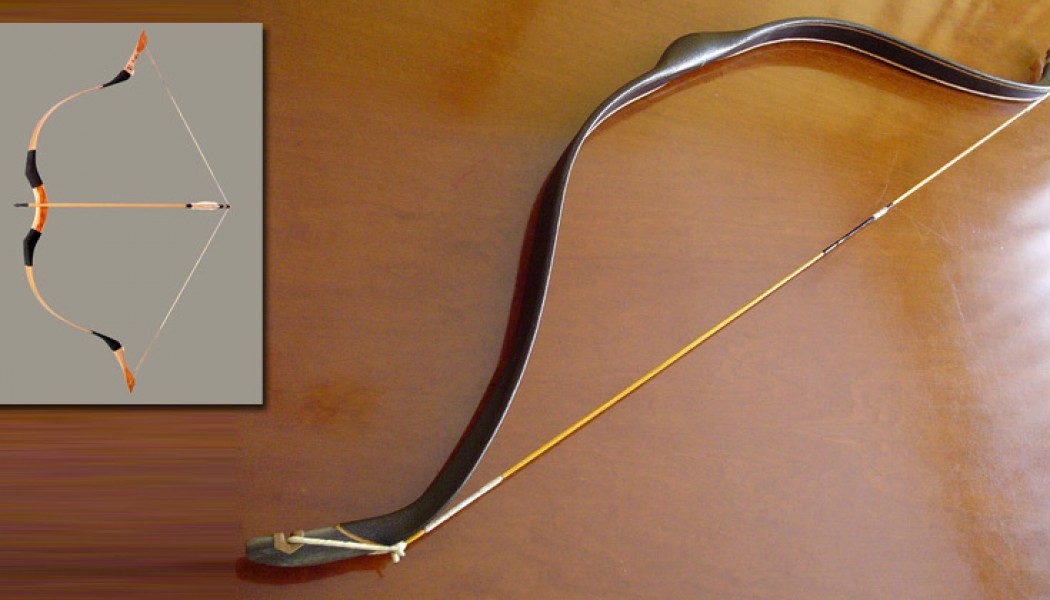
If we take the theoretical description of the bow, it is a combat, hunting and archery sporting tool that can puncture the arrow at a distant target in a controlled manner when its beam is stretched by arm force and released. Before using the bow, the arrow and spear were thrown by hand, then with a tool called atlatl. The oldest known spring find is from 17500-18000 years ago and was found in the Mannheim-Vogelstang region of Germany. The oldest monolithic wooden bow was made of elm. The bow and arrow were an important hunting and war tool until gunpowder weapons became widespread in the 16th century. Although the use of arrows and bows in army wars in Europe ended in the 17th century, they were used in hunting and tribal wars in the east and in the new world until the 19th century. It is still used as a weapon of tribal warfare in Africa. It was used in the conflict between the Kisii and Kalenjin peoples in Kenya in 2009, which we can call recently, and resulted in 4 dead.
Turkish bow
Among the springs, the Turkish bow is one of the top examples of the Asian composite bow tradition. In the Ottoman Empire, the arrow was thrown up to 845.5 meters, despite the Arab arrows in the early days of Islam, which did not exceed 500 meters with today's measurements. This record still cannot be broken today. Turkish Bows It can be used in narrow spaces, it is small enough to be used on horse or knee, it can hit the target from a very distance and it is strong enough to pierce even if it is an armored target and go out from the other side.
Building materials
The materials used in the production of Turkish bow are generally buffalo horn, maple or dogwood wood, and collagen fibers. On the hank side of the bow, there is a small white bone at the point where the two strips, cut and shaped from the buffalo horn, join the handle in the middle of the bow. Again in the middle is a heated and twisted maple or dogwood wood. Finally, there are collagen fibers that are near the hoof of the hind paw of the cattle or from the spinal nerves and separated by pinching. The layers we have mentioned are glued together with glue obtained from the myrtle fish swim bladder. After the bonding process, the spring is dried for a long time, about one year. The ends of the spring in its dried form after it is completely dried are bent in the target direction (back side) to touch each other. After all these are done, the Turkish Spring is heated and carefully finished and ready for use.
Use of Turkish Broadcasts
The use of Turkish bow requires labor as much as its production. When the spring is not used, it is stored without the hank attached. Kemankeşler use the archer ring on their thumb to pull the Turkish Bow strongly and leave it tidy. For right-handers, the handle of Sagittarius is held with the left hand, the arrow rests on the outer face of the bow. The silk skein to which the arrow is attached with a notch is pulled with the thumb on the right thumb, and the thumb is supported with the index finger. The Turkish Bow is aimed more mentally than the eye and "ya right!" saying the ordeal is bored. For left-handers, they wear the headgear on the left thumb and the arrow lean against the left side of the bow.
Sections of Turkish Broadcasting
The parts of the bow are called head, tonch notch, nerve wrap protecting the notch, hank, casing, raft, grip, steel from the tip to the middle. Sal-grip transition area is also protected by nerve wrap. In the middle of the hank, there is a rose, also known as a knot, which allows the arrow to stay in place without falling.
Turkish Bow Types
Turkish bows are made 105-125 cm in length and 300-360 gr in weight. There are varieties of bows such as tımanlı or right-handed according to their construction, tirgeş, range, peshrev (bows that can shoot the furthest arrow), kepaze (bows that can be pulled with the least force), target and war bows. who did it was called kemankeş.
Mastery
Broadcast making is an expression of fine art as well as a product of long labor. A good broadcast production takes a lot of patience and can take years. Bow making was very important in Turks. The artisanal ones were decorated with gold and gilding. In one corner of the decorations, the name of the master who made it and the date of its construction were put. Especially in military museums, there are various examples of bows used in ancient times.
Place of Turkish Broadcasting in Turkish Folk Culture
Although the Turkish Bow is a blessed weapon in the Turks, it also has a great importance. It also symbolizes the sky. Oğuz Kağan gave Golden Bow to his sons called Bozoklar by dividing it into three. Alkim (Rainbow) is considered as Six Bow or Six String Bow. The word has a width meaning. It comes from the same root as the word summer. Sagittarius / Cay also means spring. In the Orkhon alphabet, the arrow and bow exist as letters with their names and appearances.