

 Ruben Fidalgo
December 15, 2022
On October 5, 1992, the Renault Twingo debuted at the Paris Motor Show, one of the utility cars that have best met that definition. Small, very useful and full of practical solutions, its design broke the mold. It was original and one of the smartest cars for what it was defined for.
Without a doubt, the Renault Twingo was and still is one of the best-designed utility vehicles of all time. Its lines are simple but with a lot of personality, the interior is very cheerful and, in addition, it has space for 4 plus-size adults and even a double bed. Cheap to buy, cheap to maintain, spacious and practical, the Twingo is one of those cars that everyone who has owned and enjoyed has felt orphaned when they traded in for another model, perhaps more modern and with better features or safety. , but not half as helpful and helpful.
For a vehicle to be considered officially classic, it must be at least 30 years old, which is the minimum age it must be to be able to register it as a historic vehicle. This year marks the 30th anniversary of the launch at the 1992 Paris Motor Show of the Renault Twingo, a utility that broke the mold and with one of the most intelligent designs in history. Probably only the classic Mini knew how to get so much out of such a compact body.
In those years, Renault was the brand that revolutionized the market with its commitment to minivans, which hit as hard as SUVs today. He started with the highest segment with the Space in 1984 and went to the other extreme using the minivan concept in a utility with the launch of the first Renault Twingo. Later the Renault Scénic would be launched, which really was a sales bombshell and meant that several rivals were encouraged to present a similar minivan, such as Citroën with the Xsara Picasso.
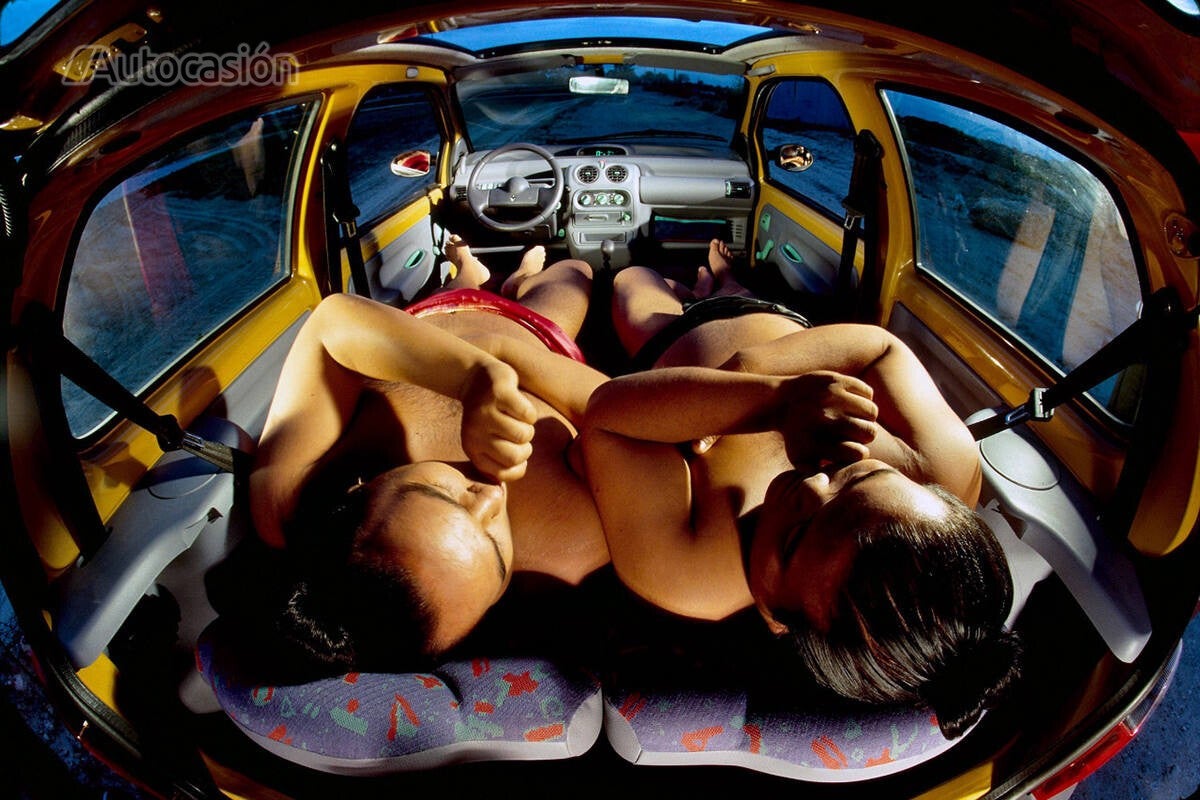
There were three premises with which the Twingo was designed: it had to be practical, economical and comfortable. The truth is that it complied with all of them and added solutions that did not exist until then, such as the sliding rear seat that allowed to modulate a trunk more or less wide. It even had a unique quality that made the first generation famous: by folding down the front and rear seats, the interior of the little Renault turned into a bed.
Renault Twingo: an optimized range

83 photos
To reduce production costs, the first Twingo had a very small range in which there was only a gasoline engine of 55 hp (with the robust block «Saw» that so good results gave from the birth of the R8… that of Renault, not that of Audi), a single interior finish and 4 body colors: yellow, green, red and blue. Only air conditioning and an openable canvas roof were available as an option. Later the automated change of the Twingo Easy.
The design of the Renault Twingo was a success; Its front was endowed with a peculiar image, with the headlights “underlined” by the direction indicators. That “look” was the subject of jokes and jokes that gave the Twingo Human qualities like dark circles, and that contributed to making it a model that was fond of.
Its body was very compact, but allowed to take advantage of every millimeter of its interior space thanks to its tailgate totally vertical and its transversal mechanics, integrated into a body almost minivan. The dashboard was very simple so as not to steal any space from the passengers and was made of synthetic materials with very bright colors, like the seat covers.
There is no doubt that the people of Renault endowed their “little boy” with a lot of personality. With the passage of time they were refining small details, thanks to which they managed to keep it in force for a whopping 15 years, until the launch of the second generation in 2008.
Renault Twingo: a bed of colors
83 photos
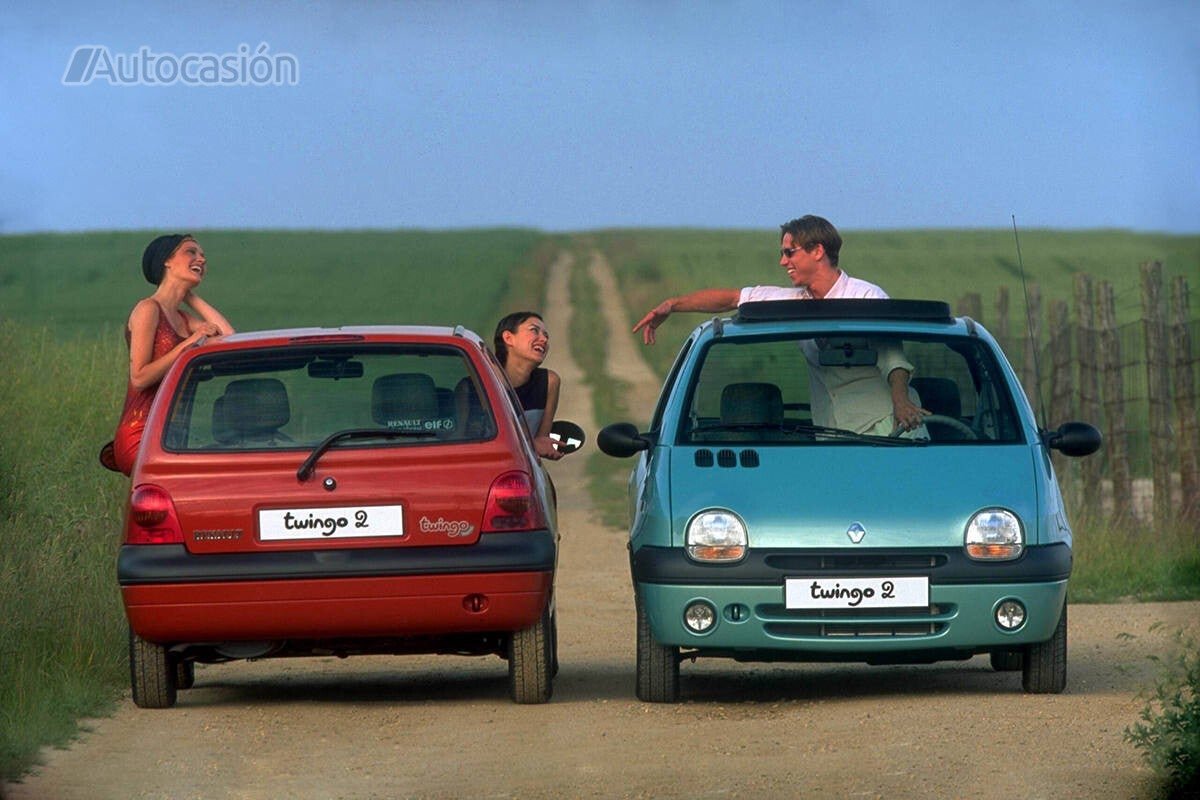
Renault knew how to get a lot out of the Twingo design. The colors that were offered in the first years after the launch were very basic and not very varied, but very striking, with pastel shades of yellow, turquoise, red… this meant that every time a Twingo entered a street it became the focus of the looks and captured the attention, not only its design was different, the colors made it the protagonist. In the following years, more serious colors were added to the car to satisfy the tastes of the less daring, but the eye-catching launch shades did their job of making the Twingo visible beautifully.
Inside, more or less the same thing happened. Upholstery with very colorful and cheerful prints, a dashboard with colored plastics to match the bodywork and something unusual, also colored steering wheels. Without a doubt, the Twingo was a very cheerful car from the first glance and that was part of the key to its success. It soon became one of the favorite cars for young people and those who had just gotten their driving license (who loved the Easy version without a clutch), the second car at home.
The interior was highly optimized and very practical solutions were introduced, such as the movable rear bench, which made it possible to play with the space available for the trunk or the rear seats, but also maximum versatility. Pulling the front seats forward, the rear bench and reclining the backrests, the four seats of the Renault Twingo became a generous bed that advertising made famous by putting two Sumo wrestlers in it.
Renault Twingo: special versions

83 photos
The peculiar design of the Twingo and its charisma made it an ideal model to launch special versions. The best known were the one made together with the brand Benettonwho knew how to make the most of the colors of the little Renault and its canvas roof and perhaps the Oasislaunched as a kind of “end of party” in the last months of commercialization of the first generation of the Twingo, which remained on the market for almost 15 years between 1992 and 2007.
Throughout its almost 15 years of life, the first generation of the Twingo had such a personal and well thought-out design that it hardly changed. On the outside, only the color palette and the shape of the front indicators, rear lights and wheels were modified. Inside there were more changes. The visual quality of some plastics was improved by changing its colorful original design for more sober tones and the steering wheel added the necessary Airbag to comply with the law from 2006.
The Renault Twingo, year by year
83 photos
- 1993: Launch of the model at the Paris Salon.
- 1994: A Twingo travels 240,000 km across Australia to prove its reliability and robustness. After the journey, his bodywork was painted by an aboriginal artist.
- 1994: The Renault Twingo Easy hits the market, with a robotic automatic transmission.
- 1996: Launch of the limited edition “Twingo Benetton” and “Twingo’Matic” with a 6-speed robotic gearbox. The Sierra engine increases its power to 60 CV.
- 1998: The restyling of the model arrives, with new optics and seats.
- 1999: Launch of the “Initiale Paris” version as the top of the range.
- 2000: Launch of the 75 hp 16-valve cylinder head engine with sequential “Quick shift” gearbox.
- 2005: The “Kiss Cool” limited series is introduced.
- June 28, 2007: The last Twingo produced in Europe leaves the factory, completing a manufacturing run of no less than 2,075,300 units, a complete success.
- 2008: The second generation of the Renault Twingo is presented in Europe.
- 2012: Production of the Twingo I ends, which continued to be manufactured in Colombia.
View model information

