

 CDA
January 05, 2023
All the cars that Audi manufactures worldwide from 2033 will be electric and it is already preparing its factories for it.
Audi has just announced that will phase out all of its global production of vehicles powered by internal combustion engines by 2033 and that it will launch new fully electric models from 2026 as part of its “Vorsprung 2030” corporate strategy.
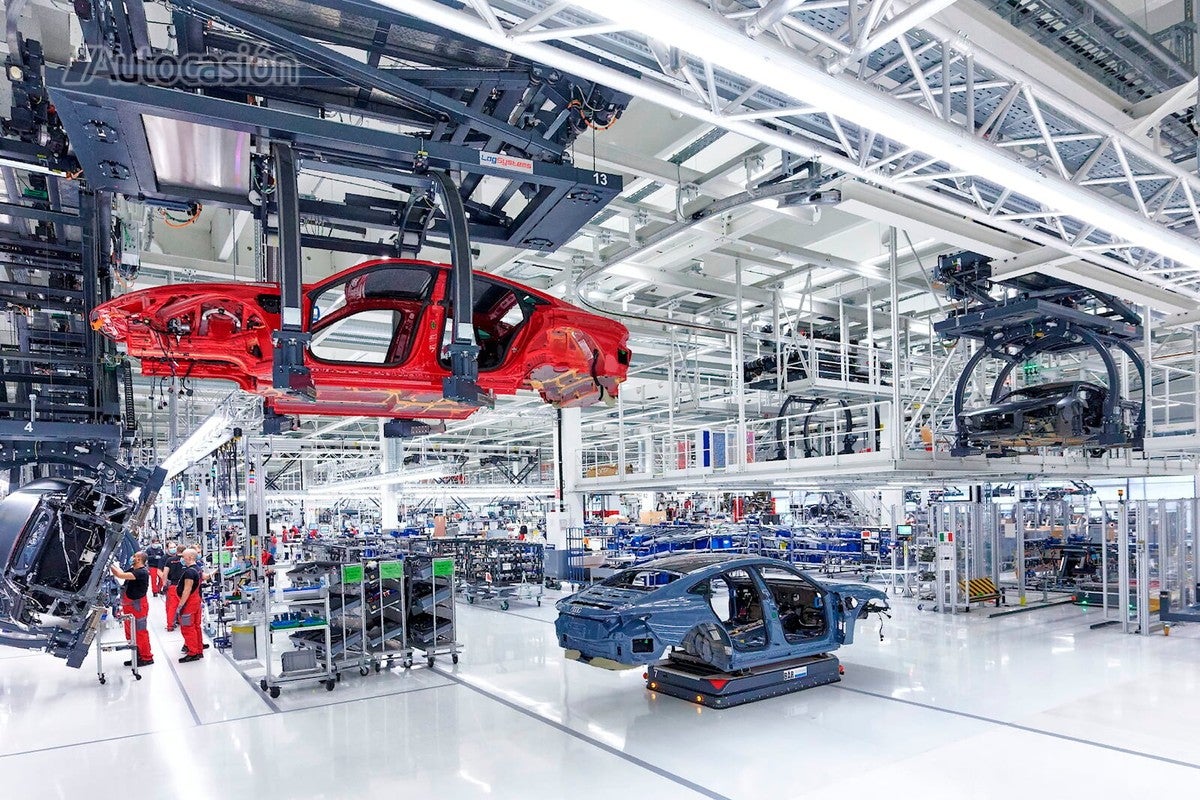
the german brand is preparing its global facilities for the production of fully electric cars, since, at this moment, only two car plants, Böllinger Höfe in Germany and Brussels in Belgium, produce fully electric vehicles.
Objectives within your corporate strategy
 Starting next year, the Audi Q6 e-tron will be the first all-electric model to roll off the Ingolstadt production line (Germany), and the production of fully electric cars will gradually start also in Neckarsulm (Germany), San José Chiapa (Mexico) and Győr (Hungary).
In 2029, all production sites will build at least one fully electric car model. Depending on local conditions, production of the remaining combustion models will be phased out early in the next decade.
Audi will also have small electric cars
The manufacturer wants to achieve four main goals. First, to ensure that future production is economical, the annual costs of each factory will be cut in half by 2033. To achieve this, the brand plans to reduce the complexity of its vehicles where it does not benefit the customer.
Second, production will continue to digitize, while the last two goals are the sustainability and flexibility of production processes. To this end, the new Audi Q6 e-tron, for example, will initially be built in Ingolstadt along the same lines as the Audi A4 and A5. The electric model will gradually replace vehicles with internal combustion engines.
By 2030, the company aims to halve its absolute environmental impact in the areas of primary energy consumption, power plant emissions, CO2 equivalents, air pollutants, local water risk, and volume of wastewater and waste, compared to 2018. Steps to achieve this target include generation of renewable energy in the company itself and the adoption of innovative technologies to create more circular value chains in which resources are used in closed cycles.

