

Thomas Schaferthe executive director of volkswagenhas made an interesting post on his LinkedIn profile in which he discusses the brand’s future goals, including the return of physical buttons on the steering wheel and 10 new electric launches by 2026 covering a wide spectrum of segments.
More specifically, Schäfer wrote in his account: “We are perfecting our offer and our designs, as well as creating a new simplicity in the operation of our cars. For example, We brought back the steering wheel with buttons!”, adding that “that is what customers want from Volkswagen”. Touch-sensitive dials, known as hapticson the steering wheel were introduced on the seventh-generation Volkswagen Golf in 2019, before making their way to other models from the German automaker.
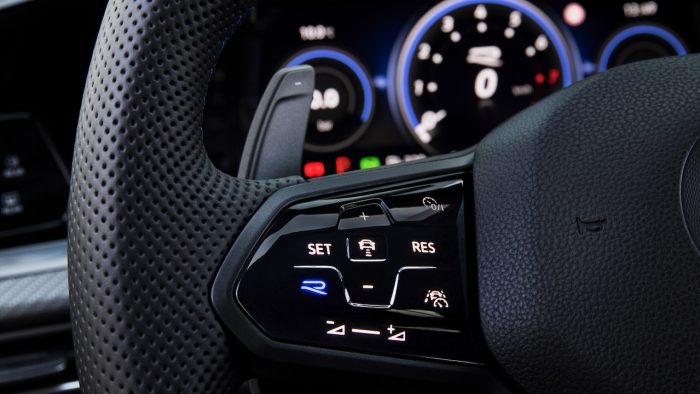
Volkswagen’s touch-sensitive controls, found on higher-end versions of its cars such as the Golf GTI or R, the Tiguan R and many of its electric models, have come under fire of late. These controls consist of a smooth piece of piano black plastic (which attracts fingerprints and dirt like no other) on the steering wheel that can be easily activated by accident. Users also don’t like the lack of feedback offered when using such a touch-sensitive system.
Some models available from the brand still use physical buttons, and Volkswagen has made specific reference to the use of these on models like the pick upAmarok. With the brand touting the benefits of physical buttons and the CEO’s post proudly announcing its widespread return, Volkswagen basically admits haptic control isn’t that great. A trend that seems to go against all odds, since a visual cleanliness is being sought with fewer and fewer buttons.

And they’re not the only ones: A Swedish automotive magazine recently put a selection of modern touchscreen infotainment systems to the test against the physical dials of a 2005 Volvo V70. The study showed that the lack of feedback offered by a touchscreen and the inability to feel the controls, plus a wait time for it to “accept” the command, make the driver takes three times longer to do a task than if he were using the physical buttons.
DS, for example, has already announced that, in the near future, its on-board touchscreen multimedia systems could ditch screens altogether. Is it the beginning of the end for screens and touch controls in cars, or are they here to stay? We assume that the next facelift of the Golf, which is expected in 2023, it will be one of the first models to return to the more traditional buttonsalong with a touch screen for the larger multimedia system and sliders for the climate control.
Source: Engine1

