

9 photos
 Ruben Fidalgo
March 29, 2023
Matrix led headlights are standard on many models, but on others they are an option (not cheap, by the way) that we must pay for separately. Is this investment worth it? Let’s see.
In the history of automotive lighting systems, there have been several technological leaps that have been revolutionary. The first leap was the transition from flame lamps (whether made of oil, petroleum or carbide) to electric bulbs. Later would come halogen lampswith a significant increase in luminosity, the headlights with gas discharge lamps (known as xenon or bi-xenon) and more recently matrix systems, made possible thanks to advances in the light power of LEDs.
It may interest you: 12 inventions that revolutionized the automobile
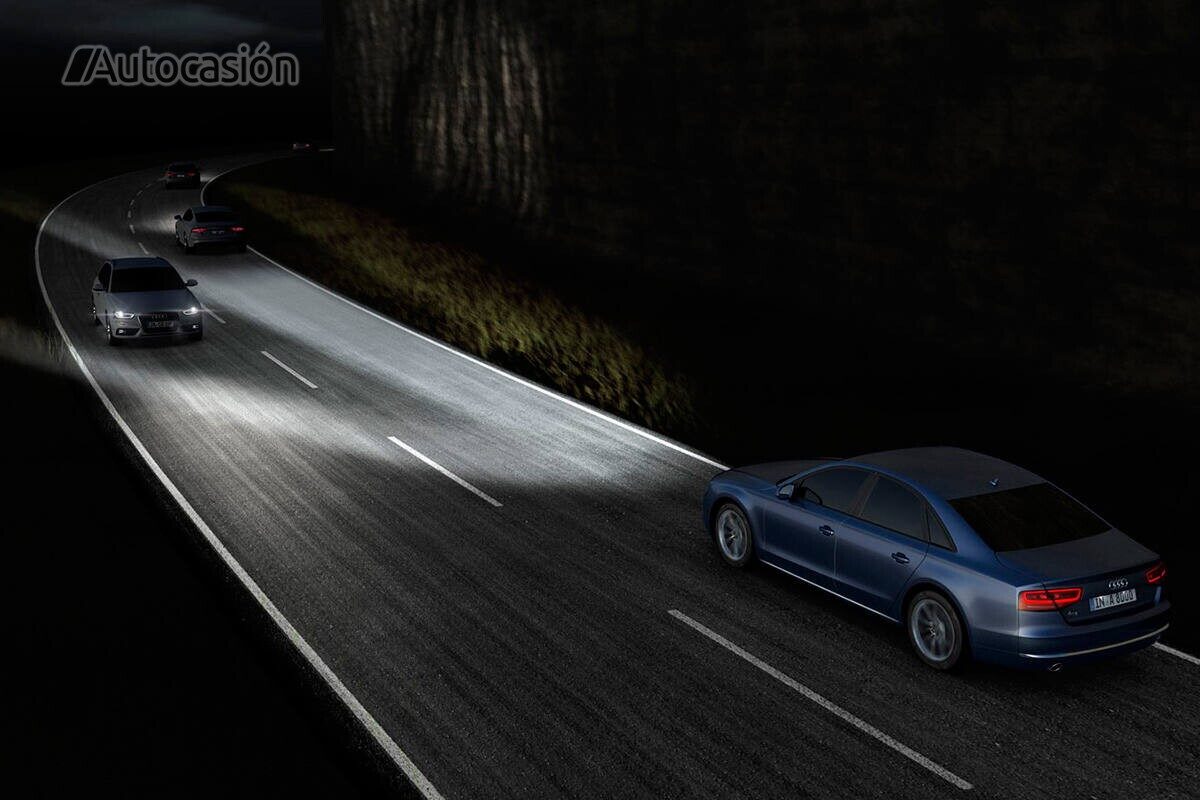
Matrix or matrix led headlights are made up of a matrix (hence its name) with several strategically placed LEDs specialized in one type of light. Depending on the lighting needs, an electronic system turns on each of these LEDs to illuminate a specific part of the road. Thus, the footprint of light on the road can be modified and adapted so that, for example, we have a long light on the right side that allows us to see the obstacles that may be on the shoulder, but creating a shadow on the left side so as not to dazzle the oncoming traffic, as in the image on the cover of this article.
In this Video test of the Mercedes C 220d you can also see in real traffic and night driving how this matrix system works.
Digital headlights: the evolution of the led matrix

9 photos
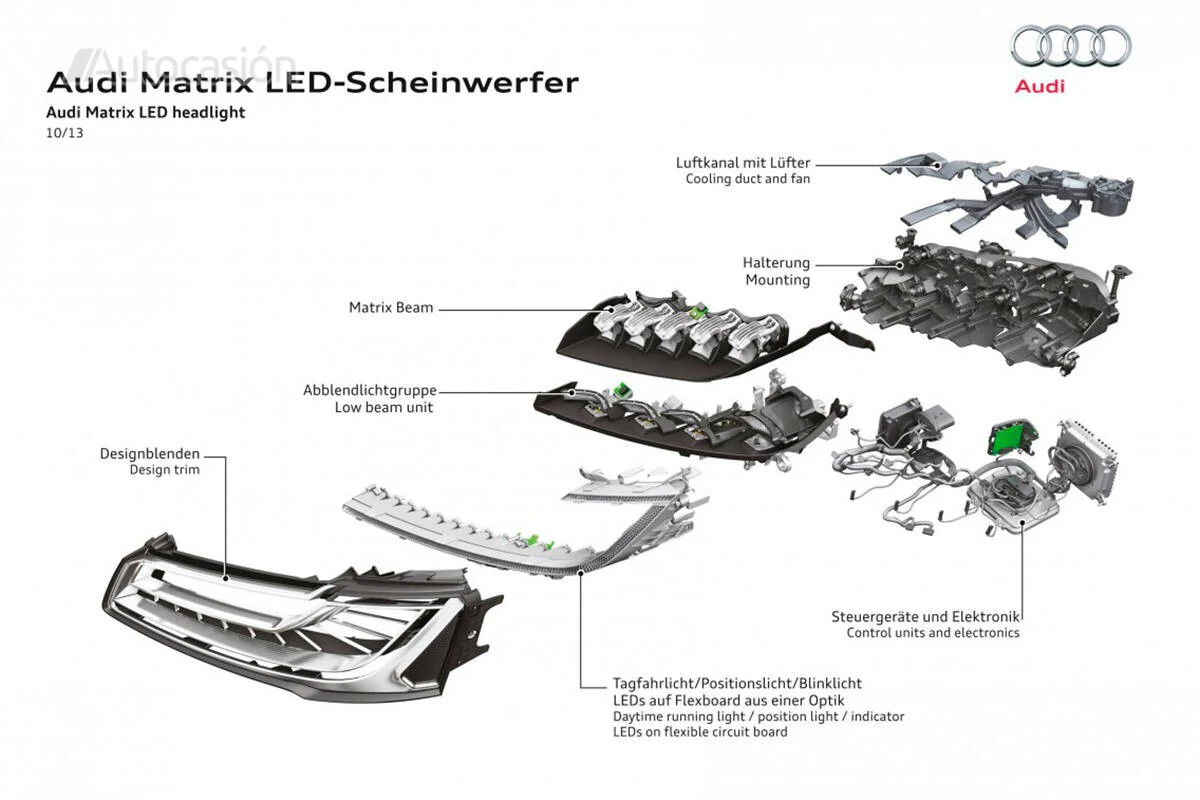
The more points of light the headlight has (the more LEDs there are in that matrix), the more we can adapt the shape of that kind of carpet of light that the headlights generate. The first matrix LED systems and those currently used in the most economical models had between 8 and 16 LEDs in each headlight. In successive evolutions, the usual thing is that each headlight has matrices of between 12 and 32 LEDs.
Currently, the miniaturization and light quality of LEDs has increased so much that there are headlights with more than a thousand independent light points. These complex systems are called Digital Light and are even capable of projecting shapes and figures on the asphalt to generate alert signals to the driver and, for example, warn of the presence of ice on the road or even project the navigator’s indications to warn of the proximity of a junction that we must take.
What are the advantages of adaptive matrix led headlights
9 photos
Although adaptive and directional headlights already existed before, matrix led technology has a huge advantage over traditional adaptive headlights and is the absence of mechanisms and moving parts which, in addition to being expensive, are susceptible to breakdowns. For example, in a bi-xenon headlight to go from dipped to long range, as the gas discharge lamp has an ignition phase that lasts a couple of seconds, what is done is that a mechanical screen covers part of the bulb when we go with dipped headlights. When lighting the long ones, that small blind moves to reveal that part of the lamp and increase the range of the light.
In adaptive headlights a mechanical diaphragm was covering part of the lamp, generating a shadow area so as not to dazzle the rest of the traffic. These systems are much more complicated to manufacture and physically operate than the simple act of turning a specific LED on and off.
Thanks to computer design, headlight projectors can be designed to produce a very specific form of light that they project, simply turning the LED in that particular reflector on or off. Actually we could say that a matrix led headlight is really several headlights joined togethereach with a specific function.
With no moving parts, they are more reliable than xenon directional and adaptive systems, and are quicker to react.
Another evolution within the matrix led technology are the laser headlights. They are headlights that have a specifically designed long-range reflector that instead of a conventional LED, uses a laser as a light emitter. The laser is a very throwing light, with a long range, which increases the field of vision and allows us to anticipate obstacles at a greater distance.
Is it worth paying for led matrix headlights? almost always yes

9 photos
As with all technologies, which reach the most expensive high-end models first and gradually become democratized, matrix led headlights are currently available on the vast majority of models on the market. In some they come as standard and in others they are paid as an option.
A good matrix led system exceeds an average of 1,500 euros as an extra and we must also take into account the higher price of the headlight in case it has to be replaced due to a blow, for this reason equipping this option increases the fee that we have to pay in our car insurance, despite the fact that it is a system that improves our security.
When deciding whether or not to pay for this option, we must carefully assess the use that we will make of the car. It is true that good light is always recommended and improves safety, but for mainly urban use or those people who rarely travel at night, it can be a significant amount that can be saved both when buying the car and afterwards. on insurance and possible repairs.
On the other hand, there are models in which the matrix led headlights do not achieve good results at all. For example, when Seat first introduced the Matrix Led headlights on the Leon and Ateca, the light intensity of the leds was not very good and their illumination was very poor, so they were actually a step backwards from previous versions. earlier with bi-xenon.
Luckily, in successive generations and evolutions of the model they have been improving and this drawback is no longer present.
What is clear is that, from a security point of view, in 99% of cases it is worth paying that extra and making the leap to the led matrix. Not only do we see better and we can avoid accidents with more margin by being able to anticipate, our fatigue while driving and the risk of falling asleep at the wheel is also reduced.

