

What’s going on?
Before getting fully into this story, let’s review the concept that led Audi to create a small, two-seater car and in some versions with a lot, a lot of power.
Let’s go back to 1989 when Mazda presents a vehicle that left everyone surprised, I mean the MX-5 or better known as Miata and it was a vehicle designed to bring the general car-buying masses the pleasure and freedom of a two-seater convertible at a price affordable to many.
With the commotion caused by the Miata in important markets such as Japan or the USA, many manufacturers focused on this important market niche and over the years brands such as BMW, Mercedes-Benz and Porsche respectively launched the Z3 the SLK and the Boxster Well into the 90s, these vehicles did not have great dynamic features at first, but they did offer that freedom that can only be obtained in a convertible vehicle, for example, Mercedes-Benz went a little further with the SLK (R170), because It was a convertible vehicle, with all retractable metal that transformed it into a two-seater coupe.
When does the history of the TT begin?
Since we delve into the history of the segment now if we focus on the model that concerns us today, the TT
During the 1995 Frankfurt Motor Show, the Audi brand presented a concept vehicle called the TT based on a design by Freeman Thomas, creator of many emblematic designs, his best-known work being the VW New Beetle.
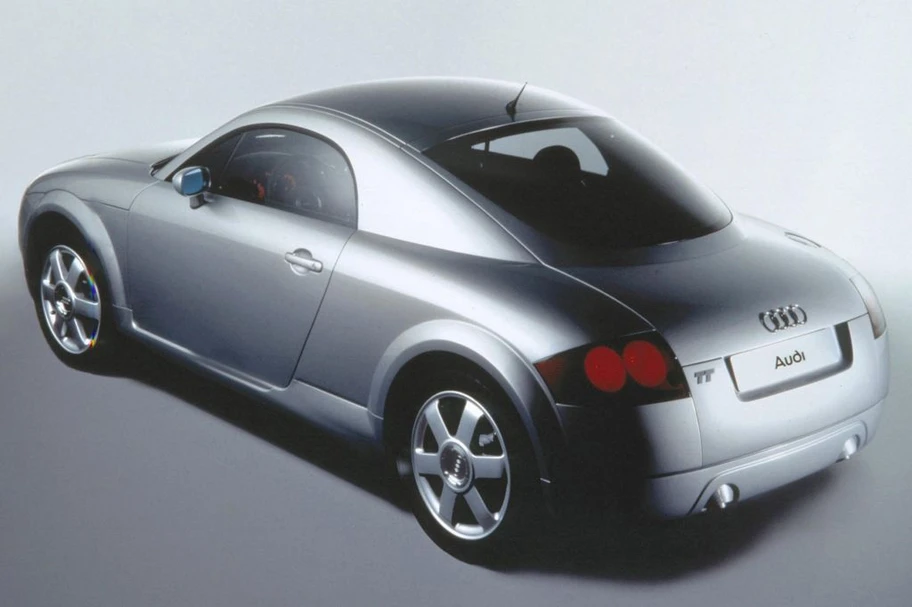
TT?
A strange name at that time, which alludes to the motorcycle race called Tourist Trophy and which has been held on the Isle of Man -located between Ireland and Great Britain- since 1907, and here another question surely arises Why an Audi commemorates a motorcycle race, when Audi has never made motorcycles? To answer that question, you have to delve a little into the history of the brands that made up Audi, and the answer is that the name TT pays homage to three pilots, two Germans and one Austrian who participated in said competition, the first was Ewald Kluge who in 1938 he rode a bike made by DKW and by Werner Haas and Rupert Hollaus who competed in the TT in the 1950s using NSU bikes. DKW and NSU are two of the four brands that make up AUDI, the other two being Wanderer and Horch.
Let’s go back to the 1995 IAA and the TT
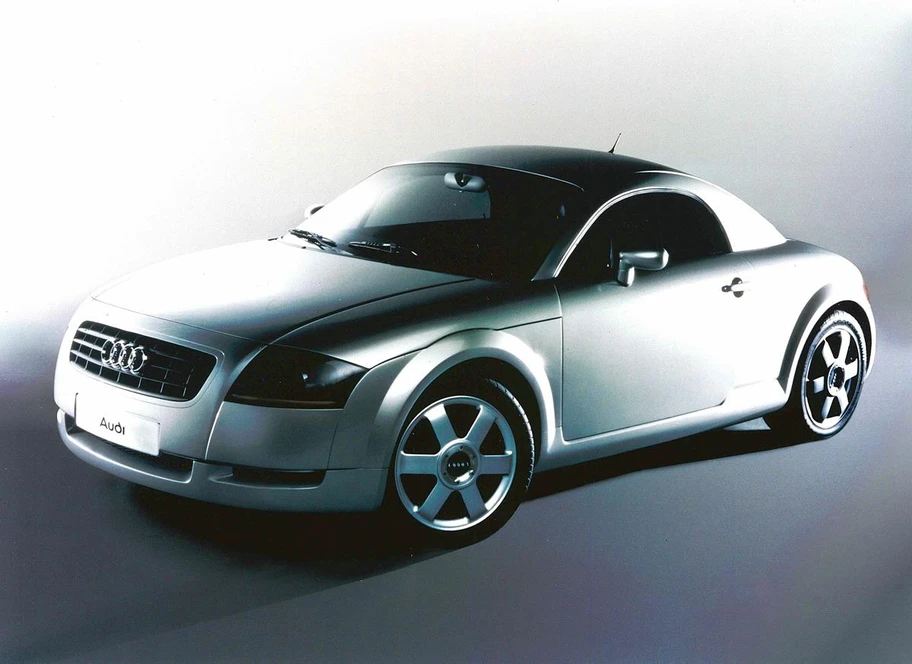 The model caused a lot of expectation due to its rounded shapes and very aggressive design for the time, a small vehicle reminiscent of sports two-seaters like the Vauxhall GTor the Renault Alpine A110 from the 60s and 70s.
1st. Generation 1998-2006
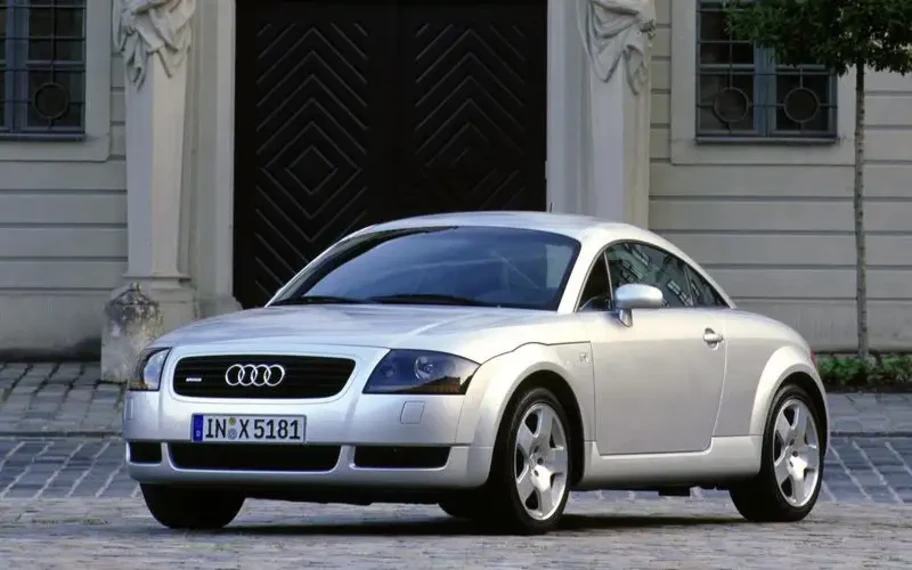 Three years passed for the brand to present the production version, internally known as N8, using “off-the-shelf” components, that is, the PQ34 platform that was already used by the Golf IV at that time and other VAG group vehicles as well as the powertrain consisting of a turbocharged 1.8-liter four-cylinder engine and two transmission options – manual and automatic – also used by the Golf IV/Beetle. One year after the presentation of the Coupé, the convertible version arrives to complete the options to suit the customer.
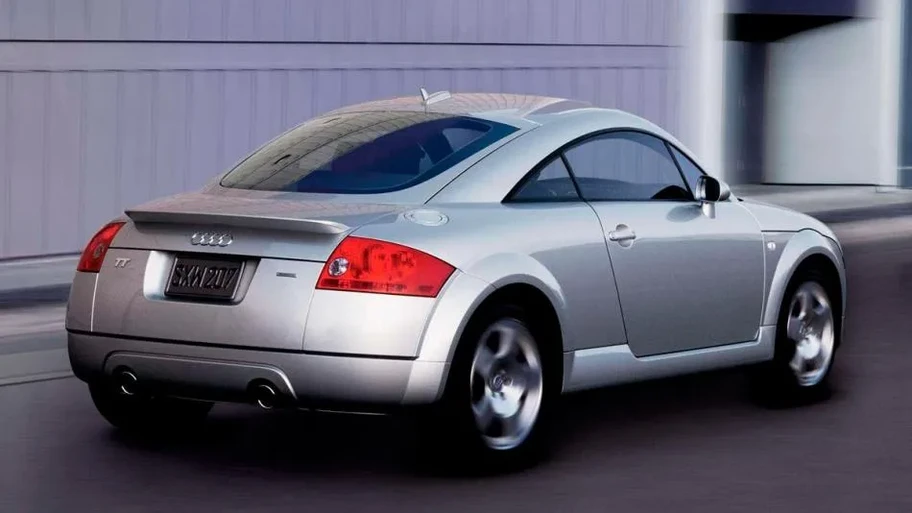
There were versions with more power and it even adopted the Quattro system -invented by Audi- and an ironic fact happened with the increase in power, customers started complaining about too much oversteer at high speeds and accidents were immediate. Audi fixed the problem by adding a rear wing to it to all versions and thereby ensured that the TT would not “go tail” and many surprises would be avoided at high speeds. The spoiler was harshly criticized by the press -and by customers- but apparently it solved the problems of poor stability.
2nd. Generation 2006-2014
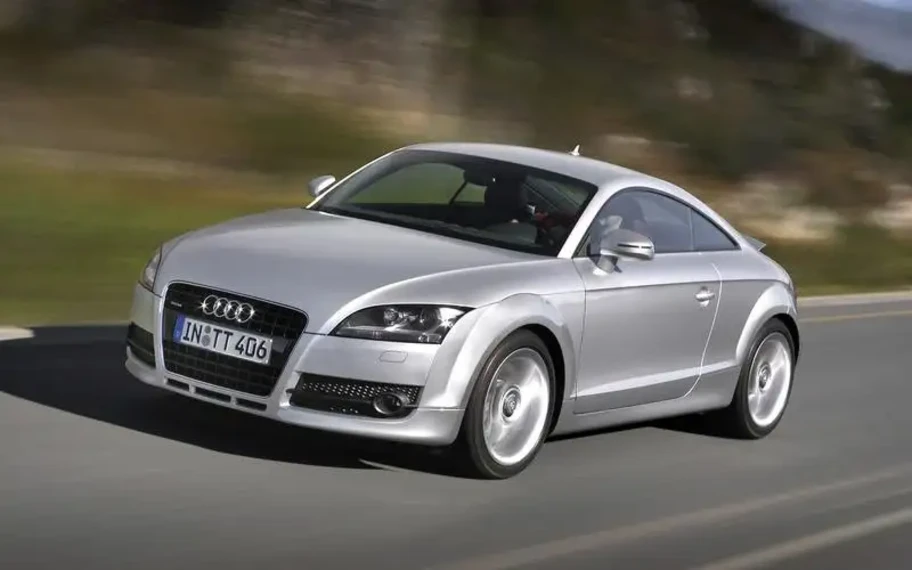
The second installment of TT is the work of the influential designer Walter da Silva -which is the creator of the first generation of the Audi R8 and previously of the Alfa Romeo 147-156-
The internal code is 8J and it was assembled on the VAG Group platform called PQ35 and sharing many components with the Golf V and technologically it provided the new Audi dual-clutch transmission called Stronic and was the standard bearer for the evolution of construction technology called Audi Space Frame that used the combination of aluminum and steel components to improve structural rigidity.
The controversial spoiler -which caused so much noise in the first generation- was still an important part of the design, but now it was retractable and It only emerged when driving at more than 80 km/h.
With the 8J generation we met the TTS and TT RS versions that offered dynamic improvements and more powerful engines, as well as Quattro all-wheel drive systems.
3rd. Generation 2014-2023
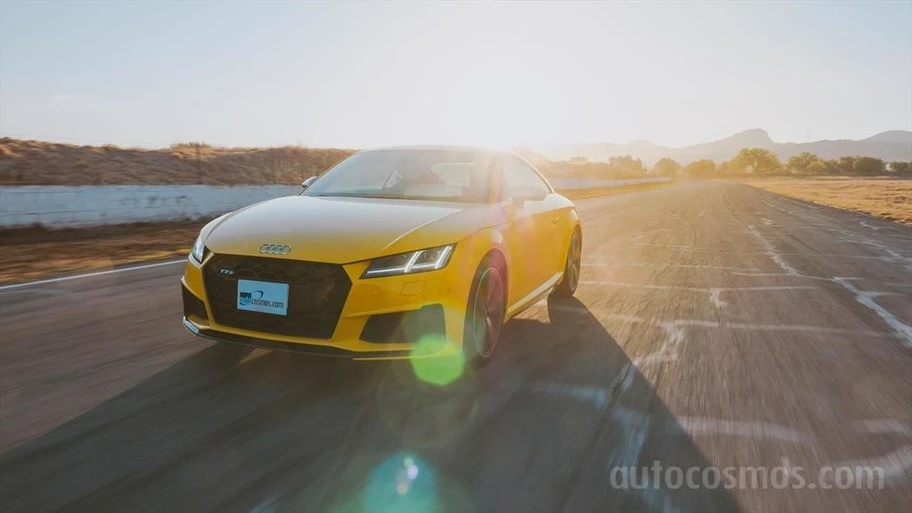
Almost 10 years ago we met the third generation of the Tourist Trophy at the Geneva Motor Show, now the design was carried out by Jürgen Löffler And faithful to custom, the model shares the VAG Group platform called MQB (Modularer Querbaukasten) that the group uses for vehicles with transversal mechanics.
The design of the FV/8S – as this generation was called – has more fluid, less round lines, although it is reminiscent of the first generation (8N), the most notable being the bulges on the fenders and the placement of the rear optics.
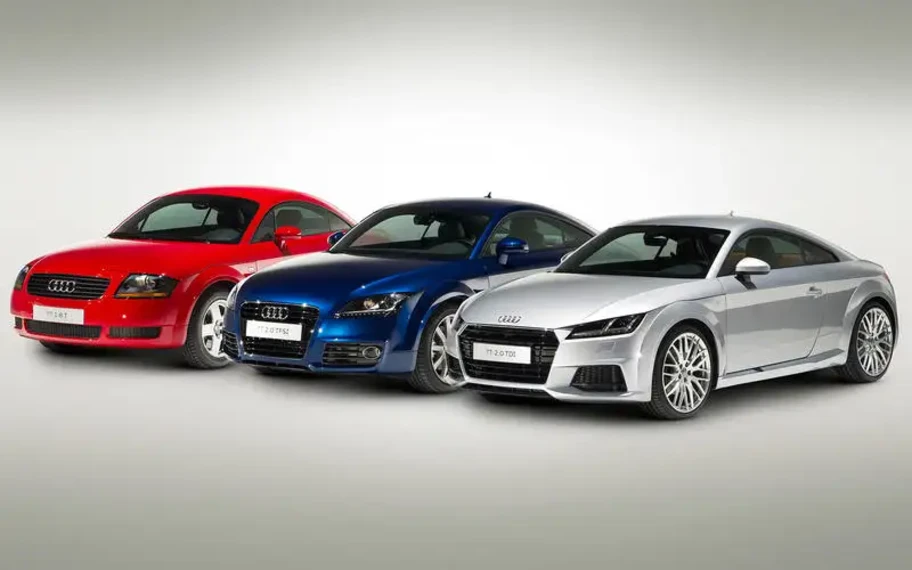
The 3rd Generation TT marked a technological milestone in infotainment systems and was one of the first Audi to carry the now well-known “Virtual Cockpit”. that said goodbye to the traditional cluster of needles in the instrument panel and was replaced by a fully configurable screen.
Audi TTS Memorial Edition (Japan)
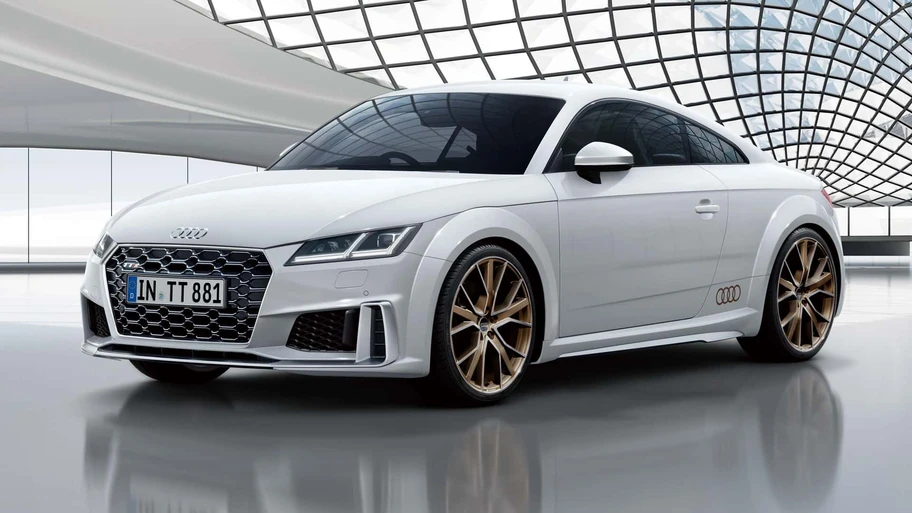 Audi ends TT production in 2023 and in some major markets has launched farewell versions, for example the Heritage Edition in 2022 and the Final Edition for the UK this year. It also launched an edition called: Memorial Edition limited to 100 copies that will be sold in Japan and stands out for the special details in bronze. The engine does not change: the 2.0 TFSI block with 320 Hp and 295 Lb-ft, associated with the seven-speed S tronic dual-clutch automatic transmission and the quattro all-wheel drive system.
We do not know if a special edition of the model that is still available in our catalog will arrive in Mexico with two versions: Audi TTS Coupé and TT RS.

