

 Ruben Fidalgo
February 14, 2023
The Renault 21 arrived on the market with attractive but traditional lines and little risk. However, inside the TXE versions there was an instrument panel that was most futuristic. We review the history of this model.
In 1986 Renault presented the relay of the R18, a model that had provided excellent services to the brand with the rhombus, but which was due for a thorough renovation to stand up to an increasingly prepared competition. Spain finally had its borders open to imports and it was no longer so easy for Seat, Renault and Citroën to sell their nationally manufactured models, which until the early eighties were practically free.
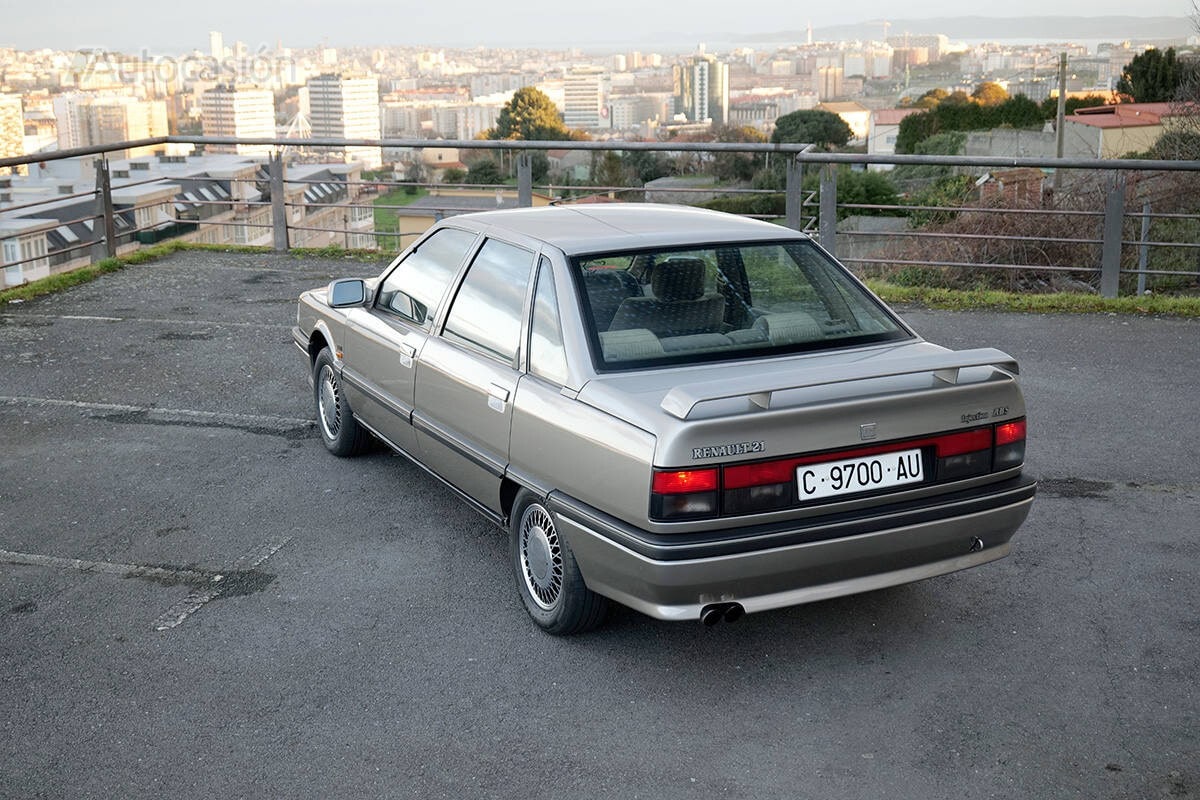
The new Renault 21 presented in 1986 drew attention for its very modern designthe work of Giorgetto Giugiaro (the same person who designed the Golf, the BMW M1, the Saab 900…) with quite traditional lines but with details rarely seen to date. For example, his doors bit into the ceiling, thus eliminating the rain gutter (a solution also used by the designer in the Saab 900, Lancia Thema and Fiat Croma) and with very flush windows. These details and very fluid proportions allowed the Renault 21 to offer good aerodynamics, with a Cx of only 0.31a very good value for the time and even today.
To the sedan-type saloon bodywork was added a family version named Nevada which drew even more attention due to the shape of its rear, also very aerodynamic, with a large trunk and the added practicality of the generous tailgate. With the facelift carried out halfway through its commercial life, the 5-door hatchback saloon would arrive, with which the R21 would have one of the most varied ranges in its segment.
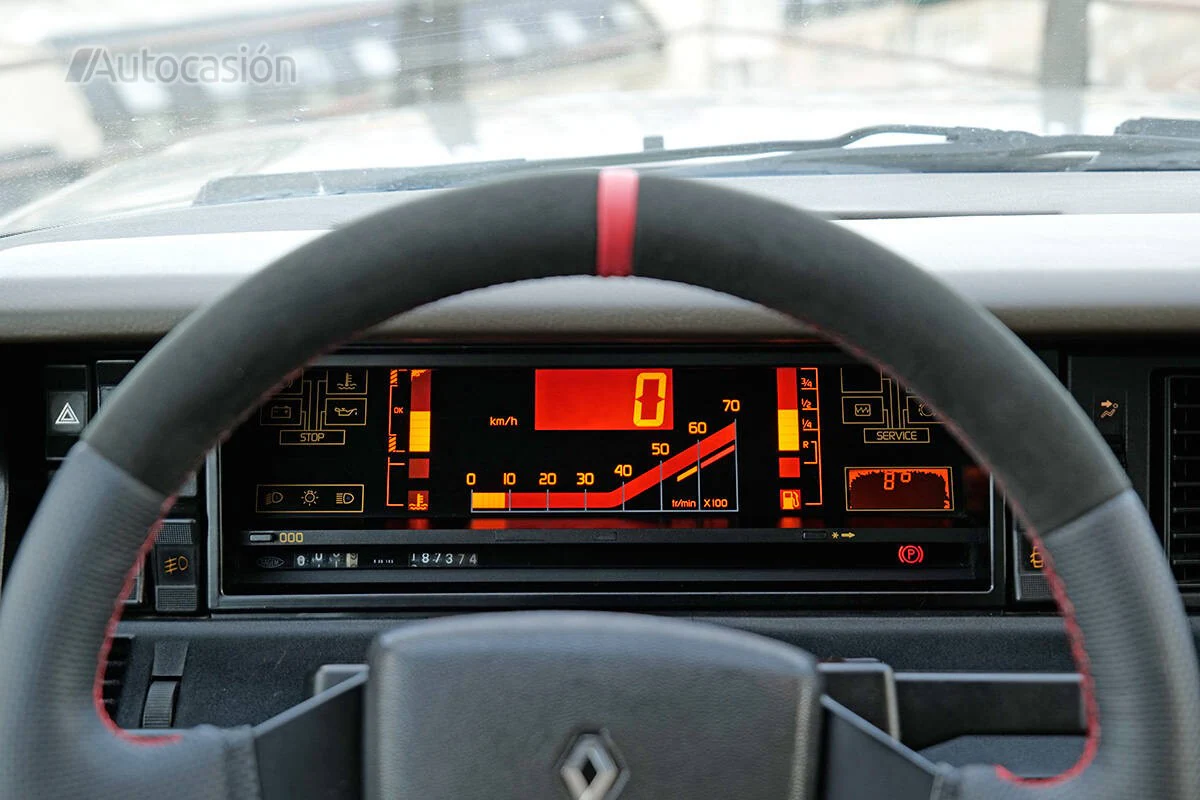
Of the two mechanical versions presented in 1986, the TXE was the top of the range, with a 2-liter 120 hp engine that would be the basis from which the powerful R21 Turbo would be developed and it would reach the market a few months after the launch of the Renault 21. The TXE, in addition to its complete equipment and mechanical solvent, drew attention especially for a detail that we will see later and that is present in the unit tested in this video.
Renault 21: ABC Car of the Year in 1987
56 photos
Due to its good qualities, such as ride comfort, its modern equipment, variety of mechanics and equipment, spaciousness… the Renault 21 won the car of the year title in Spain in 1987, with a comfortable difference compared to the second and third classified (the Opel Kadett and the Opel Omega, respectively). Undoubtedly, this award helped the sales of the R21 to be very numerous and thus became one of the most common cars on the roads and streets of the peninsula. It was also very well accepted in the Taxi industry, where its comfort to spend long working days and the reliability of its diesel mechanics were especially valued.
Among the singularities of the Renault 21, the versatility of its platform, which mounted very different mechanics, was striking. The basic models equipped the engines of the smaller brothers, Renault 9 and 11. These models mounted the mechanics in a transverse position, while the large 2-liters were longitudinal. This made it necessary to modify the front part of the R21 chassis in order to accommodate transverse and longitudinal engines, which varied the proportions of the overhangs. Versions with all-wheel drive were also offered, called Quadra and 4×4
The Renault 21, like the Renault 9 that we tested a few months ago, it was also marketed in the US under the name Renault Medallionwith a somewhat different aesthetic due to the specific headlights and bumpers for American legislation and with more complete equipment.
Renault 21 TXE: the fantastic car for families
56 photos
On August 1, 1985, the series “El Coche Fantástico” premiered in Spain, something that would mark the childhood of thousands of kids who hallucinated with the talkative Pontiac Firebird Trans-Am with the voice of Hommer Simpson and a digital instrument panel. full of witnesses, lights and screens. Those were years in which digital was the most futuristic thing you could imagine and, although there were several manufacturers that used liquid crystals for the instrument panel of their models (Citroën BX Digit, Opel Kadett GSi, Audi Quattro, Chevrolet Corvette, Fiat Tempra …) was something very distinctive and striking then.
The Renault 21 TXE was equipped with a digital instrument panel that was much more striking in terms of color and size of the digits than any of the others.not only less attractive, but also less legible.
In those years I had barely turned a decade and I remember putting my face closer to the window of each R21 TXE that I found on the street and putting my hands to avoid reflections and thus being able to see that digital instrument panel that was a real pass for the kids of that time. The truth is that, if in addition to the digital box, they had added the voice synthesizer of the R25 and in addition to this instrumentation the car spoke, it would already be a total Michael Knight.
A few months after the facelift carried out at the end of the decade, Renault unified components and the Renault 21 TXE lost this characteristic instrument panel. Luckily our protagonist still has it as it is one of the first post-restyling units, which makes it even more special.
Renault 21 TXE: look like the Turbo
56 photos
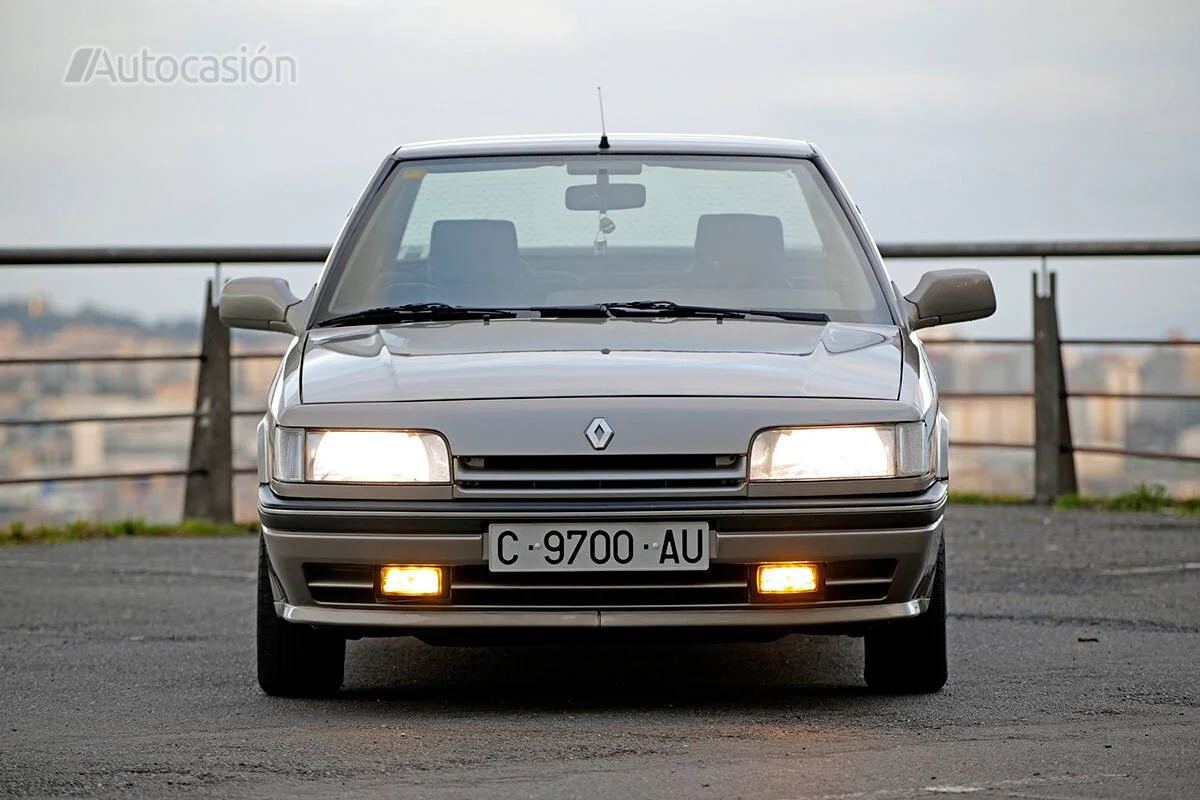
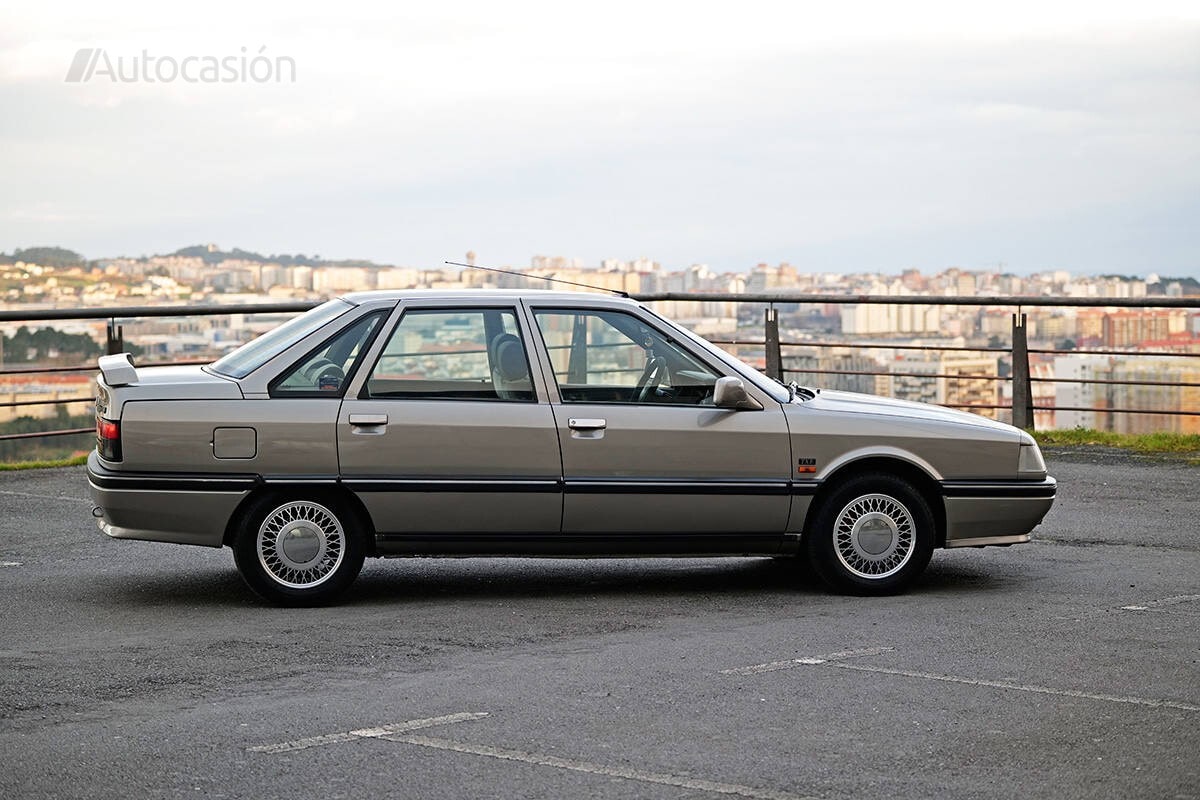
With the arrival of the 90 model year, the Renault 21 changed its appearance slightly and the 5-door version was added to the saloon. The changes to the design make the new look of the R21 more similar to that of the Turbo, especially in the front view, with longer headlights and a new bumper that make the front end look sharper and make the car appear wider. The tires also change design and The TXEs abandon the alloy ones that were inspired by those of the R5 GT Turbo and adopt a more distinguished design in the Broker versionsfinished in polished and gray aluminum and a very elegant cross-spoke format, like the ones our protagonist has.
At the rear, a reflector joins the rear lights from side to side and gives a sportier and more modern look to the rear of the R21, which already drew attention in its day due to the large size of its lights and its smoked finish.
Renault 21 TXE: comfort above all else
56 photos
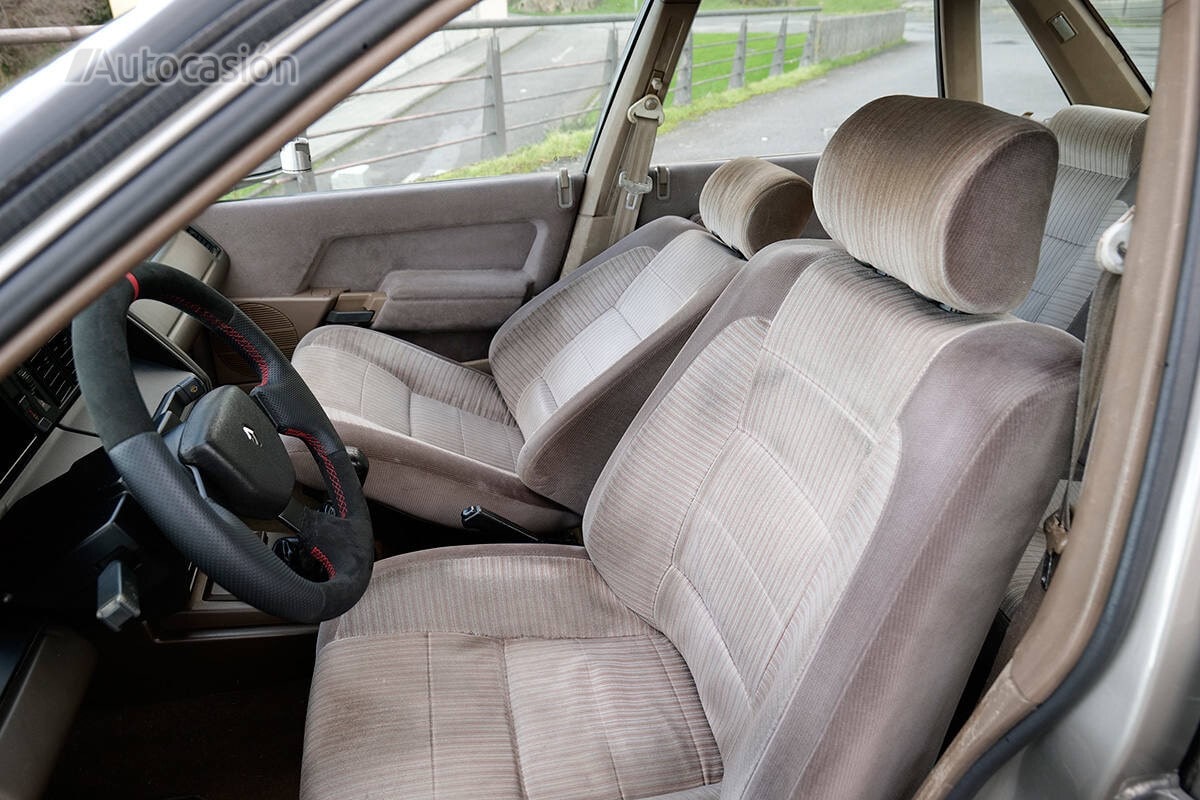
At 4.46 meters long, the Renault 21 offered a very spacious and comfortable interior to its passengers.. The front seats adopted the monopod anchorage system as in the R9, which left room for rear passengers to tuck their feet under the front seats for more leg stretch and a more comfortable ride. The seats had a very comfortable padding and were wide and with a good bench, very comfortable. In addition, there were details such as height-adjustable seat belts, velor door upholstery, central armrest, etc.
The comfort on board the R21 was high, both for space and for the clothing that enveloped the passengers. The quality of some plastics did not hold up well over the years and cracks were frequent in some parts of the dashboard.
With the arrival of facelift and special versions such as Broker and Manager Some luxuries of the almighty Baccarra began to be offered in the most basic Renault 21, such as electronic climate control or satellite controls to control the sound equipment.
The top of the range, together with the Turbo, was represented by the extremely luxurious Renault 21 Baccarra, characterized by excellent high-quality leather seats in the image and likeness of those of the Renault 25. With them, the Renault 21 became a true mobile lounge, with a luxury that did not envy the models with much more prestigious names.
The Renault 21 TXE of Pedro and Oscar: our protagonist
56 photos
Although the Renault 21 was a true commercial success, more than 30 years have passed since then and the successive renovation plans and scrapping of the park, together with the low prices of the model they have meant that there are hardly any surviving specimens left, and even less in a state of conservation like this. In September 1990 Pedro (may he rest in peace) chose a brand new Renault 21 TXE from among all the options on the market, attracted by its design, good equipment (one-touch electric windows, central locking, air conditioning, steering power assisted, trip computer, alloy wheels, ABSetc.) and the benefits offered by its 120 CV engine in a car much lighter than what we are used to today.
Two years later, his eldest son, Óscar, would be born, who unfortunately inherited it too soon and who has been in charge of keeping it in this state, practically original, although with some personal detail to make it even more his, such as the 3-spoke steering wheel with sports upholstery. .
Many thanks to Óscar for his conservation work so that in 2023 we can enjoy an R21 TXE that is over 30 years old, which is a true reflection of what this car was like in its day.for giving value to memories and the history behind a car beyond its material value, which, deep down, is the least valuable.
See technical sheet and equipment

