

5 photos
 Ruben Fidalgo
January 16, 2023
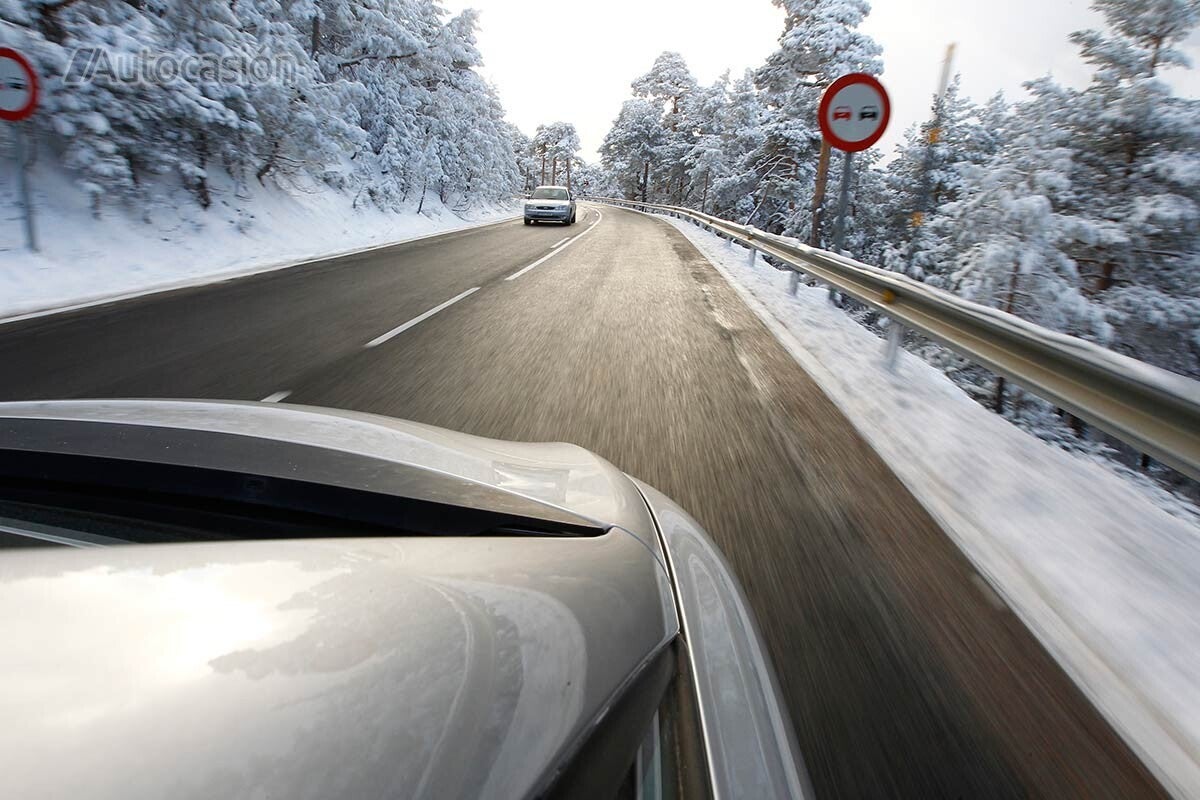
Winter has already started several weeks ago but the temperatures so far have been rather autumnal. It seems that the cold that should have been with us for some time has arrived suddenly and with it the first serious snowfalls, so throw the chains in the trunk and a blanket and follow these tips if you have to travel.
This year they are called Gerard and Fien and they are the two storms that have decided to coincide in space and time to bring cold blows with snowfall and wind to Spain. Now we can say that the winter season begins on the roads and, as every year, it does not hurt to follow some advice that can help us these days.
A few weeks ago we gave you some tips to prepare your car for the cold and it was not in vain. This week the first alerts for snowfall have begun and the DGT has already released its statement recommending drivers to prepare the trip in advance and find out about the weather forecast for their itinerary.
As in Spain we are not very used to driving on snow; There are barely 3 months a year in which there is snowfall and it usually falls in very specific areas, these tips are not too much to avoid problems in the case of having to drive on the snow. The lack of practice when driving on snow causes us to make some mistakes and put ourselves in risky situations unnecessarily.
The first thing to keep in mind When there is snow on the road, 3 risk factors come together:
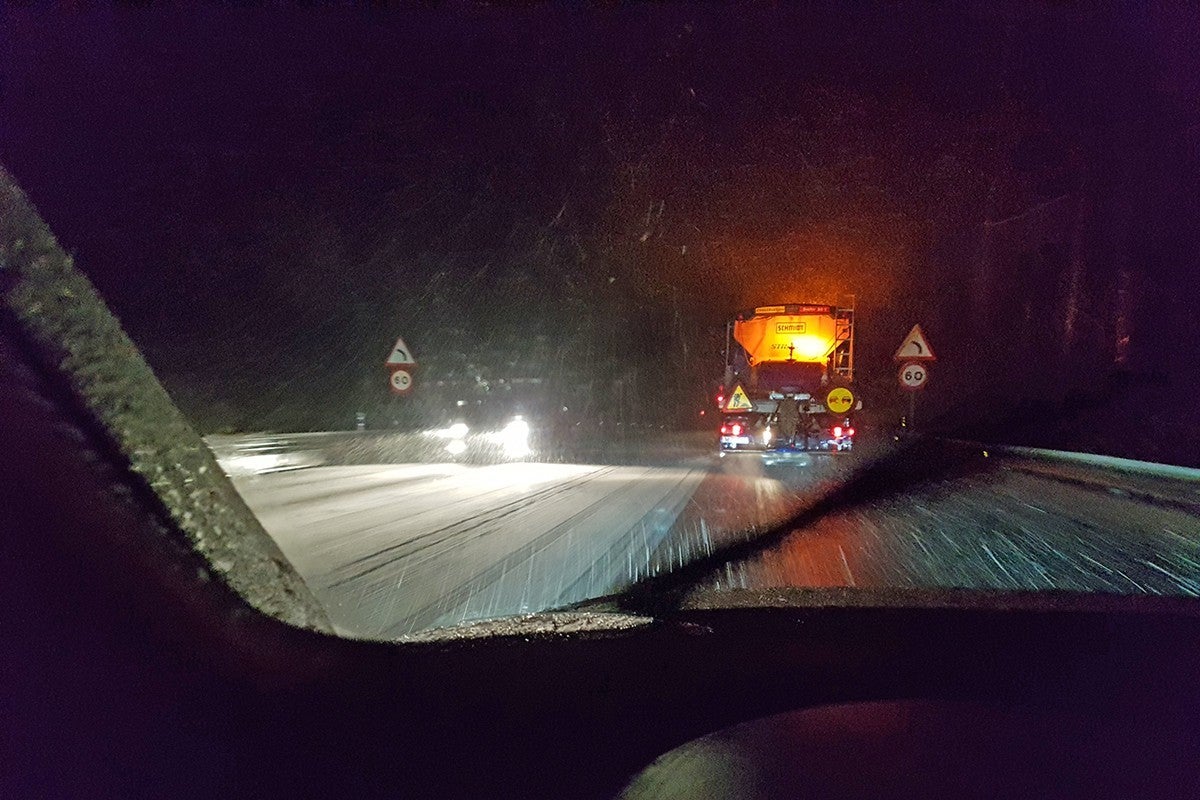
- bad visibility: For this reason, it is a priority to always turn on the lights and perfectly signal our position (reflective vest, triangles…) in case of being immobilized.
- low adherence: It always implies a risk and we must minimize it. The basic rule is increase the safety distancewhich, in the case of snow or ice, must be more than three times what we would keep under normal conditions.
- Low temperatures: with the cold our movements are more clumsy, either because we are wearing thick warm clothes or because we are numb. Something similar happens to the car (especially non-winter tires), so be patient with it.
Another thing that we must be clear about, to apply the greatest possible precaution, is that cWith snowfall, weather and road conditions can change abruptly. In a few minutes a route that was safe before can become impassable. Being proactive is essential to anticipate possible problems. If we are not equipped, the temperature is low and it is snowing heavily, it is better to look for a place to spend time safely and comfortably instead of risking passing through and getting trapped.
A very common mistake is that after a few kilometers on the snow, we got used to it and emboldened ourselves. The result is that we end up taking risks that end up with the car off the road. During the first kilometers on the snowy road, we are very prudent because it takes us by surprise and it is an element that we are unaware of. As we cover kilometers and nothing happens to us, we lower our guard and increase our speed. There are almost never accidents at the beginning of a snowy section, but rather in the middle of it.
Once the previous concepts have been clarified, we will describe how we must carry out the basic maneuvers to drive in snow. The basic rule is that we must be extremely smooth with the accelerator, brake, gear and steering wheel.
How to start walking on snow

5 photos
How do you walk on ice? Very carefully and even on all fours. The advantage on snow of an all-wheel drive car is not that it has more grip, but that each wheel receives less power as it is distributed among 4 and not between 2 wheels. We can reduce the power going to the wheels to prevent them from slipping when using high gears. Instead of starting out in first gear, we should start the march in second gear (even in third gear if we’re on the flat) barely accelerating and playing with the clutch so the car doesn’t stall.
There is an English expression that is perfect for this situation: “Take it easy”. It’s kind of like “make it easy.” The more we make it easier for the car to advance, the better. If we have to start from a standstill, it is much easier to do it with the wheels straight than rotated. Do the test one day: put the car on a completely flat area, remove the gear and the brake and try to push it with the steering turned fully or with the wheels straight, you will see that with them turned it is much heavier.
Start the march with the wheels straight and, as soon as the car begins to roll, go turning little by little. If you turn the wheels suddenly, it is most likely that you will end up standing still or even that the car will go to the opposite side to which you are turning.
How to brake on snow
5 photos
If what we want is to slow down, it is best to do it very gently on the brake. Today, with ABS in almost all cars, we will retain the ability to steer with the wheel, but Braking distances will multiply even by 10. That is why it is vital to maintain a much greater safety distance. If we need to stop in the shortest possible distance, it is better to get out of the rut on which we are driving. The snow that piles up in front of the wheels will slow us down more quickly.
The problem is that it is very likely that, afterwards, we will not be able to get out of where we have stopped, they will have to tow us or we will have to remove the snow from around the wheels and even the belly of the car to get out, but, at least, we will have stopped as soon as possible and avoided the impact.
How to ride on snow

5 photos
As long as we’re riding in a straight line, there’s no problem on the snow. The complicated thing is to take a curve, brake and start the march. What it is about then is trying to go as long as possible at a constant speed (without having to accelerate or brake) and in a trajectory that is as rectilinear as possible.
Maintaining a uniform speed is very easy if we follow a golden rule: LEAVE DISTANCE WITH THE CAR IN FRONT. If we’re going too close, their changes in rhythm will affect us and force us to brake more abruptly (and remember that being abrupt is the last thing you should do). If the person in front makes a mistake and goes off the road, we can anticipate and avoid it without having to swerve or brake.
Following a straight line is impossible, because the roads have curves, so what we must do is take a uniform speedlow enough so that we can draw a curve with the very little grip available.
Do not pack yourself in the straight areasbecause then you will have to brake in the corners… and braking is a problem and trying to accelerate out of the corner, too. You have to be disciplined, set a safe speed and stay within that range..
Video: how to drive in snow
?

