

Today we have come to Sitges to see the new Peugeot 408. We had already been able to see it static but we have finally driven it in its plug-in hybrid version.
The brand presents it to us as something different from everything else in the compact segment, although it shares a platform with a model like the Peugeot 308 and there is a model in the Stellantis group with which it shares a style, the Citroën C5 X.
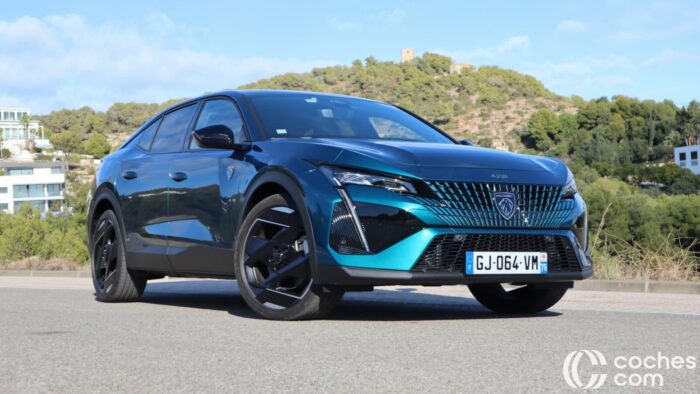
What does this crossover provide compared to a traditional compact or an SUV? That is what we are going to try to discover in this video. I advance that we liked its habitability, with good rear seats, its risky aesthetics and its dynamic behavior, with a fairly balanced touch.
Its starting price is €34,850, a figure that goes to 48,400 euros in case of choosing the GT finish, the highest of the range, with the plug-in hybrid motor of 225 CV of power. Precisely, the unit that we are testing. You can find Peugeot 408 offers in our new cars section, published by official dealers of the brand. Renting is interesting in this model, because with the same entry of 5,000 euros you can access a Peugeot 408 for 388 euros per monthjust 47 euros more than a 308.
Exterior
Peugeot’s idea is to get one step ahead of the market. Compact SUVs are in fashion and are sweeping sales. But just as minivans no longer sell even a small part of the old stuff, they want to be ready for the next fad.
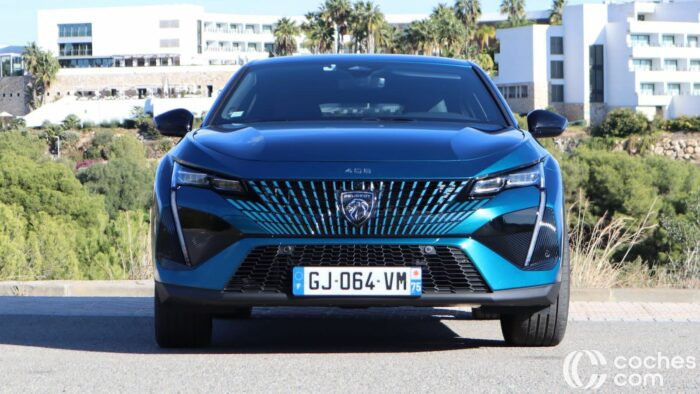
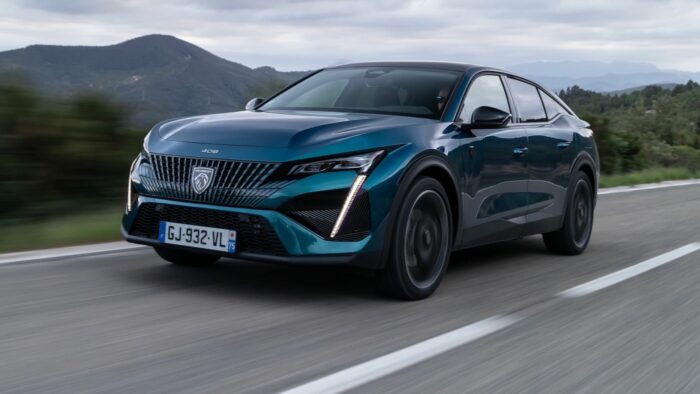
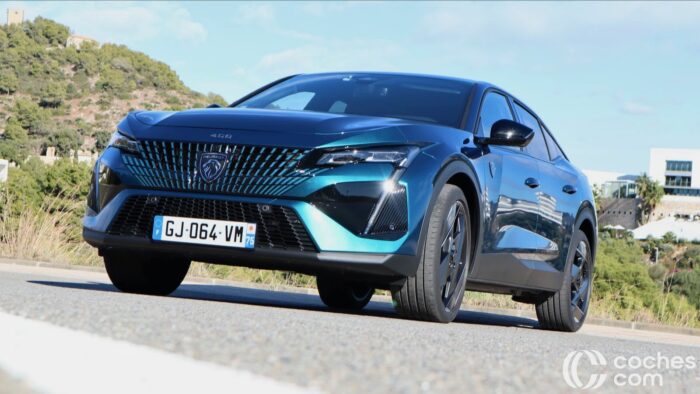
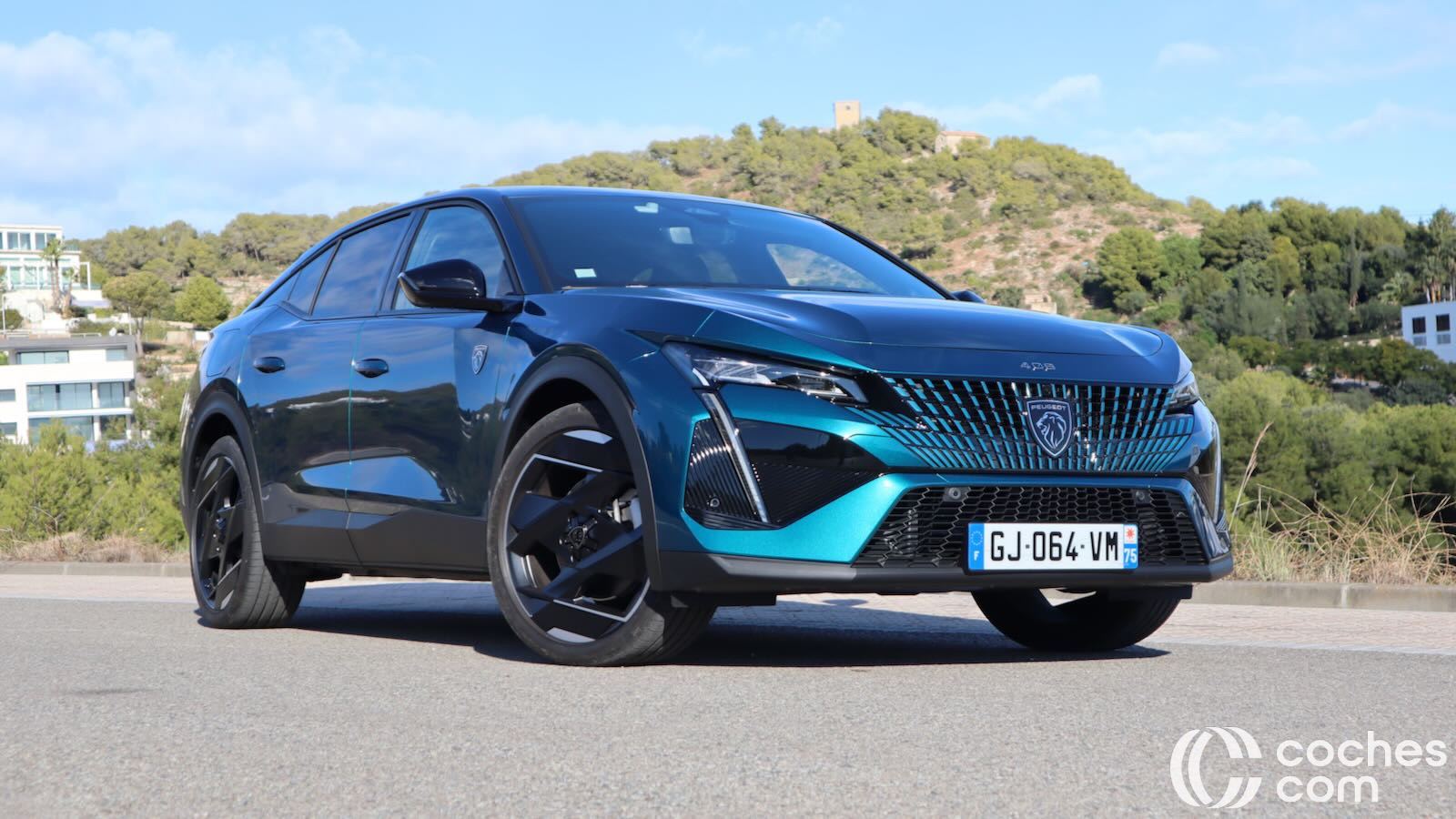
Will this be? The brand insists that it is not an SUV, but a saloon. At the front we find the lion’s head presiding over a wide grill with parts in the color of the body, a detail that gives it a very modern look, like the LED optics that are inserted into it from the ends. There is no shortage of daytime running lights that imitate the lion’s fangs, which cross the bumper, right in the middle of the black piece that is a detail that visually separates it from the 308.
The change comes on the side, where we see that silhouette not with three volumes, like the classic sedans, not familiar either, but rather it is a silhouette fastback, with the rear very inclined in the final part. Highlight its high ground clearance, 18.8 cm, as well as the very marked wheel arches and with black plastic protections, under which we find wheels between 17 and 20 inches.
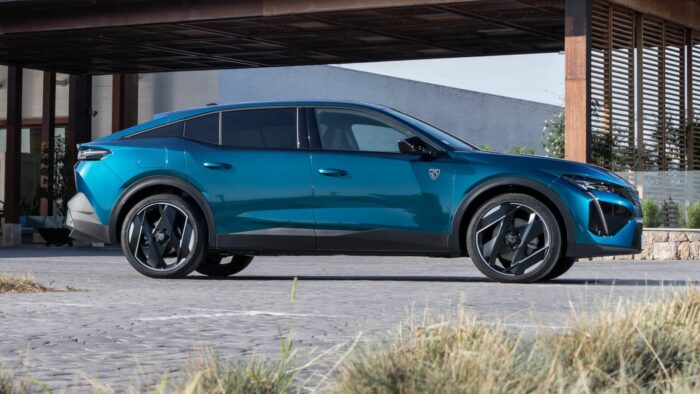
We talk about a C-segment all the time, but it’s quite a long car, with 4,687mm length, right between a Peugeot 508 (six centimeters less) and a Peugeot 308 SW (6 cm more). Of these, 2,787 mm correspond to the wheelbase, a significantly better figure than the compact. It is not very tall, just 1,478 mm and it stays at 1,859 mm wide, like the 308.
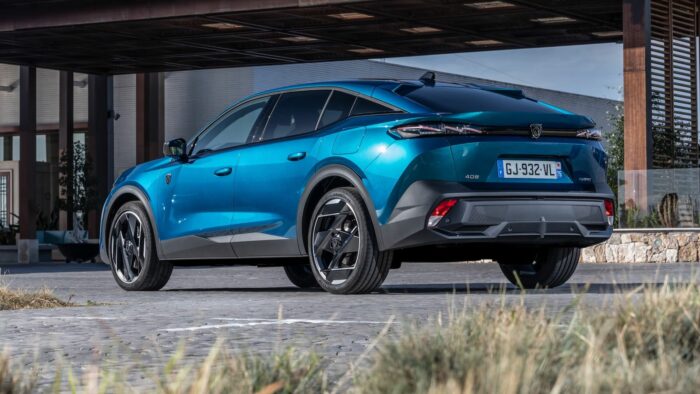
If we look at the rear, it has a fairly loaded design, with the window very stretched out, without a rear wiper, which has some appendages in the upper part that the brand calls cat ears and that improve aerodynamics. Under a small integrated spoiler are the optics, with the triple light signature that imitate the paw of a lion. A huge black plastic bumper completes the rear.
Inside
If on the outside it is groundbreaking within the Peugeot range, the truth is that inside… little or nothing. The 408’s dashboard is exactly the same as a 308’s, with its strengths and weaknesses.
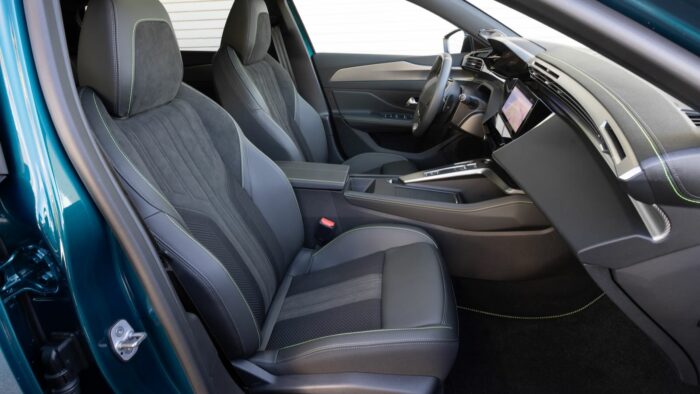
The good? The quality of realization and the impression you have when you enter, with good materials. From the basic versions, not only in the GT finish. Also better access, because the doors open a lot and it helps that the seat is higher. What an eye, this does not imply that the driving position is like that of an SUV. I see it closer to that of a conventional tourism, somewhat higher, yes. The seats have also been very comfortable and support the body reasonably well.
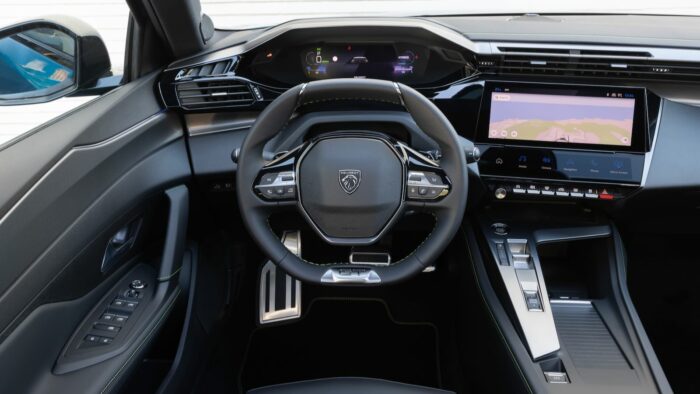
The bad? Well, the brand’s i-cockpit. They told us that they have already sold more than 9 million units of this curious driving position, with a small steering wheel in a low position to see the instrumentation above. It does not convince me, only in commercial vehicles. In conventional sedans it forces me to place the seat higher than I would in order to see the instrument panel. Best to go to a dealer and try it out.
In the center of the console, a 10-inch screen with the new infotainment system, navigation and climate control. It has a configurable touch area under them and function keys under the screen to which you can assign functions such as shortcuts.
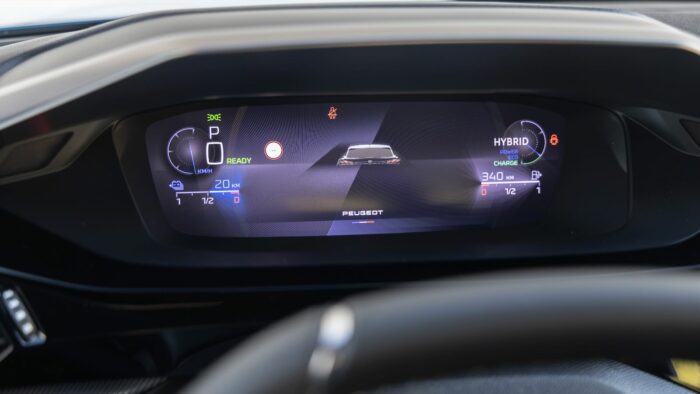
There are also holes to leave objects, such as a wireless charging area for mobile phones on the gear selector, a couple of drink holders hidden behind a blind or the chest between the seats, very well finished.
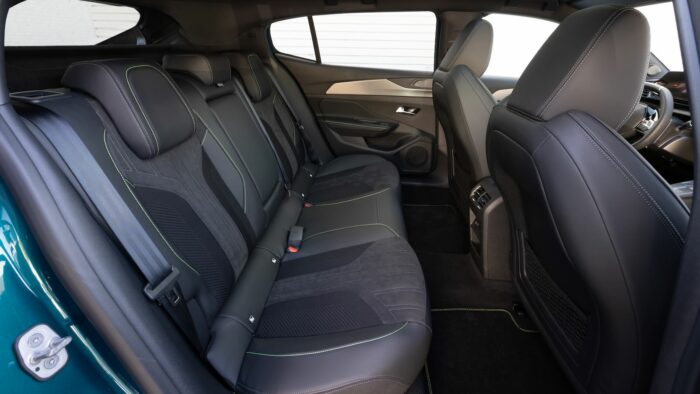
Behind, it shows that we have a wheelbase of 2,787 mm, just over 5 cm more than a Peugeot 308 SW (2,732 mm). That gives us very good legroom. They are more easily accessed than in a conventional compact family car, but the drop towards the rear prevents outstanding headroom, be careful if you are going to travel with very tall people frequently. In that case, better a conventional compact SUV. We have, yes, a couple of USB-C sockets, air vents at the end of the console and an armrest through which you can access the trunk. Here we go
Trunk
The Peugeot 408 announces a boot capacity of 536 liter capacity. The plug-in hybrid versions have something less, they stay in 471 liters. The reduction comes from the space under the floor, where, yes, there is space for the charging cables.
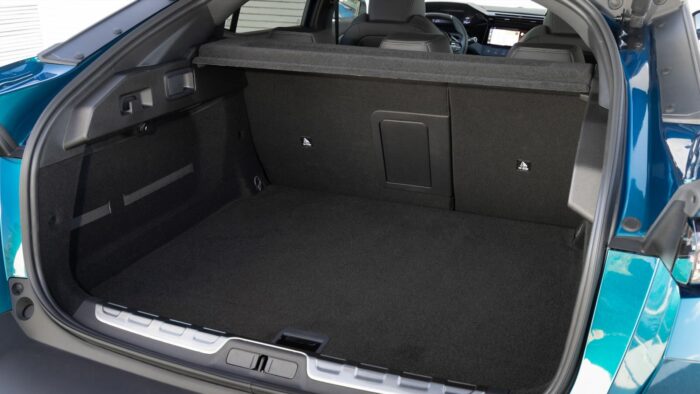
It is possible to fold the backs of the rear seats, divided into two parts, by pulling levers on the sides. When you do you get a slot of 1,545 liter capacity… figures lower than a 308 SW both.
engines
The range of engines is simple and well-known, brought directly from the 308. The mechanics of access is the three-cylinder 1.2 Puretech 130 hp. Above are two plug-in hybrid versions, the 408 hybrid with 180 or 225 hp of power.
Both combine a 110 hp electric motor with a 1.6 Puretech four-cylinder block with 150 hp or 180 hp, hence the difference in total combined power. They are associated with a automatic gearbox EAT8 eight relations, which sends power to the front wheels. There are no versions with manual transmission… nor diesel. The range will be completed (there is no set date, but we imagine that in 2023), with a 100% electric version.
Behaviour
I have recently tested the Citroën C5 X, a car very similar in concept to this one, a large and quite heavy car. The 408 maintains the feel of the brand, very precise and quite dynamic, without being as comfortable as the Citroën since it does not have shock absorbers with hydraulic stops, so bumps are more noticeable. Therein lies the art of Stellantis of taking different approaches with the same base.
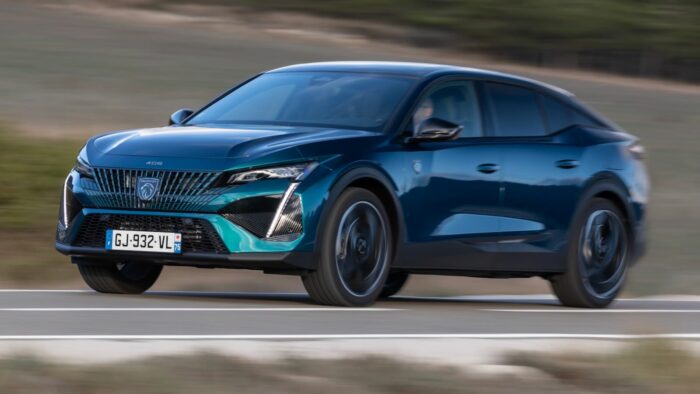
As for the engine, we had already driven it several times. I always say the same thing, that this combination of mechanics, both the 110 CV electric and the 180 CV combustion engine, move the car well by themselves. They are combined with the automatic gearbox, which you can control with the paddles behind the steering wheel and it works smoothly and pleasantly, with very well achieved transitions between gears.
We have driving modes that also modify energy management. From a electric mode, with which we force to move in electric mode, using the energy stored in the lithium-ion battery with 12.4 kWh of capacity (10.2 useful). They told us that it homologates 64 km of electric autonomy according to the WLTP cycle, but it was difficult for us to reach 50… and it will go down if you use it at highway speeds.
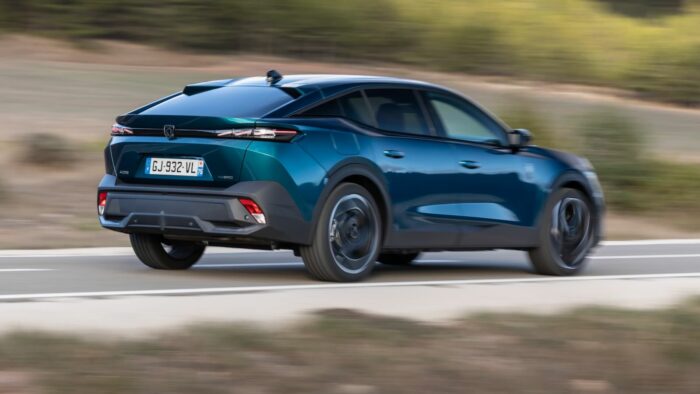
Then it will be time to charge it and for this it has the usual on-board charger in Stellantis hybrids, with 7.4 kW of power in alternating current (it does not support fast charges). In a Walbox of that capacity you can recharge it in less than two hours, which lasts up to six in a conventional socket.
The balance is provided by hybrid mode, which manages the use of both motors always thinking of maximum efficiency. When you want dynamism, you can use the sports mode, which delivers all the power available to both engines seeking maximum performance. You will never run out of battery because the combustion engine is charging it to always have the 225 CV of total combined power.
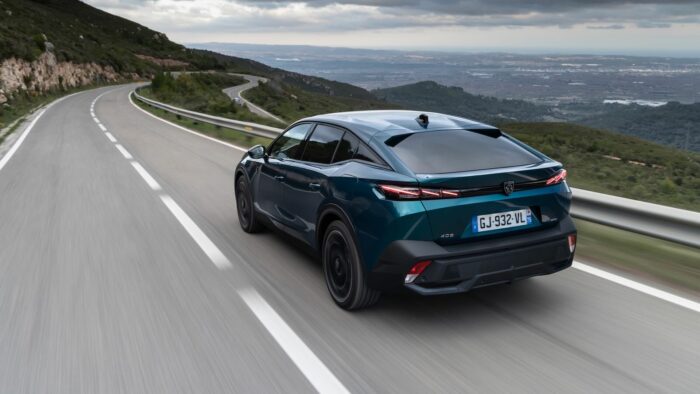
The Peugeot 408 hybrid 225 offers a maximum torque of 360 Nm and achieves interesting performance, since it is capable of accelerating from 0 to 100 km/h in 7.8 seconds. The maximum speed is 233 km/h, although in electric mode it is limited to 135 km/h.
Even at high speeds, I would highlight the soundproofing of this car. Plug-in hybrids excel in this regard, but you don’t get much wind noise either, thanks in part to thicker window glass.
In summary, the Peugeot 408 is a comfortable car, more reactive and dynamic than a C5-X, where it does not have that feeling of buoyancy on the road, without absorbing the imperfections of the road like the Citroën. It’s also not quite as direct as a 308 SW. But it is a good solution for those looking for a car with a good balance between performance, dynamism and comfort.
Opinion cars.com
Who wants such a car? The brand told us that daring people, looking for good rear seats and a more comfortable access to the cabin at the same time. Without a doubt, it offers that point of daring that many of us sometimes demand from brands.
The Peugeot 408 is a car that one seeks more with the heart… because perhaps the reason would push you more to choose the Peugeot 308 SW, with whom it shares a mechanical range, finishes, consumes less, has a little more dynamism… and is cheaper .
Because the starting price of this model is high. It is already a list of all the models we tested. You should also know that the i-cockpit is not for everyone and, to be something so special, we expected another engine in the range or versions with all-wheel drive that could take advantage of that headroom.
Photo gallery:
 1/80Photos
