

The Peugeot Inception Concept is a prototype that, according to the brand, will inspire the brand’s future models from 2025. Its name already indicates this, which comes from the term inceptio (the beginning, in Latin). Also,
The STLA platform is the one on which the Peugeot Inception Concept has been forged. It is the largest platform for electric vehicles of the Stellantis Group and we will see the first models that will reach the market from 2023. And, in the next two years, five new 100% electric models of the brand will arrive. By 2030, all Peugeots for sale in Europe will have this type of propulsion.
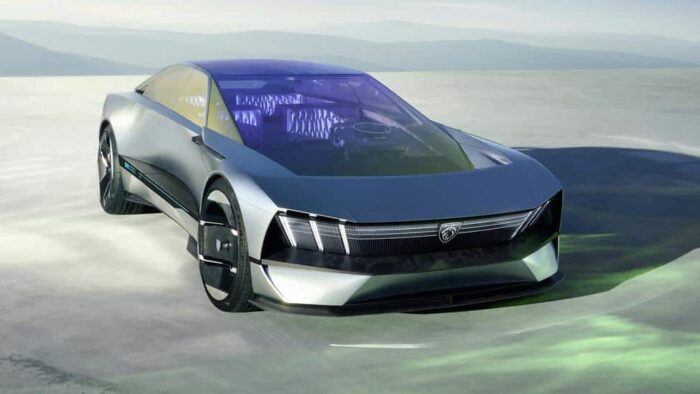
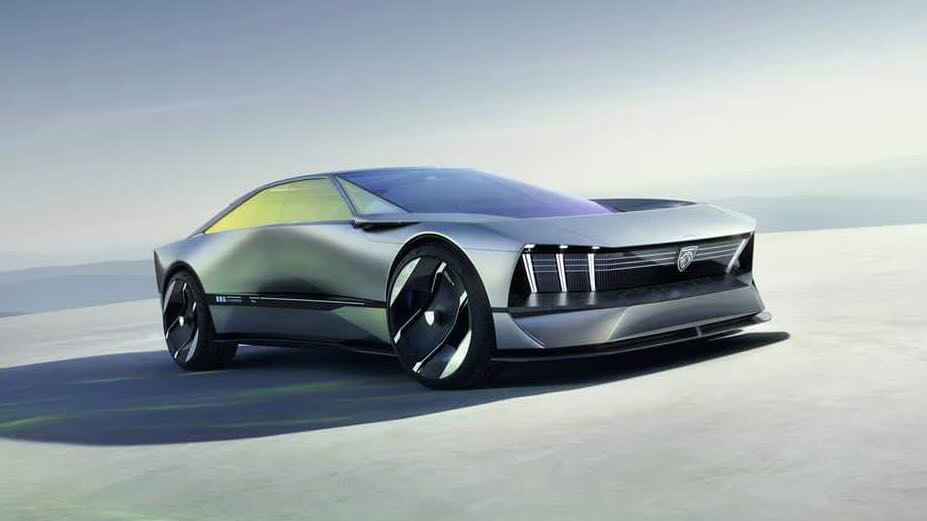
This platform has an 800 volt architecture, a solution that we have already seen in models like the Porsche Taycan or the Kia EV6. Above it, a large saloon comes to life, 5 meters long and barely 1.34 meters high. The silhouette is vaguely reminiscent of the lines of the old Peugeot 504, although
Design details of this “manifesto” that we may see in future Peugeots is the front glass that covers the entire grill, where we find the illuminated lion or the optics, arranged in four modules and three “claws” at an angle of 45º. The large glass surface stands out, in Narima glass (with aerospace technology), especially in the front part, designed as “a glass capsule for the passenger compartment, which sinks to the feet of the front passengers. They are 7.25 square meters of glass.
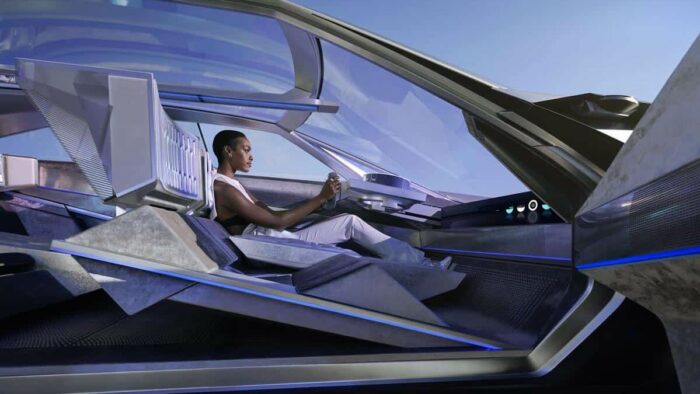
The technical data of the propulsion system is very interesting, with two electric motors (one per axle) that deliver 500 kW (680 hp) power. With them, a Peugeot El Inception could reach 100 km/h from a standstill in just 3.0 seconds. The battery that feeds them is very large, with a capacity of 100 kWh and announces 800 km, with just 12.5 kWh/100 km of consumption (very low). The battery can recover up to 150 kilometers of autonomy in 5 minutes and, in addition to a plug, it can be charged by induction.
Inside there is an evolution of the controversial i-Cockpit driving position (which we saw recently in the Peugeot 408 test and the Peugeot 308 SW test). Its about Hypersquare, inspired by video games. The conventional steering wheel is eliminated thanks to the steering-by-wire technology. Thus, a rectangular controller with cells and a screen in the center comes into play.
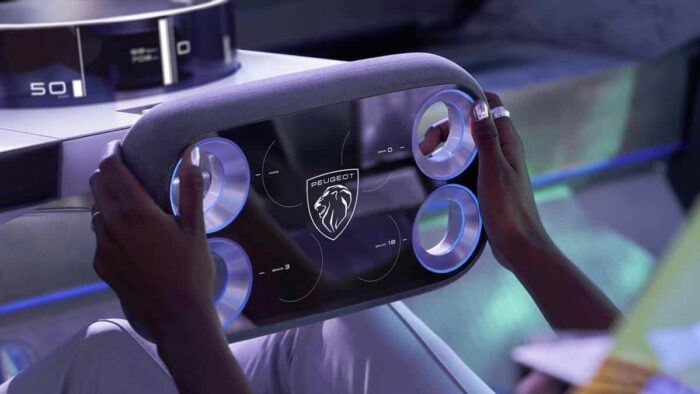
In addition, the Hypersquare has a circular display instrumentation called Halo, which informs the driver and serves to communicate with whoever approaches the car.
Source: Stellantis
Photo gallery:
 1/15Photos
