

If we want to do without the use of oil, the future world will need energy storage solutions. Using lithium ion batteries, with high capacity, has the problem of price and availability of raw material. Now we know of a new sodium sulfur battery design, with four times more energy storage capacity, ideal for grid-scale energy storage.
The sodium sulfur battery falls under the category of molten salt batteries, which have been around in various forms for over half a century. The potential of molten salt batteries to store clean energy is great, due to their relative affordability and reliance on readily available materials.
Typical versions are based on sodium-sulfur chemistry and keep their electrodes at high temperatures to keep the electrolyte in a molten liquid state. Scientists from China and Australia have teamed up to develop their own version, with greatly improved performance at room temperature.
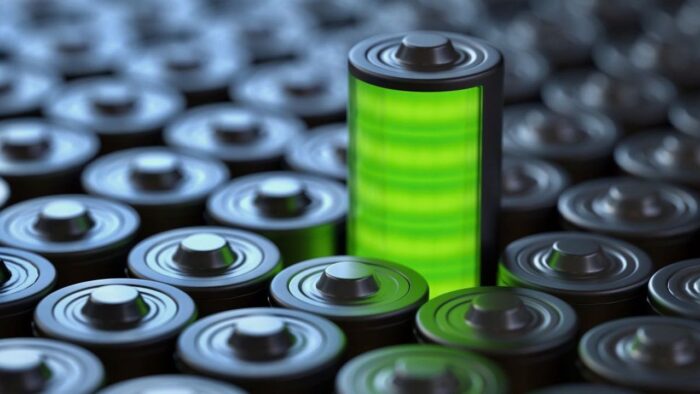
“If the sun is not shining and there is no wind, we need storage solutions that are easily accessible locally or regionally,” said lead researcher Dr. Shenlong Zhao, from the University of Sydney. They hope to provide a technology that reduces costs to achieve clean electricity as soon as possible.
The research team sought to address several shortcomings of current sodium sulfur batteries, such as short life cycles and limited capacities, which make it difficult for them to be practical in commercial applications. They used carbon-based electrodes and a thermal degradation process, known as pyrolysis, to disrupt the reactions between sulfur and sodium.
The result is a sodium sulfur battery with a high capacity (1017 mAh g-1 at room temperature), around four times that of a lithium-ion battery. It demonstrated good stability and retained around half of this capacity after 1,000 cycles, something “unprecedented”, according to the team.
After testing the technology in “coin” cell batteries in laboratory tests, the researchers are now working on “pouch” cell versions to facilitate commercial use.
“Storage solutions that are made using abundant resources such as sodium, which can be processed from seawater, have the potential to ensure greater energy security and allow more countries to join the shift towards decarbonization,” they indicate. from the team.
Via: Advanced Materials
Source: University of Sydney

