

Little by little, manufacturers begin to have a greater variety of electric cars in their ranges. A good example of this is Volkswagen. In 2020 the Volkswagen ID3 arrived, the first electric of the brand with an exclusive platform for this propulsion system. A year later came the Volkswagen ID4, in the fashionable SUV format. Obviously, the next to arrive is the Volkswagen ID5 protagonist of today’s test, specifically the Volkswagen ID.5 Pro Performance.
While its predecessors are, one might say, rational, the ID.5 adds a passionate touch to the ID family. This is the coupe-style body of the ID.4, a type of vehicle that the Wolfsburg firm had not worked on SUVs beyond the Taigo until now.
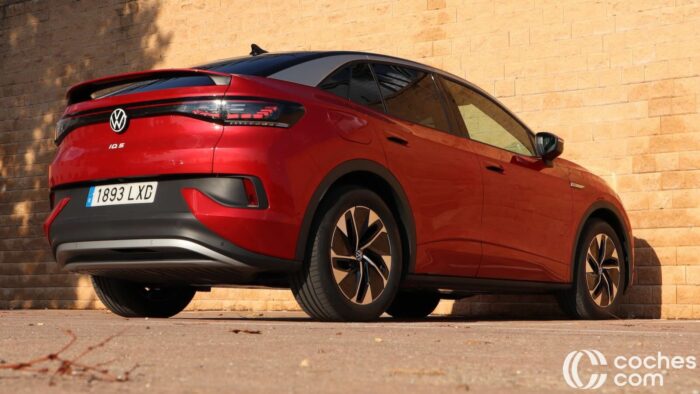
Based on Volkswagen’s modular electric propulsion (MEB) platform, like the ID.4, it has a starting price of 51,100 euros, which means paying about 2,400 euros more than for the ID.4 with the same engine and finish. What does the ID5 offer for that extra cost? Who are your most direct rivals? Is the Volkswagen ID.5 Pro Performance the best alternative in the range? That is what we are going to discover in this in-depth test.
These prices we give do not include brand discounts. You can find Volkswagen ID.5 offers in our new cars section, published by official dealers of the brand. And remember that we have car financing tools that allow you to pay more comfortably for this vehicle month by month.
Exterior
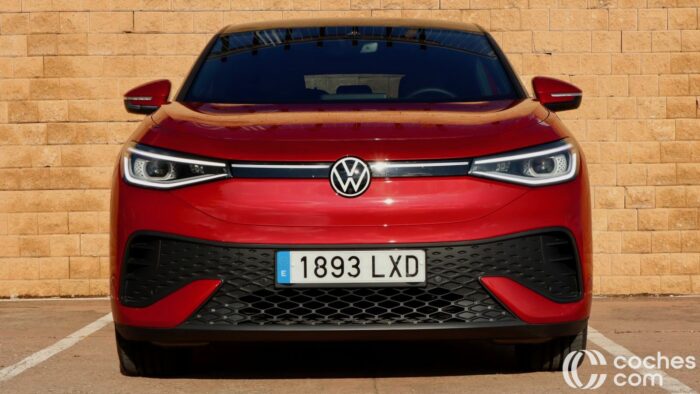
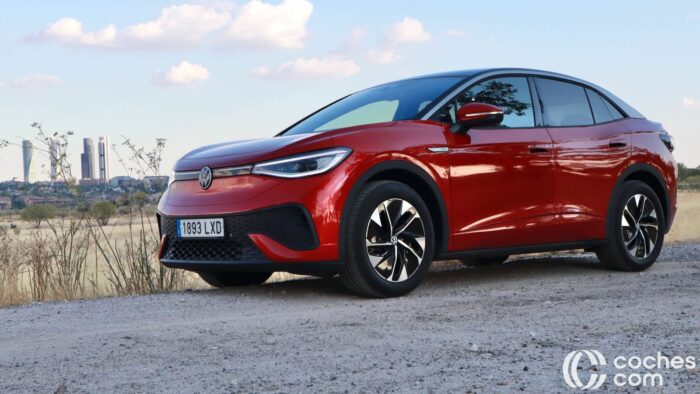
We could say that the ID.5 is the coupe version of the ID.4 and almost everything would be explained, but let’s see details. Both models are almost the same at the front, with identical optics that may have Matrix LED IQ.Light technology, joined with an LED strip. The differences must be found in the lower bumper, with shapes that give it a more sporty air.
It is the lateral silhouette where we begin to see changes with respect to the ID.4. First, a slight change in proportions, with an almost identical wheelbase (19-inch wheels as standard, in the Volkswagen ID.5 Pro Performance version, by the way) but longer front overhang and somewhat shorter rear.
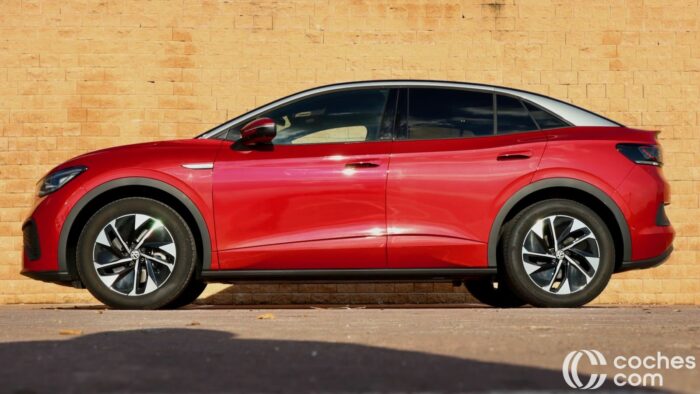
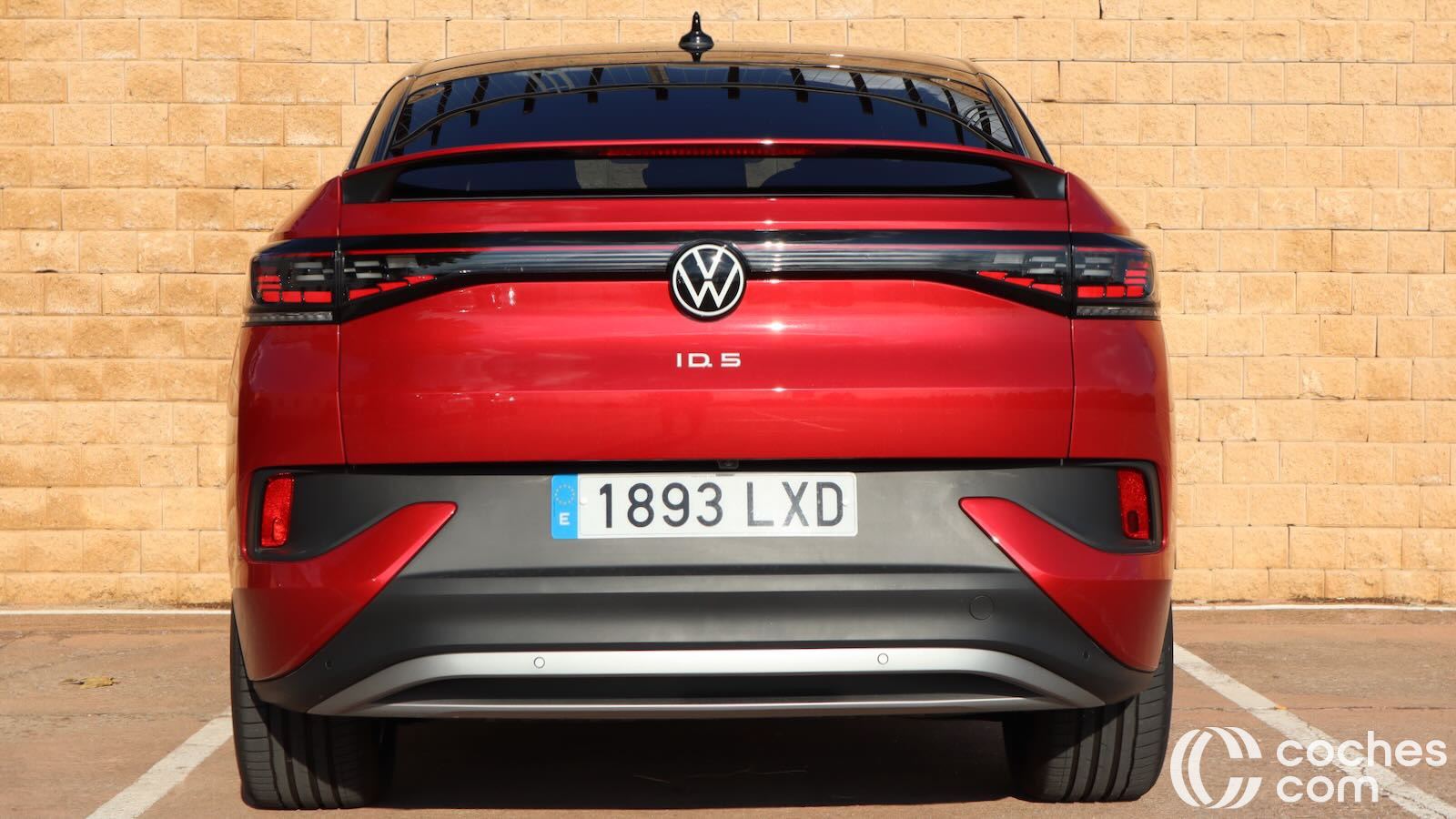
And obviously a slight drop in the second half of the roof, which is not entirely exaggerated. It ends in a spoiler very well integrated into the trunk lid and which runs parallel to a very characteristic lighting signature. The optics are joined by an LED strip, as in the front, and they make a very attractive movement of lights.
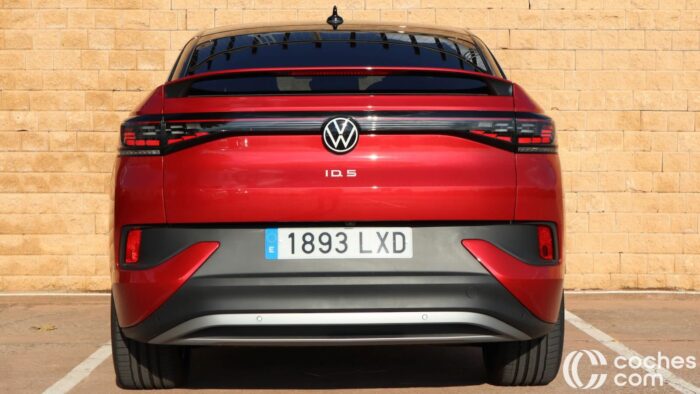
Beyond the silhouette, the greatest disparity with respect to the ID.4 is observed by analyzing its measurements. The Volkswagen ID.5 measures 4,599mm, which means being 15 mm longer. Both are equally wide, they stay at 1,852 mm and this ID.5 is slimmer since the 1,613 mm height means it is 5 mm lower. These dimensions make it somewhat more aerodynamic, with 0.26 Cx, which slightly improves autonomy and consumption. But how does it affect inside? Let’s see
Inside
The seats in the front row of the Volkswagen ID.5 Pro Performance go slightly lower to the ground than those of an ID.4. We still have an SUV-like dominance on the road, but lower is in keeping with its coupe-like approach. There is some loss of headroom, but almost negligible. The seats are really comfortable, with a very successful compromise between firm and soft.
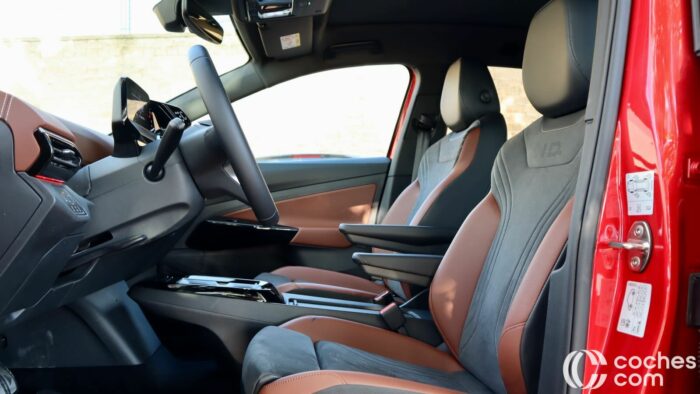
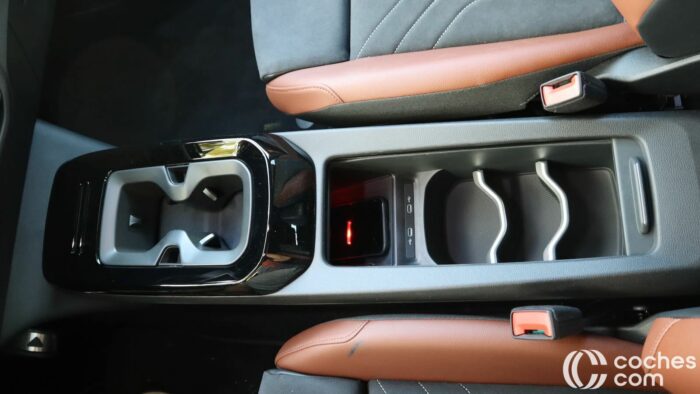
The design of the center console also helps the feeling of roominess in the front part. Very low and released as the gear selector passed next to the steering wheel. It has a practical approach, with drink rests and a large hole to leave objects.
What’s not to like? Well, above all, the piano black at the front. It is a material that gets dirty and damaged easily and that we also have present in the doors. In this sense, as in the ID.4, there are hard plastics in the lower areas, but then good ones in the upper areas. The best, the commitment to recycled plastic materials and skins of non-animal origin.
The worst of the car is common to the entire ID family: betting on a screen that integrates all the functions and completely abandoning the buttons makes it difficult to use. The central screen is 12 inches and with its new 3.1 software the fluidity has improved, but it is still cumbersome to use touch surfaces (and without lighting) to change temperature or volume.
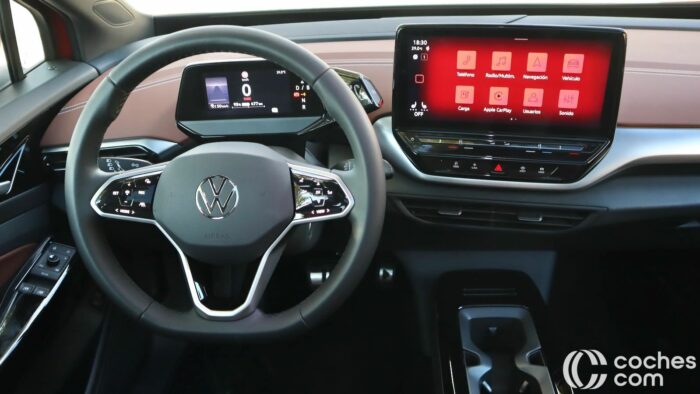
Tactile controls also on the steering wheel, which I have already commented on some occasion that seem to me more imprecise than the physical ones. It is easy to activate them by mistake and that, Volkswagen gentlemen, is a problem. Behind them, the screen of a 5-inch instrument panel, which shows the right information. If we want more, we have to go to the headquarters. You also can’t vary much how you see the information in it.
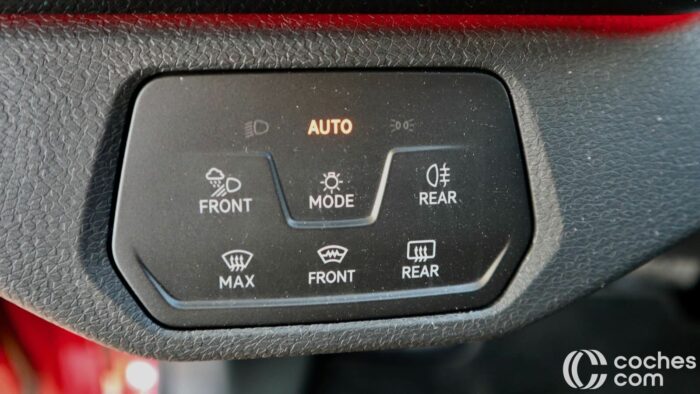
All of these touch controls may be cheaper to make or look better, but they are more cumbersome to use. They distract and force you to look away. The same happens with the light controls or the fact of putting a single control for front and rear windows.
Where coupe SUVs tend to lose some space is in the back row. The brand speaks of 5 mm less. The truth is that there is a sufficient height and that somewhat stretched bodywork is more noticeable when entering the car, since the gap is smaller, than in free height to the ceiling.
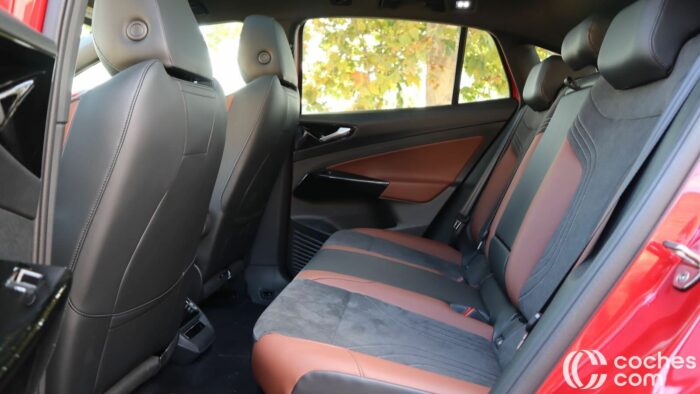
We do, however, have good legroom. And as in an ID.4, three occupants are a little cramped, but it will help to have a totally flat floor to place your legs. At the end of the console we have air vents and two USB-C sockets to recharge a mobile.
Trunk
The trunk capacity is really good, 549 liters, which means that there are 6 more than an ID.4. It also has shapes that make it very usable, a false bottom, perfect for carrying charging cables, and a hole under the floor. Of course, like the Audi Q4 e-tron Sportback that went through our test section, it does not have a trunk in the front, where space is not used well.
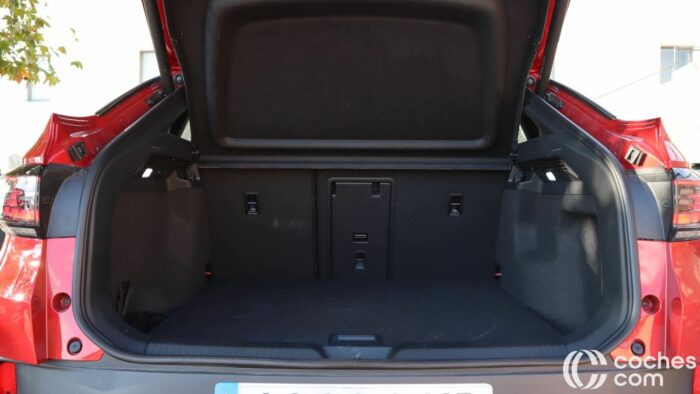
The front trunk is something that the most direct rivals do have, but even so, the Volkswagen ID.5 resists the comparison with the Ford Mustang Mach-E or the Kia EV6, despite the fact that they are cars about 10 cm longer. The Tesla Model Y advertises outstanding cargo capacity, but it’s 15cm longer and they measure trunk to roof.
|
MODEL |
rear trunk |
front trunk |
|
VW ID.5 |
549 liters |
0 |
|
Ford Mustang Mach-E |
402 liters |
100 liters |
|
Kia EV6 |
490 liters |
52 liters |
|
Tesla Model Y |
854 * (up to ceiling) |
117 liters |
The usual details are not lacking, such as hooks to fix a net that holds the load, two light points or a hatch to carry long objects. If you want more capacity, you can fold down the rear seat backs, giving you 1,561 liters of capacity. They are 14 less than an ID.4, here the fall of the roof becomes more evident.
Engine
The trunk of many electric SUVs tends to have a lower height than in their internal combustion counterparts. This is because the engine is located under the floor, in a rear position. Volkswagen offers three variants for the ID.5:
- ID.5 Pro: Delivers 128 kW (174 hp). It accelerates from 0 to 100 km/h in 10.4 seconds.
- ID.5 Pro Performance: With 150 kW (204 hp), goes from 0 to 100 km/h in 8.4 seconds.
- ID.5 GTX: It has the 204 engine from the previous one, but adds another 80 kW (109 CV) to the front axle for a combined power of 220 kW (299 hp) and all-wheel drive. It completes 0 to 100 km/h in 6.3 seconds and a limited top speed of 180 km/h (160 km/h the previous ones).
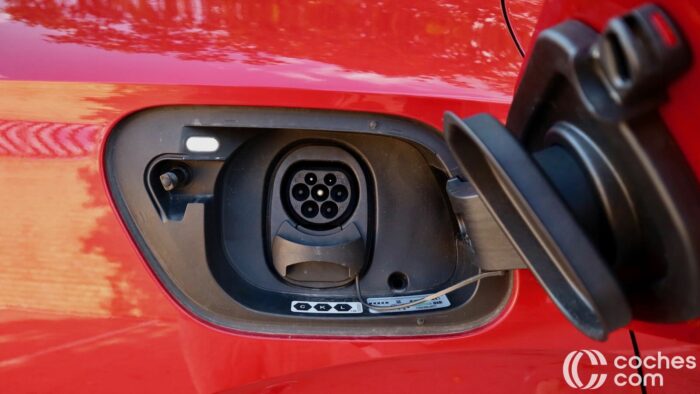
The three versions mount the same battery, with 82 kWh of gross capacity (77 kWh net) and with which they promise autonomies, in this version that we are testing, of 514 km before plugging it in again. Where? Well, in alternating current with the on-board charger up to 11 kW and fast charges in direct current up to 135 kW.
Thanks to better aerodynamics, the car promises consumption of 17 kWh / 100km, slightly better than those of the ID.4 (which certifies 17.4 kWh / 100 km) Do you get it? Let’s check it out.
Behaviour
Everyone thinks about the autonomy of electric cars and it is logical due to the scarce existing recharging network and the problems that you still sometimes encounter. As usual, they are easy to get and improve the consumption approved in the city, but this is a car with enough battery to venture on trips. There the cost rises, around 20-21 kWh, like the ID.4. So it’s time to calculate stops every 350 kmabout.
Otherwise, it’s a very Volkswagen car on the go. The Germans know how to make cars that go well and, above all, they are very easy to drive, with always safe reactions. As usual in electric cars, it gains speed very well from a standstill and the ride comfort is sublime.
This version seems perfect to me. The 204 HP of power and 310 Nm of torque They do not leave you glued to the seat when you accelerate fully, but they are more than enough to move their 2,117 kg of weight and respond with solvency when overtaking. It completes 0-100 km/h in 8.4 seconds and has a top speed of 160 km/h. Enough. The ID.5 GTX will offer you more punch and total traction, which will help in corners.
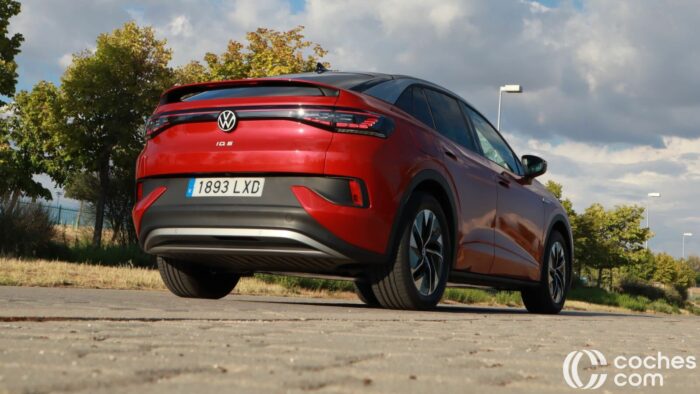
Despite its line, I do not see this car with a sporting philosophy. Of course, there are differences with the ID.4, very subtle. Although, like him, the comfort of the occupants is paramount, simply the fact of sitting closer to the ground makes you feel better how the car flows. I don’t think it’s so much a matter of differences in the set-up of the car, but of how you perceive it while driving it.
The VW ID. 5 has quick steering, which allows it to appear more agile than a conventional SUV, as well as allowing it to maneuver very well in small spaces. The fact that it carries almost 500 kg of batteries in a very low position helps to lower the center of gravity and to be stable, but when connecting curves inertia appears due to its weight and height.
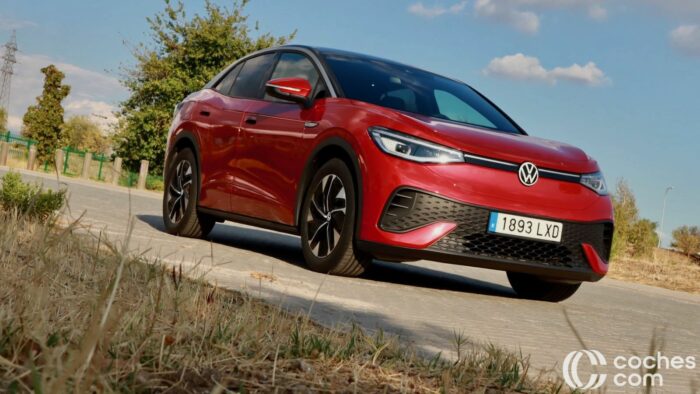
The car offers several driving modes, Eco, Comfort and Sport, which vary the feel of the accelerator a bit and also of the regenerative braking. In Sport mode, for example, it acts more intensely, but without bringing the car to a complete stop when you lift your foot off the accelerator. If that is what you are looking for, it is better to turn the selector and put it in position B, which also serves to recover more energy. I see it practical in the city but somewhat rough on the highway.
Opinion cars.com
What does the ID.5 bring? Well, in addition to an easy rhyme, it is an electric SUV that is easy and safe to drive, spacious and with a trunk and a range that allows you to travel with some planning. Like the ID.4, true, but with that aesthetic plus and differentiation that many people want when they are going to spend good money on a car.
Do you hit? Well, despite the fact that the interior finishes are much better than in an ID.3, it has ergonomic flaws that we didn’t like and that the brand should undoubtedly think about solving in the ID family.
For the rest, its price, despite the fact that it will seem unattainable to many, is competitive. The Kia EV6 is similarly priced and more powerful, and we found it more fun dynamically, but not as comfortable. A Ford Mustang Mach-E or a Tesla Model Y offer more features, but are more expensive matching equipment:
|
MODEL |
Power |
retail price |
|
Volkswagen ID.5 Pro Performance |
204 hp |
€51,100 |
|
Ford Mustang Match E |
269 hp |
€63,800 |
|
Kia EV6 |
229 hp |
€52,500 |
|
Tesla Model Y |
256 hp |
€51,200 |
Another one that is more expensive and uses the same technical base is the Audi Q4 Sportback e-tron, but its target audience aims a little higher. The Skoda Enyaq Coupé and Cupra Tavascan will be two very tough rivals, but for the moment they have not reached the market.
Photo gallery:
 1/56Photos
