

Imagine that you can replace dozens of soldered components with a single module, making huge individual parts. It is not something new, I remember when Apple did something similar with its laptops, made from a single aluminum plate, which avoids the assembly of different parts. This now reaches the automotive sector and with this the manufacture of cars is greatly simplified, reducing costs in some areas by up to 40%.
Tesla has been a pioneer using the giga presses, huge casting machines to make large individual parts, reducing the labor needed per unit, including robots (which don’t get tired, but cost a ton). One such module can avoid soldering or otherwise joining up to 60 components. Without a doubt, it helps to be one of the most profitable manufacturers on the planet.
In a context like the current one, with rising new car prices and galloping inflation in raw materials, is this a solution that can help the industry preserve its profit margins and continue to offer affordable products to the majority?
What is a Giga press?
The term Giga press (Giga Press) was coined by the CEO of Idra, Riccardo Ferrario, when he received the first order for an OL 5500 CS HPDC machine, in May 2019. In fact, it already has its own entry on Wikipedia.
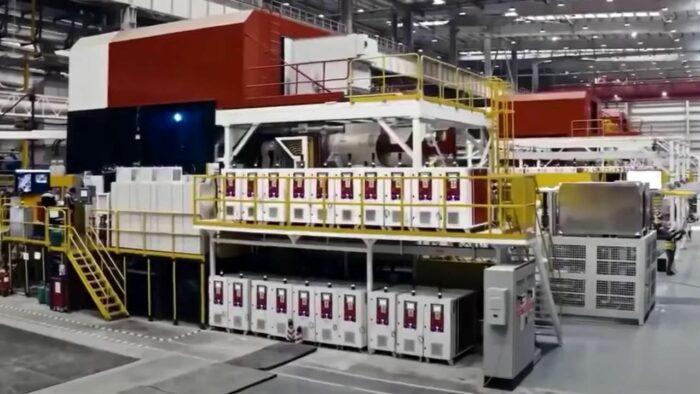
Its operation is very simple, since it involves forcing the molten metal alloy into a reusable mold. That mold is then opened to remove the finished piece, once it has solidified. After cooling the mold, it is cleaned with robots and after a couple of minutes the next cycle begins. Molten aluminum is injected into the mold at a speed of 10 meters per second, to produce up to 500 pieces in one day.
Then “barely” you have to cut the casting, measure, verify that there are no imperfections and send to machining for the last adjustments. It sounds simple, but you have to melt the aluminum ingots and scraps in an oven at 850º until it becomes liquid (natural gas is used). And you have to be careful with oxides and eliminate impurities throughout the process.
Idra Group is an Italian company that was absorbed by the Chinese group LK Industries in 2008. It has been developing Giga presses since 2016. They are not the only ones that manufacture them in the world. In Europe we find the Bühler Group, in Japan Ube or Shibaura and in China others such as Yizumi and Haitian.
The Giga presses in the automotive industry
Actually, Giga presses can make huge parts for anything, but it’s automotive that’s making them known. Tesla bought the two largest Giga presses in the world in April 2020. Their goal is to cast the rear chassis and the guard rails of the Tesla Model Y in one piece. In the words of Elon Musk, with this machinery they are “trying to make full-size cars in the same way that toy cars are made.” . Literally.
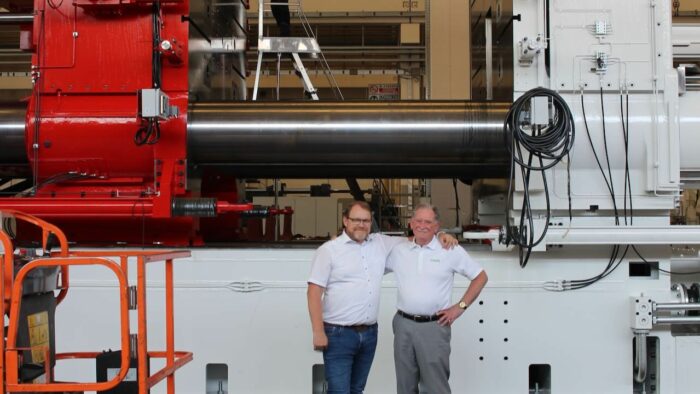
A year and a half later, it already had eleven units in its factories in Shanghai, California, Berlin and Texas… as well as space prepared for more. Because they occupy theirs. Idra has Giga presses of different sizes, from 19.7 x 7 x 6 meters to 22 x 8 x 6.5 meters (like a small house). With a wild closing force, ranging from 5,500 to 9,000 metric tons. The latter was sent to Tesla to manufacture its Cybertruck.
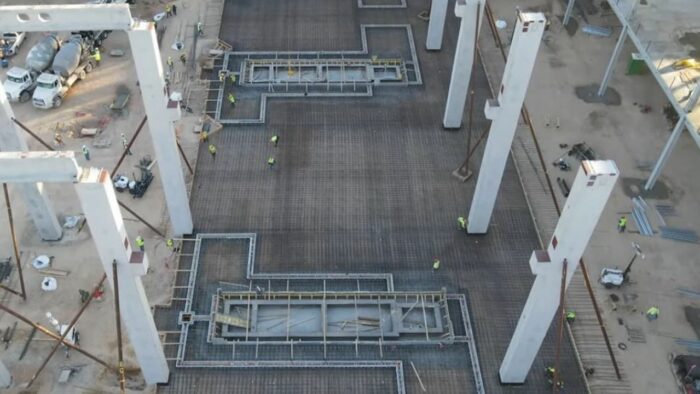
The biggest pieces that come out of those giant presses are 2.2 meters wide. These are now mostly used for the front and rear frames, but work is underway to add center deck castings incorporating battery boxes.
It is a technology that undoubtedly simplifies the car production process. If today in an electric car the battery pack represents between 25 and 40% of the cost price, it will be necessary to try to make the rest cost less. After the engine, the second most expensive component of the car is the chassis. And Riccardo Ferrario assures that his machines can save 30% of the cost. It does not sound unreasonable if we look at the figures that Tesla gives. They assure that in their factory in Germany they produce a Model Y in 10 hours, three times faster than their rivals.
This is what makes the business go up. According to an analysis by consultancy AlixPartners, the global aluminum die-casting market reached $73 billion in 2022. It is expected to exceed $126 billion by 2032. This will encourage more aluminum to be used in cars. It is a highly appreciated material for its lightness and is used in many parts, such as engines. In 2019, 179 kg were used and its use is expected to increase to 200 kg per car in 2025, according to a study by European Aluminum.
Giga press problems
From Idra they assure that 80% of manufacturers will use this die-casting system for future electric car platforms. Why not do it if it saves so much cost? We have read that Volvo plans to establish it and it is said that Idra has contracts with other car manufacturers and components beyond Tesla (there is talk of Toyota, General Motors, Hyundai, or Nio).
The doubts, in the words of manufacturing experts, are the risks of quality and flexibility. A single defect can completely compromise a module and make it difficult to repair if something goes wrong. You cannot fail in the initial design as there would be no going back. It is not the same to fail in the design of a part that is going to be installed over another in an assembly line than in 60 at the same time.
It would also hinder future improvements to a vehicle, since financially these parts will be very complex to amortize… unless they are repeated over and over again in different vehicles, as demonstrated by the use of the same platform in different makes and models.
In fact, Volkswagen had considered die-casting for its future Trinity model… but has delayed the project until at least 2030. The automotive industry tends to be conservative and it is difficult to alter established processes, sometimes decades old… but will it be late for this new constructive way?

