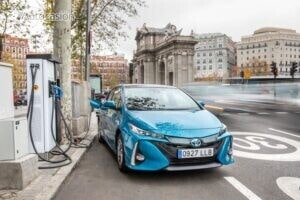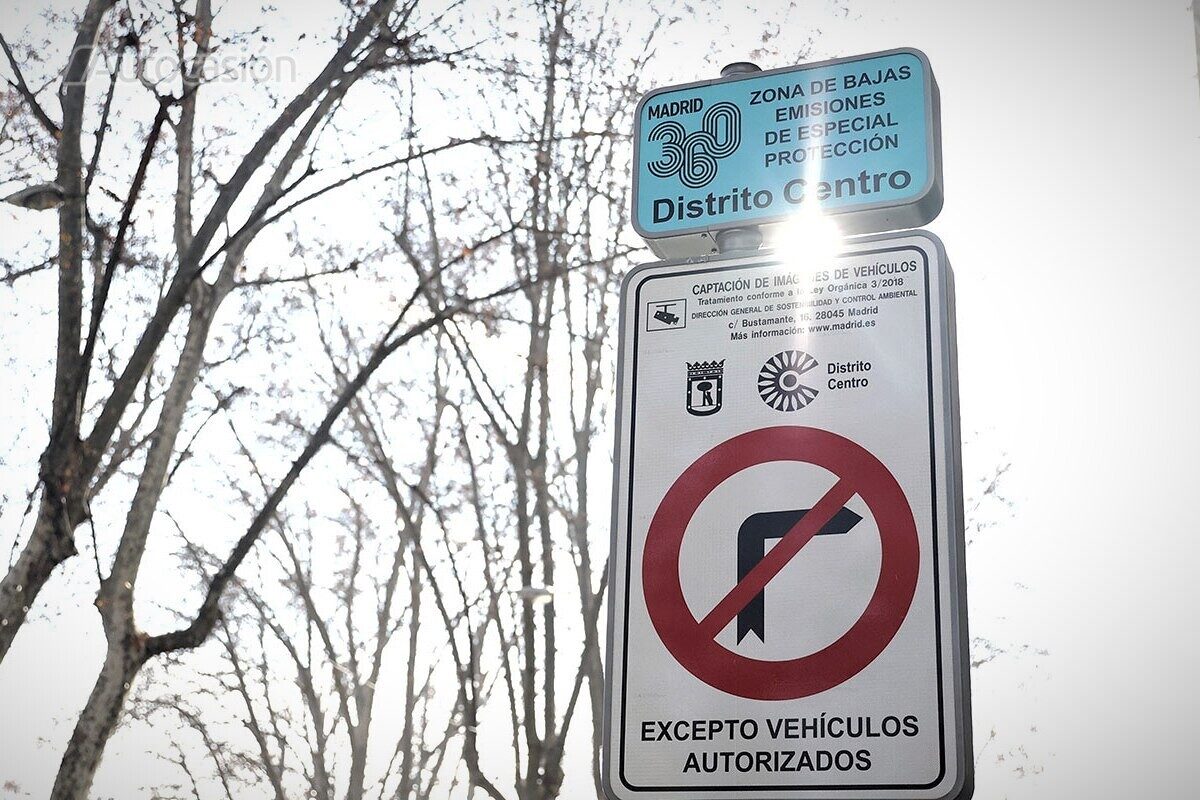
4 photos
 christian garcia
January 24, 2023
149 Spanish cities are required to have at least one LEZ or Low Emission Zone since January 1. How does this new rule affect you when moving around your municipality?
The Climate Change and Ecological Transition Law that the socialist government, pushed by the demanding European regulations, approved in 2021 requires since January 1 all municipalities with more than 50,000 inhabitants to place a Low Emission Zone (ZBE) to reduce vehicle pollution in their urban centers. This will affect, to a greater or lesser extent, the citizens of no less than 149 Spanish municipalities, due to the fact that only models with an environmental label can be accessed in these LEZs. But… what is an LEZ? Which cities will have a LEZ? Can they fine me? Will there be a moratorium? Let’s go in parts…
It may interest you: 5 cheap cars to enter cities with ZBE
What is an LEZ
In accordance with the provisions of article 14.3 of the aforementioned law, which includes the establishment of these zones, ZBE is understood to be the area delimited by a public Administration, in exercise of its powers, within its territory, of a continuous nature, and in which restrictions on access, circulation and parking of vehicles are applied to improve air quality and mitigate greenhouse gas emissions, according to the classification of vehicles by their level of emissions in accordance with the provisions of the current General Vehicle Regulations.
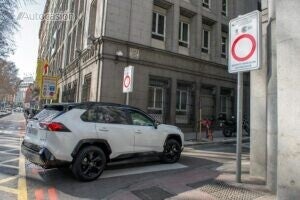
We are talking, therefore, of a metropolitan perimeter that is protected from the most severe vehicular pollution and that is controlled by cameras that sanction offenders with up to 200 euros fine (halves with prompt payment.) Each access to said perimeter is properly communicated and signpostedalthough it is convenient to go with 100 eyes because it is not difficult to get confused or make a mistake and end up accessing the tumult that is assumed in a big city.
Cities with Low Emission Zones: do they work in all?
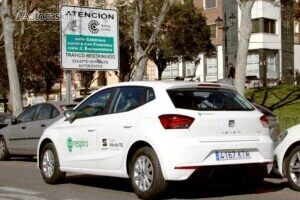
Below, we detail the list of Spanish cities with more than 50,000 inhabitants that should have a LEZ up and running by 2023. As we will see later, not all of them still have one…
- Andalusia: Alcalá de Guadaira, Algeciras, Almería, Benalmádena, Cádiz, Chiclana de la Frontera, Córdoba, Dos Hermanas, El Ejido, El Puerto de Santa María, Estepona, Fuengirola, Granada, Huelva, Jaén, Jerez de la Frontera, La Línea de la Concepción, Linares, Málaga, Marbella, Mijas, Motril, Roquetas de Mar, San Fernando, Sanlúcar de Barrameda, Seville, Torremolinos, Utrera and Vélez Málaga.
- Aragon: Huesca and Zaragoza.
- Asturias: Avilés, Gijón, Oviedo and Siero.
- Cantabria: Santander and Torrelavega.
- Castile and Leon: Ávila, Burgos, León, Palencia, Ponferrada, Salamanca, Segovia, Valladolid and Zamora.
- Castilla la Mancha: Albacete, Ciudad Real, Cuenca, Guadalajara, Talavera de la Reina and Toledo.
- Catalonia: Badalona, Barcelona, Castelldefels, Cerdanyola del Vallès, Cornellà de Llobregat, El Prat de Llobregat, Lleida, Manresa, Mataró, Molet del Vallès, Reus, Rubí, Sabadell, Sant Boi de Llobregat, Sant Cugat del Vallès, Santa Coloma de Gramanet , Tarragona, Terrasa, Viladecans and Vilanova i la Geltrú.
- Madrid’s community: Alcalá de Henares, Alcobendas, Alcorcón, Aranjuez, Arganda del Rey, Boadilla del Monte, Collado Villalba, Colmenar Viejo, Coslada, Fuenlabrada, Getafe, Leganés, Madrid, Majadahonda, Móstoles, Parla, Pinto, Pozuelo de Alarcón, Rivas Vaciamadrid, Las Rozas, San Sebastián de los Reyes, Torrejón de Ardoz and Valdemoro.
- Valencian Community: Alicante, Alcoy, Benidorm, Castellón de la Plana, Elche, Elda, Gandía, Orihuela, Paterna, Sagunto, San Vicente del Raspeig, Torrent, Torrevieja, Valencia and Villareal.
- Estremadura: Badajoz, Caceres and Merida.
- Galicia: A Coruña, Ferrol, Lugo, Ourense, Pontevedra, Santiago de Compostela and Vigo.
- Balearic Islands: Calvià, Ibiza and Palma de Mallorca
- Canary Islands: Arona, Arrecife, Grandilla de Abona, Las Palmas de Gran Canaria, San Bartolomé de Tirajana, San Cristóbal de La Laguna, Santa Cruz de Tenerife, Santa Lucía de Tirajana and Telde.
- The Rioja: Logrono.
- Region of Murcia: Cartagena, Lorca, Molina de Segura and Murcia.
- Navarre: Pamplona.
- Basque Country: Baracaldo, Bilbao, Getxo, Irún, San Sebastián and Vitoria.
- The Autonomous cities from Ceuta and Melilla.
In total, it is estimated that some four million vehicles without a label will be affected by the entry into force of all these LEZs. Now at the end of January are only operational or in working condition 20: Madrid capital, Barcelona, Pamplona, L’Hospitalet de Llobregat, Sant Cugat, Cornellà de Llobregat, Pontevedra, Seville, Córdoba, Burgos, Talavera de la Reina, Ciudad Real, Algeciras, San Cristóbal de la Laguna, Melilla and the municipalities of Madrid from Alcobendas, Coslada, Fuenlabrada, Parla and Rivas. This leads us to think of a possible moratorium that would obviously be well received by the vast majority of city councils and users. However, the Executive would not be for the work… and the truth is that in Europe they would not see it very favorably either.
Even so, some consistories such as Valladolid have already warned that they would regulate their own ZBE with exceptions, such as allowing access to cars without a label in the lowest rents. Also, for the moment, residents in such perimeters they also have free access no matter what year your car is or how many harmful particles it emits.
LEZ types
Madrid is a good example to enumerate the existing LEZ types. There are the LEZs themselves, such as the M-30 and everything inside it. There are also ZBEDEPs (Zone of Low Emissions for Special Protection) whose objective is to protect the health of the most vulnerable population (elderly and children, above all). In the capital there are two, the one in the Central District and the one in Plaza Elíptica. In other municipalities such as Rivas-Vaciamadrid, a school ZBE has been created. Also, it is planned possibility of establishing temporary ZBE in extraordinary episodes of high pollution.
Remember! Which cars can access LEZs and which ones cannot?
Only cars classified by the DGT with the environmental stickers B, C, Eco and 0 Emissions can cross the limits of a ZBE, the last two being the ones with the most preferences (tax discounts, discounts on public parking spaces, etc.) On the contrary, the cars that do not have a label (those classified as type A), which are gasoline registered before 2001 and diesel registered before 2006they do not have permission to access any LEZ.
In the case of motorcyclesthe margin is set in the year 2003 (those registered before that date count as type A.)