

Launched globally in 2020, the peugeot 208 now presents its first major redesign in Europe, the one that echoes the changes already released in 2008. It seems like a short time, yes it is, but Peugeot has moved very quickly with its new brand image, so the 208 cannot be left behind.
Peugeot 208 2024: the exterior restyling
The changes to the exterior are focused on both ends, especially in the lighting, the most notable being the change from the LED fangs to a luminous trio of claws.
Other novelties are in the grill that shows off the new logo of the brand and grows monopolizing the lower air intake (the one that looked like the Mazinger shield). It also changes the LED lighting of the main headlights.
On the back stands out the nomenclature Peugeot written with the brand’s new typography and LED lighting now with three horizontal strips (or claws as the brand likes to say) instead of the previous vertical ones.
Peugeot 208 2024: the interior restyling
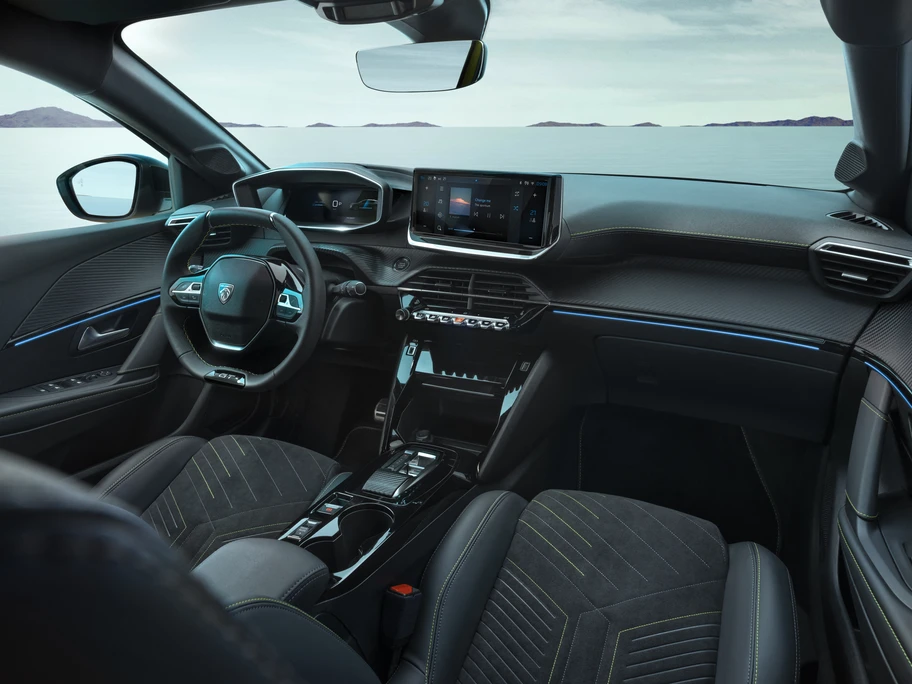
The 208’s cabin remains largely unchanged. If they change the interface of the instrument cluster and the new multimedia system, on a screen that will remain 10″ for the entire range, at least in Europe.
Other details of the renewed Peugeot 208 are:
- New upholstery, including Alcantara (depending on the version)
- New knob for manual gearbox
- Faster wireless charger (15w instead of 5w on the previous model)
- Wireless Android Auto and Apple Carplay
- New USB ports: two of type C on the front and one of type A on the back
Peugeot 208 2024: mechanical update
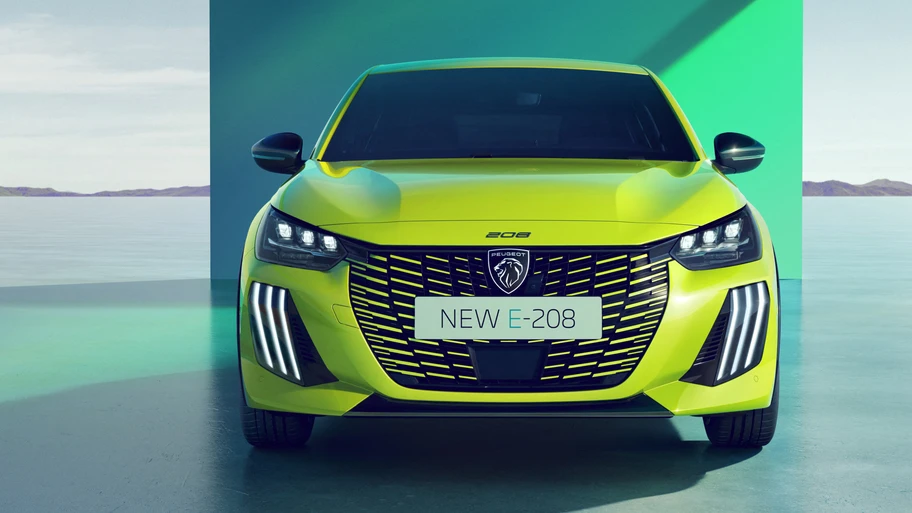
The European range of the B hatchback includes two petrol variants, two hybrids and one electric:
- 74 Hp, 87 lb-ft 1.2L 3-cylinder with 5-gear manual gearbox
- 99 Hp, 151 lb-ft 1.2L 3-cylinder turbo with 6-speed manual gearbox
- Hybrid 100 and 136 microhybrids with AT6 transmissions and a dual sixth clutch e-DSC6
- e-208 100% electric that goes from 134 Hp (100 kW) to 154 Hp (115 kW) keeping the same 192 lb-ft
The battery of the electric version has no major changes in its capacity (54 kWh) for a range of 400 km (WLTP cycle) and allows charges of 7.4 kW (almost 5 hours), 11 kW three-phase and 100 kW continuous to go from 20 to 80% in less than 30 minutes.
Do you like the changes to the 208?

