

Walking around looking at shop windows, and deciding to go into a store when a garment attracts attention, is an activity that is increasingly being replaced by an infinite scroll on web pages, or social networks, where only a few clicks are needed to purchase a product. Comfortably from the sofa at home, or even the office computer, without being cold in winter, hot in summer and with the time savings of not queuing, or hunting for a free space in the parking lot of a center commercial. Said like this, it seems that they are almost all advantages, but where is that experience of having the product in your hands Or be able to ask questions to the sales assistants, for example? is it really the same spend 10,000 euros on a watch from your mobile phone than in a store in which the buyer is showered with attention, from the moment a person opens the door for him to enter?
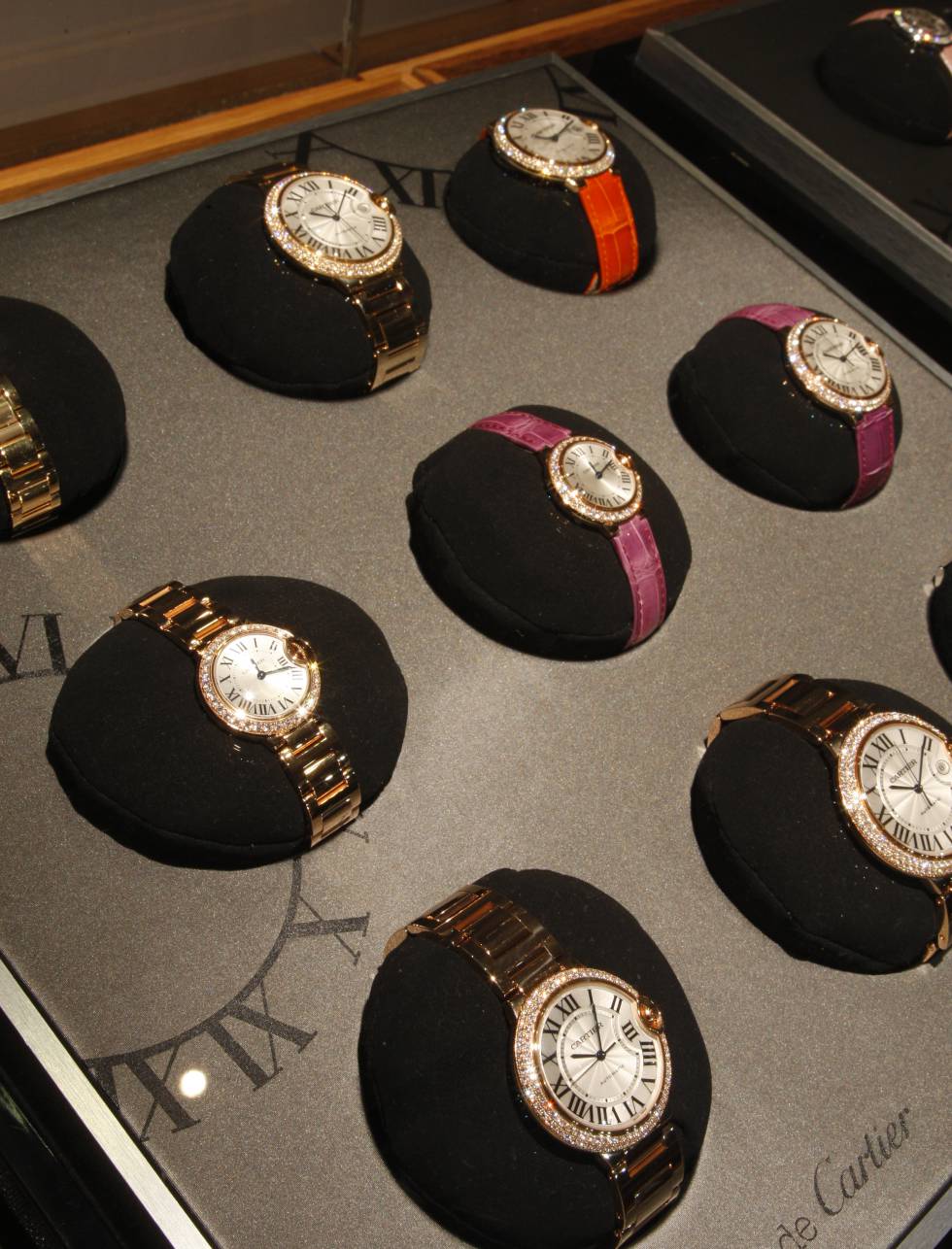
For customers of Cartier it seems not. This is reflected in his data. He e-commerce accounts for only 8% of sales, a figure that has not grown even after the closure of almost 80 points of sale around the world, as explained by Santiago Asensio, the brand’s communication manager in Spain, at a round table organized by Isdi, a business school specializing in digital transformation. . “The challenge is how to manage to grow in a very important door such as online commerce, what tools or resources to provide it with so that the customer feels that they can continue buying”, asked Asensio.
If in Cartier they do not reach 10% of sales, in Jaguar Land Rover Iberia is that directly “online sales do not exist to this day”, as recounted by Félix Olavarrieta, its marketing director. “In the end, a man who buys a Range Rover for 200,000 euros wants to be able to touch it, smell it, hear it and feel it,” he added.
precisely the impossibility, for now, of being able to smell through the internet makes perfume sales encounter a barrier in online commerce, according to María Benito, manager of L’Oréal Luxe perfumes, with whose words Sergio de León, deputy general manager at Loewe Perfumes, agreed. “A fragrance is an emotion, a dream, memories. We are taking a step forward with devices that measure your emotions, and based on that, they recommend fragrances to make you feel good”, explains Benito.

The importance of the human factor
What technology does allow is, for example, finding the location of a restaurant and reading the reviews of other diners before going. However, many luxury hotel guests still prefer to ask concierges of this type of establishment, as recognized by Carolina Bao, senior marketing manager at the five-star The Madrid Edition. In the same way, although technology can be a differential factor in the services offered to the person staying at the hotel, it does not play such an important role when it comes to selling, as reflected in the fact that in luxury hotels only 20% or 25% of reservations are made directly online. “The purchase is made mostly through a third party, an agency to which the client goes and which tailors the trip. Human contact is still very important to convince these intermediaries to recommend our hotel. We invite them to eat, to sleep and for them to live the experience, because if they don’t live it, they don’t recommend it”, he added.
Yes, digital channels have played a fundamental role in the luxury sector when customers less accustomed to going to stores of expensive products Lose the fear of entering the physical establishment, maintains Asensio, using the case of Cartier as an example. “The person first forms by looking at the price on the web, and when she is sure, she goes through a door that she previously considered a barrier.” Jaguar Land Rover customers are in the same line, which, according to the data provided by Olavarrieta, in 95% of cases have a first contact with the company through the digital channels of their brands.
And just as shoppers use technology to learn more about the product, brands use it to collect data and learn more about their customers. For one, it allows them to anticipate and deliver a better experience, as Bao exemplified. “It happens with the people who are in the membership programs. The idea is that when that person comes back, you already know what he wants. Before I arrive at the hotel, you have already offered them a transfer. Or you know that he loves a specific wine, and amenities you put a bottle People want to feel recognized.” On the other hand, knowing almost in real time what interests consumers allows companies to act faster and detect demands, “when before you had to call the dealers,” says Olavarrieta.
The luxury in social networks
With new technologies came social networks, a channel in which brands are almost forced to have a presence, even if their current customers are not. This is what happens, for example, with Cartier and the campaign it has launched on TikTok, a network where young people predominate. “If you don’t connect with them now, after ten years they won’t come to buy,” Asensio said. What all the round table participants agreed on is that if a luxury company chooses to have profiles on social networks, you need to dedicate a lot of resources, because the treatment that you have to offer to the people who contact you through this means must be up to the expectations of your brand image. “They allow you immediate communication. Giving a clear and direct answer is the first step in a luxury experience”, affirmed Asensio.
The potential for selling offered by a social network was exemplified by De León when he explained that “a consumer in Osaka who sees a product on Instagram is able to place an order in Madrid and have it arrive in 10 days”, thanks also to advances in the logistics sector. However, although a good adaptation to the digital ecosystem is very important for luxury brands, De León defended that the product is still the trigger for growthespecially in the case of Loewe, “where craftsmanship is so important”.
One of the unknowns that hover over luxury brands, and that seems to not be resolved in a short period of time, is knowing What will the customer be like in five or ten years?, if young people will change the way in which it is consumed. “The challenge is how to transfer that experience with the human factor to the digital part. And the truth is that I still don’t have an answer”, Bao summarized about a sector, that of luxury, which accounts for 4% of European GDP and employs more than two million people.

