

China is the country that is giving the most talk in the automotive industry. Normal. For a decade it has been the world’s leading market and to serve it, European factories have moved a good part of their production there. For the Chinese domestic market and, in the case of some models, with exclusive global manufacturing.
Together with Tesla, today China dominates the manufacture of electric cars and also the development of their technologies. European brands do not get, for now, similar products at competitive prices and it shows in the market. The strategy of many of them is to stretch the production of cars with a combustion engine, which leave profits to later reinvest in electrified products. But it looks like that, at least in China, is going to be a problem.
The Asian country is about to enter into force the emission regulation 6b. Specifically, on July 1. It is an evolution of the current 6a, which began to be applied in 2020 with the aim of making new cars sold cleaner. Something similar to the laws that the United States or Europe has (here we now have the euro 6d-Temp and in September the euro 6e arrives).
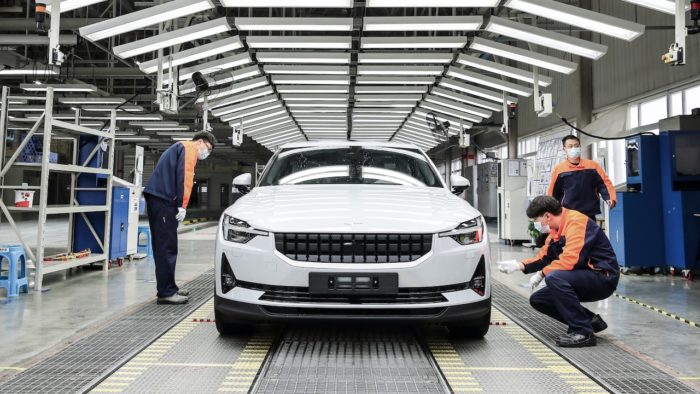
The Chinese standard makes the current one much tougher, with maximum NOx limits that drop by half compared to the current ones. Selling combustion cars is going to get more complicated in China, at least cheap, without the proper emission control systems (which make vehicles more expensive).
The problem is that manufacturers (especially European) have a number of cars manufactured that do not meet this future standard. And in just a month, they won’t be able to sell them. This, despite the fact that the CADA (China Vehicle Dealers Association), seeks a six-month moratorium, to delay the entry into force of the month beyond July 1. In recent months, car sales have been enormous, something similar to what happened in Spain with cars that were going to go up in price a few years ago, forcing the WLTP regulation to be delayed (they went to a new section of the registration tax, when measured emissions more accurately).
China, launched by the electric
Sales of electric cars in China already account for 25% of the total. They have doubled the market share in just two years, since in 2021 they were 13%. The majority of local brands have decidedly opted for this new technology and have achieved that brands like Tesla have had to lower prices so that their cars remain competitive.
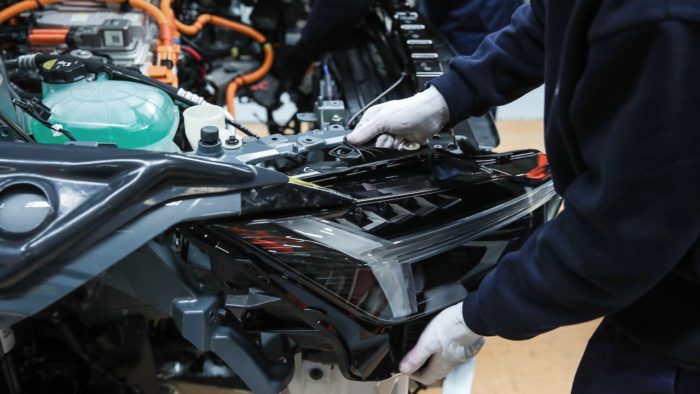
Be careful, Chinese brands have also been pushed to lower the prices of their vehicles to give them an outlet, but it is the European ones, above all, that have been most affected. What was once a thriving market for selling cars with amortized powertrain technologies (anti-pollution laws were laxer than in Europe) is now punishing manufacturers.
The French brands that operate in China register sales falls of more than 40%, the German ones 21% and the Korean ones 22%… It is true that they were warned of the arrival of this standard for a long time, but the turn to the electric car , with annual growth of almost 90%, has caught them by surprise and without vehicles of this type at a good price.
Europe… towards the same point with Euro 7?
Europe is currently waiting for the Euro 7 standard to materialize in figures, which must enter into force the July 1, 2025 for passenger cars and vans (July 1, 2027 for trucks and buses). And there is trouble. Because a large part of the industry and society believes that this intermediate step does not make sense before 2035, the year in which only cars without local emissions (or with synthetic fuels, following the German request) can be sold.
Applying a stricter anti-pollution standard would have two problems:
- Combustion engine cars would be more expensive and access models would have to stop being sold.
- The industry could not focus its investments on the electric car.
There are already eight European countries that have united against Euro 7 with these arguments. It would be offering the market to manufacturers that today have – it is fair to admit – the most advanced technology for electric propulsion, batteries and all the adjacent industrialization… without giving time for the reconversion of the European automobile industry.
Via: NBD

