


2 photos
 christian garcia
November 11, 2022
Oil companies have spent years developing new renewable fuels to achieve carbon neutrality without the need to electrify 100% of the circulating fleet. Some are already on the street…
One of the barriers to electric and electrified cars, without a doubt, is their high price, but there are others that are no less important, such as the charging infrastructure or the time required to obtain maximum autonomy. For this reason, among other things, it seems practically impossible to imagine a mainly electric European or Spanish car fleet in the short or medium term. However, thanks to the research and development work carried out by oil companies such as Repsol, it will be possible to continue driving combustion vehicles, getting ever closer to the long-awaited emission neutrality.
If you drive a diesel car, this is what awaits you in the coming months
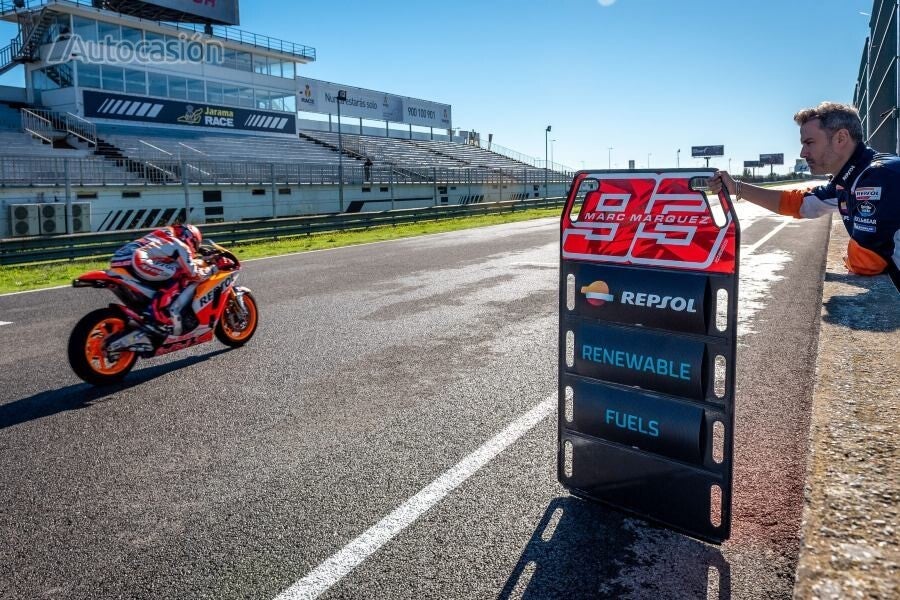
A good example of these renewable fuels It is the one that Marc Márquez has been able to test this week at the Jarama Circuit. Competitions are not exempt from environmental measures and, given that they must also guarantee sustainability, MotoGP will switch to using a compound fuel with no less than 40% biofuel in 2024, a figure that will reach 100% in 2027. The best of all is that, in addition to the immense benefit they will bring to our planet, these fuels will not imply any perceptible difference to the user or additional wear on mechanical parts and components.
Sustainable fuels to reduce emissions
2 photos
In the words of the eight-time World Champion, it is impossible to appreciate any difference in terms of performance between that first evolution that came out of the Repsol Technology Lab in Móstoles and the current fuel used by his motorcycle. The same thing will happen in our cars when they arrive at the gas stations… which will arrive in no time. In fact, construction is already underway on the first advanced biofuel plant in Spain, which will be in Cartagena, and on one of the world’s largest synthetic fuel plants in Bilbao. The total investment exceeds 300 million euros, but they will be essential for heat engines do not disappear.

