

Two and a half years since it was released, the Volkswagen ID.3 is renewed, taking into account some criticisms made to the product, but also adding more technology that allows the model to remain competitive in its segment. Although the brand presents it as “the new ID.3″ and even with the last name “Gen II“, actually it is a facelift.
Imelda Labbé, Member of the Board of Management of Volkswagen Sales, Marketing and After Sales: “With the second generation of the ID.3, we continue the success story of the ID. The design has matured and the interior materials have been significantly improved. The new ID.3 demonstrates our clear commitment to quality, design and operability, and we have consistently taken our customers’ wishes into account.” The new ID.3 is one of the ten electric models that Volkswagen will launch between now and 2026.
Volkswagen ID.3 2024: what does not change
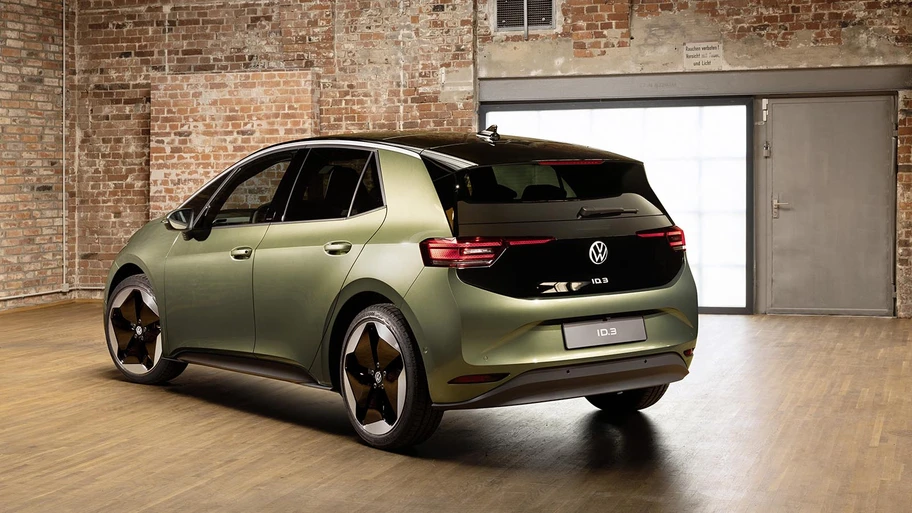
The first thing is that there are no changes in its motor offer. That is, we have a 201 Hp (150 kW) engine and 229 lb-ft of torque, which allows it to accelerate from 0 to 100 between 7.9 and 7.3 seconds, depending on the version chosen. The top speed is 160 km/h. There are also no changes to the battery options, be it a 58 kWh (426 km range) or 77 kWh (546 km range) pack.
The ID.3 supports charging systems up to 170 kW (120 kW on the Pro model) which could eventually generate charging times of half an hour only to complete 80% of the batteries’ capacity. Obviously that time will be less in less powerful chargers.
In the future, the ID.3 may be enabled to have bi-directional charging, with which you can charge a house, a car or some devices.
The second thing that does not change are the dimensions, with 4.21 meters long, 2.77 meters between axles and a 385-liter trunk. It is only 6 mm lower, but nothing more.
Volkswagen ID.3 2024: what changes on the outside
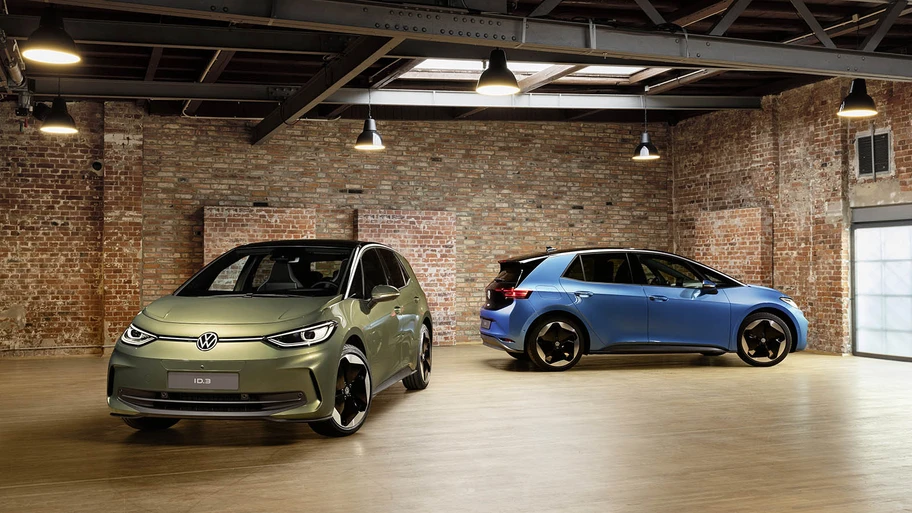
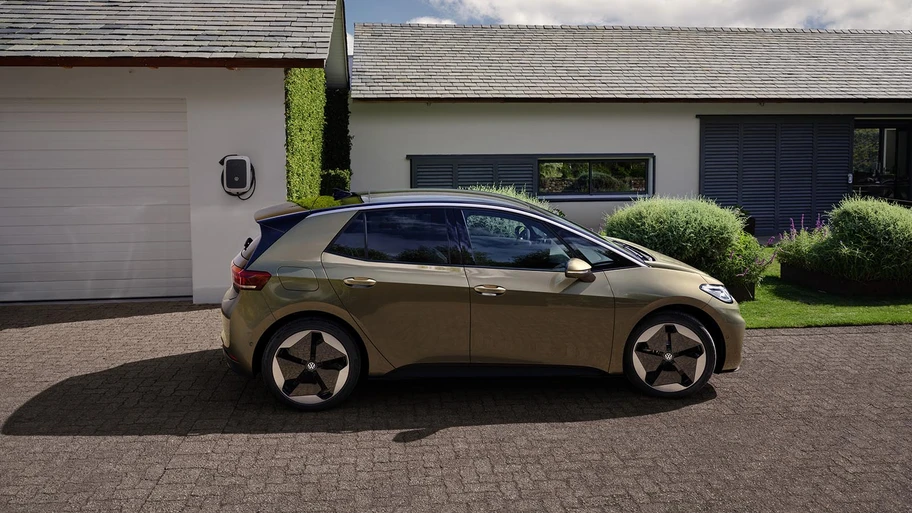
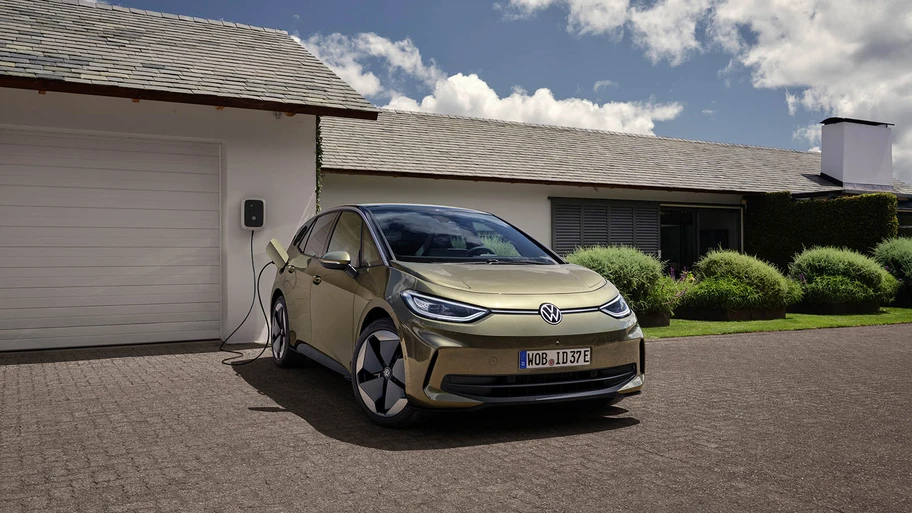
On the outside, what is most striking is the redesign of the hood, which had a higher black molding that visually extended the windshield. Now the chest is higher in the area near the windshield, creating a more regular effect and better defining the frontal volume. The front bumper was also redesigned with air curtains on the sides and air inlets with active louvers.
The headlights and taillights have been changed, as well as some elements on the tailgate (badges) that light up. Of course there are new wheel designs and a new color (Dark Olive Green) that has a metallic iridescent effect with gold highlights.
Volkswagen ID.3 2024: what changes inside
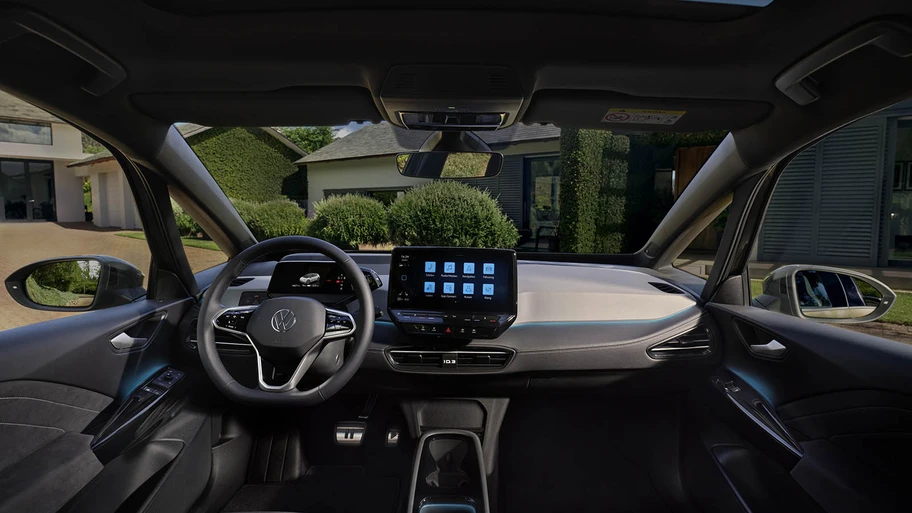
One of the biggest criticisms the ID.3 received was its poor perceived quality.with very hard and austere materials for what the brand usually offers. Volkswagen responded with a redesign of the main dash, which features soft-touch surfaces and more luxurious trim. The air vents and door panels were redesigned, as well as the upholstery, which debuts an ecological microfiber textile called Artvelours Eco, a fabric that contains 71% recycled material. There is nothing inside the ID.3 that has been made from materials of animal origin.
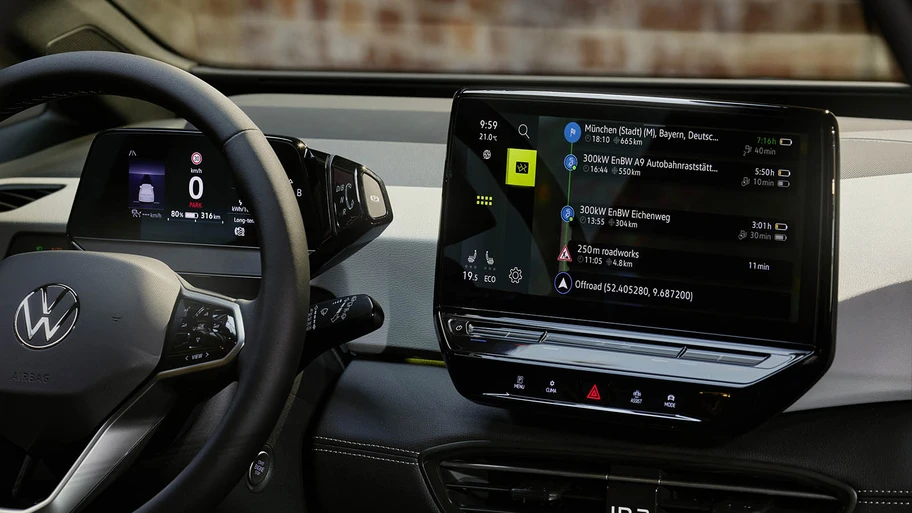
Another problem that had plagued the ID.3 is the car’s software. The model arrives with an updated system and capable of receiving OTA updates. The instrument panel is 5.3 inches, while the multimedia system is 12″, with a redesigned interface that is more logical to use.
You can also equip a Head-up Display system with augmented reality effectwhich projects the data onto the windshield as if it were 10 meters in front of the car.
Regarding the loading processes, now the ID.3 It comes standard with a system called Plug & Charge, where the vehicle authenticates itself and starts the charging process when the cable is connected to a charging station.
Another system, called Route Planner, it can intelligently calculate charging stops so that the destination can be reached as quickly as possible, using current traffic information and forecasts in addition to the battery charge level. Load stops are evaluated dynamically. This means that the function can suggest two short charging operations with high power instead of a single long charging stop with low power. Also, the system detects charging stations that are busy and does not suggest them in the first place. Points of interest can be transferred to the car using the free We Connect ID app.
With regard to driving assistance, the semi-autonomous driving system (Travel Assist in Volkswagen language) is compatible with collaborative data “from swarm”, which can improve the guidance of the car on less marked roads, such as secondary routes.
Kai Grünitz, Member of the Management Board and Head of Developmenteither: “With the new ID.3 we are bringing premium technologies to the compact class, in line with our Volkswagen goal of successively offering innovations across the entire model range. This is also reflected in the state-of-the-art help and assistance systems in the ID.3. By using swarm data in the Travel Assist system, we are taking the next step on the path to highly automated driving.”
The new ID.3 can already be reserved in Germany at a price starting at €43,995, but deliveries are agreed for the last quarter of the year. The brand builds the ID.3 alongside the Cupra Born in Dresden, but will also start manufacturing it in Wolfsburg to meet orders.

