

 Ruben Fidalgo
January 20, 2023
The first generation VW Golf has already earned the title of full-fledged classic, and also the next and even the third. In the case of the cabrio, its life lasted until 1993, so that even the most modern of all, this year is already legally a Historic Vehicle and that is why we bring it to our section of classic reports and videos.
The first generation of vw golf It is an example of profitability for its owners, a car that has not only maintained its value quite well but is also rising significantly. However, in its range there is a rare paradox and that is that the convertible version has remained in the shadow of the well-known GTiwhen in fact most of the Convertibles that you will find for sale are GTi convertibles.
While figures are being paid for a Golf GTi MK1 that currently never go below 8,000 euros, convertibles with the same engine and less years in tow are around 6,000 and do not usually exceed 10,000. below what a closed GTi is paid.
It is true that the Golf Cabrio has more weight and less torsional rigidity than the hatchbackbut, although it is less fun in a twisty section, you get a lot out of it and enjoy it much more and with less risk of losing your card points.
VW Golf Cabrio: a long life
30 photos
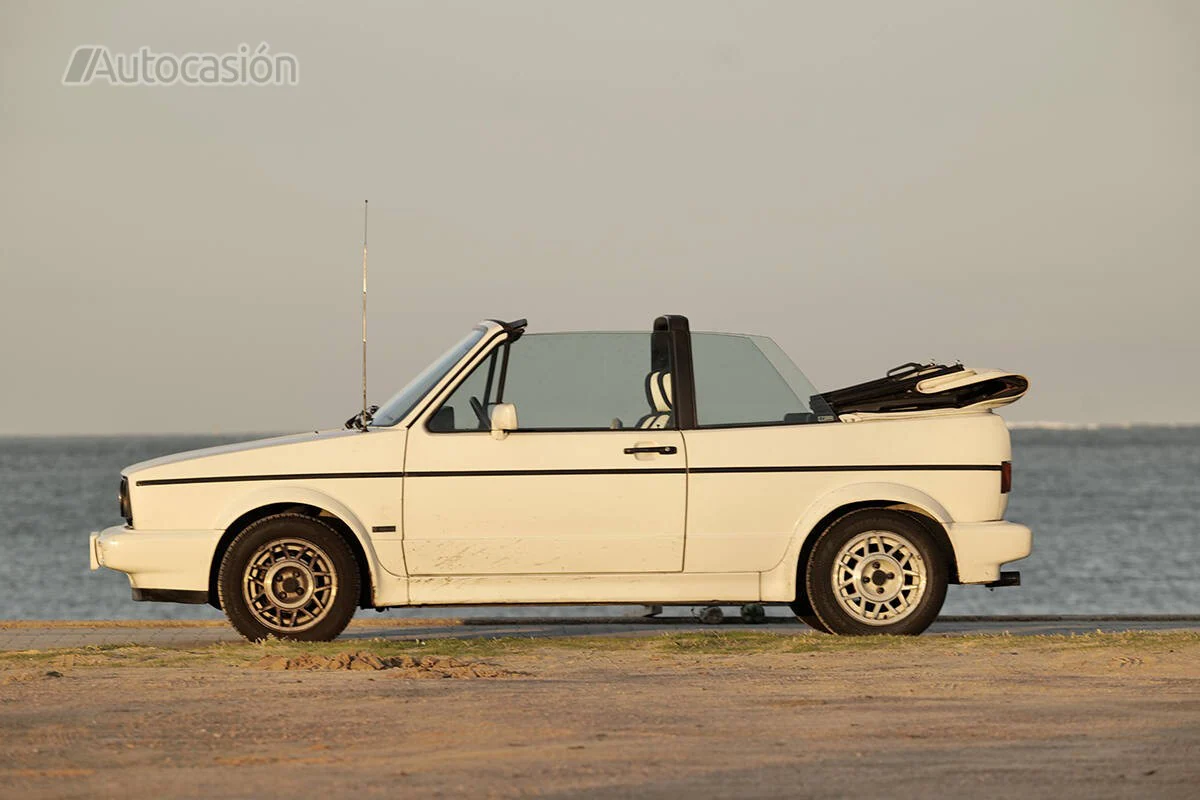
In 1980 the VW Golf was already a model that, although successful, was beginning to smell a bit musty despite the fact that the launch of the GTi revitalized its sales and launched the Golf to stardom. The brand was already working on his relief, which would arrive in 1983, nine years after the launch of the first generation. To give the range a boost in its last years, and incidentally to retire the convertible Beetle that continued to be manufactured at the Karmann facilities, Volkswagen In 1980, it launched the convertible version of the VW Golf, which was also manufactured by the Ösnabruck bodybuilder, who dealt with the more playful versions of VW models such as convertibles or the Karmann-Ghia coupé and later the Scirocco and Corrado.
Although the Golf Cabrio was born after the facelift carried out on the Golf, in which the most visible changes were in the more enveloping bumpers and the larger rear lights, the Cabrio retained the aesthetics of the first with smaller optical groups to allow for a larger trunk access lid and also slightly improve rear cross member stiffness.
Its bodywork drew attention for maintaining an anti-roll arch, partly to better enter the safety ring in an important market such as the American one, but also to guarantee the necessary torsional rigidity in a chassis conceived after the oil crisis and in in which the weight and thickness of the sheets was reduced to a minimum.
Precisely this lack of natural rigidity of the original chassis was one of the possible causes for the second generation of the Golf to maintain the line of the Mk1, which remained on the market until 1993, surviving the Golf MK2 and already with the third generation to the sale.
Something similar would happen later with the Golf Cabrio III, which would be given a fairly light facelift to resemble the Golf IV, but under its appearance it was still the model of the previous generation.
Sales of the Golf Cabrio were quite successful and in its day the fact that it was a true 4-seater was valued very positively despite its compactness, the quality of the hood closure and the features of the versions with the GTi engine. On the negative side of the scale were narrow access to the trunk through the small door, the rigidity of the chassis and an outdated design that today is perhaps one of its main virtues, being able to have a Golf with the design of the original, but 10 years younger and with fewer kilometers behind it.
VW Golf Cabrio MK1: with the soul of a GTi
30 photos
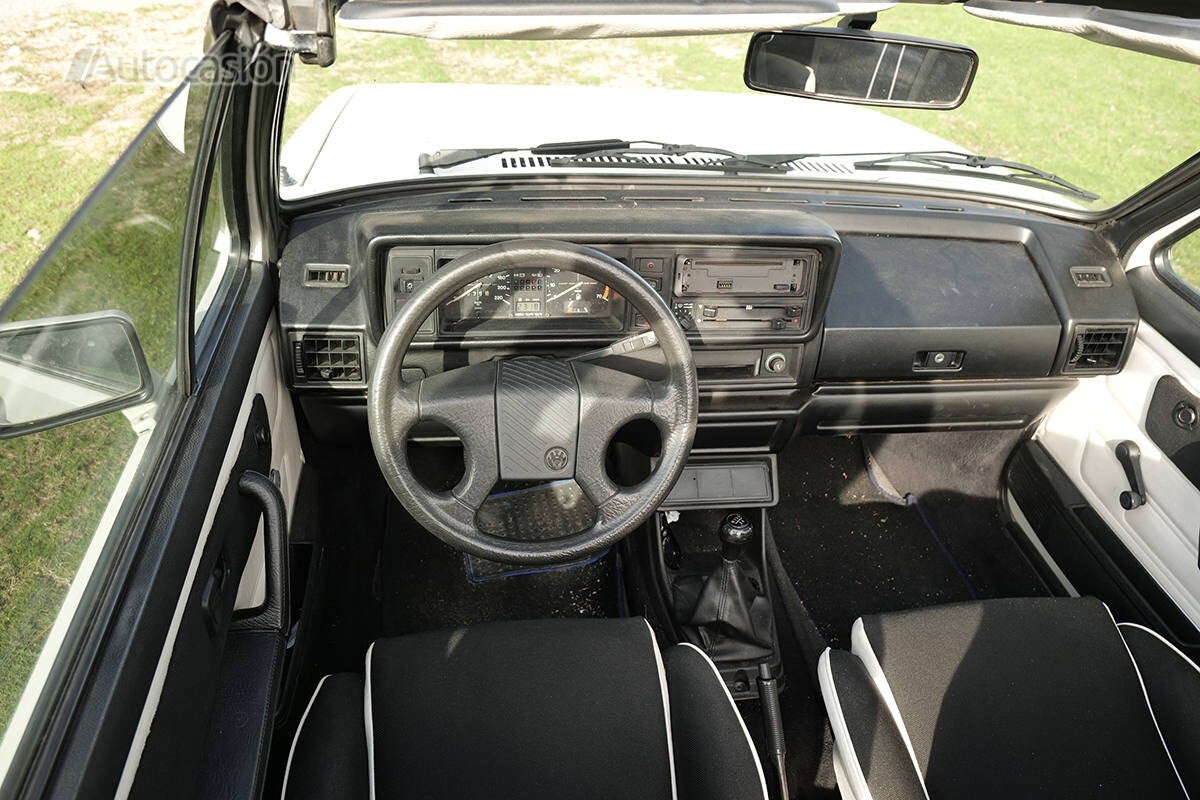
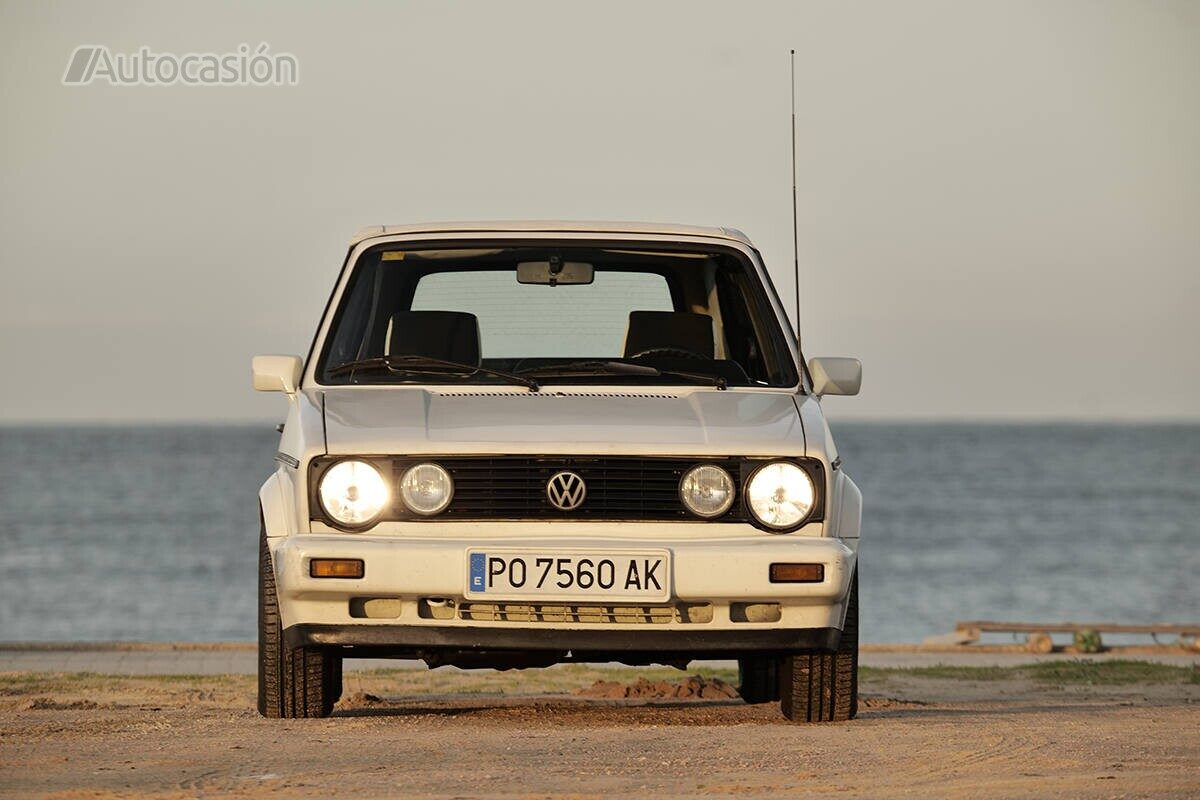
Throughout its almost 13 years in the market, the Golf Cabrio Mk1 received few changes. It was given a more muscular look with new integral bumpers that matched perfectly with the aerodynamic kit formed by the winglets that widened the wheel arches, the side skirts and new alloy wheels whose design you can see in the unit. proven and that they were an icon in the Golf of their time.
It may interest you: how to wash a convertible top
Its equipment was quite spartan, although extras such as air conditioning, electric windows and the hood with electro-hydraulic drive could be mountedan extra that is currently in high demand, although the truth is that doing it manually only takes half a minute and you avoid weight and hydraulic system breakdowns.
Being a more expensive version than the Golf, most of the convertibles that were marketed were equipped with the Golf GTi mechanics, with the 1.8 4-cylinder engine with constant jet Bosch K-Jetronic mechanical injection, a very reliable system, but who hates big hands and inventors.
The Golf engine earned a reputation for robustness, although it had a weak point in the valve guides and seals, quite prone to wear before they should, which meant a bluish-white cloud at the rear of the car, especially in the seals. The repair is not expensive and, except for the emissions and the smell of the exhaust, if you are careful to check the oil level frequently, the engine can last for years and years.
The benefits are somewhat more modest than in the GTi due to the approximately 100 kg more weight of the cabrio and its worse aerodynamicsbut it is a car that moves with joy and that gives a lot of satisfaction when driven in the open air, which is why it is surprising that it is still not listed as much as hatchbacks… and this is where it becomes clear that the myth often does not tell us lets see reality
Yes, the VW Golf GTi MK1 is fun and a delight in a twisty section, but at this point we are no longer here to fight against the stopwatch and, furthermore, any 3-cylinder utility can humiliate us if we fall into the stupidity of the pique… in a convertible we can also enjoy rushing it a bit, but it is that walking too we are going to enjoy it.
VW Golf Cabrio MK1: timeless
30 photos
Driving this Golf Cabrio is appreciated for its simplicity and the real sensation of going in a convertible. Many of today’s convertibles have a very steep and long windshield that makes us practically carry our heads under the upper frame of the glass. This makes us lose the sensation of going in a real car without a roof, because we practically have the windshield over our heads. Here the feeling of being outdoors is complete, and those of us who like rafters love that.
The manufacturing quality is good, a deserved fame that led Karmann to manufacture many convertible models for other brands, such as the Renault Mégane Coupé Cabrio with a retractable hardtop.
Personally I like these versions better with the more enveloping bumpers and the widened wheel arches, I see a more serious air in them, partly because with the roll-over bar the first versions have an appearance like a picnic basket, something more delicate. This arch solution was not exclusive to the Golf, The Ford Escort convertibles also carried itwhich were the main rivals of the Golf in its time, arriving later the very elegant Peugeot 306 cabrio created by Pininfarina.
Inside, rigid plastics and straight shapes abound. The instrument cluster and dashboard couldn’t be more boring, but they’re also functional and have held up well over the years, so their quality is good.
The seats have good ergonomics and it is surprising that in a car that is barely 4 meters tall and convertible, 4 adults can travel without being in a hurry.
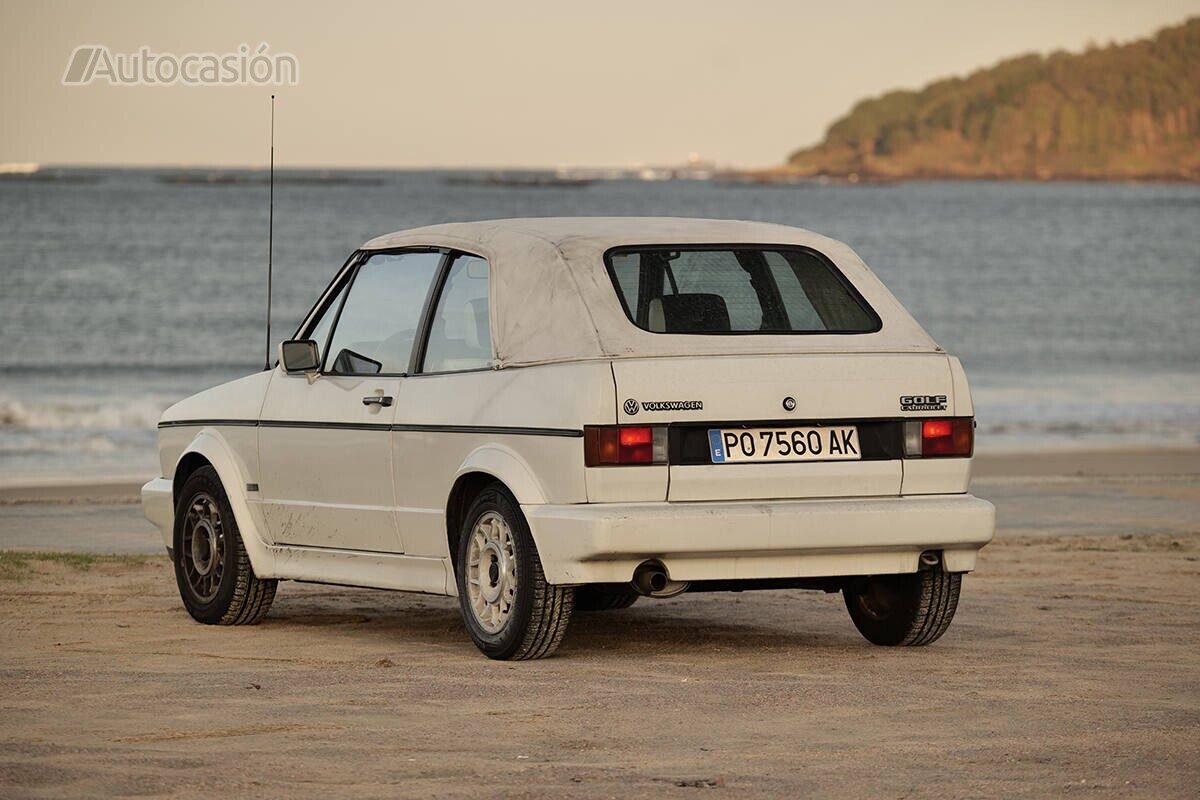
As for the hood, its closure is very good and its quality is good. The test unit mounts the hood as standard, a good proof of its resistance to time. Its closure and adjustment is good, better than the average of the time, and this also makes the Golf Cabrio cars very usable all year round, with a glass rear window and electric demisting, something that, for example, could not say everything a BMW E30 Cabrio much more expensive than the Golf.
VW Golf Cabrio MKI: a recommended purchase
30 photos
The last Golf Cabrio MK1 left the factory in 1993so that this year the newest of all turns 30 and it can already be list as historic vehiclewhich adds some value and interest to the model.
With more possibilities for fun than the Golf GTi, the Golf Cabrio is a very appealing classic. It has a design that has become an icon and has survived time, it is easy to maintain, there are plenty of spare parts, it is reliable, fun and has personality… and all this for less than what a low cost utility costs today.
Over the past 10 years, MK1 Golf Cabrios have been changing hands without losing their owners any money. They have not had significant capital gains and more or less their price has been stagnant between 4 and 6 thousand euros during all this time, but now it is beginning to be difficult to find specimens in good condition that are below 6,000 euros and prices are clearly at rise.
Right now, the Golf Cabrio MK1 is one of the last few more or less affordable fads, so don’t wait too long to try the experience of owning a convertible. yes there is still cars for less than 10,000 euros. Don’t be afraid, if you don’t like it, you can sell it quickly without losing money, but you will most likely like it.
View model information

