

The AlixPartners report is clear: commodity price inflation has affected battery electric cars more than internal combustion ones. If the first ones were already expensive, now the gap between the two propulsion systems is widening. And just as the European Union tries to reduce carbon emissions and dependence on oil.
The data from the consultancy is for the month of September and indicates that the cost of electric car materials amounts to an average of $5,076 per vehicle, which represents an increase of $2,152 compared to the average for 2020. In the same period, vehicles Combustion (including hybrids) had a material cost of $1,851 (it was $1,475 in 2020. Material costs for plug-in hybrids have not been calculated but at the study presentation in Milan they noted that “they are probably higher than those of conventional hybrids.

Costs are for production in Europe and include all key raw materials, both those borne by automakers and suppliers. An electric car has 60% exclusive costs ($3,100), since the rest are common to all propulsion systems.
Is it possible to reduce the cost of an electric car?
A switch to less expensive battery materials would help reduce the cost of electric vehicle production. Lithium-ion batteries, made of high-quality lithium, cobalt, manganese and nickel, are used today and their prices have skyrocketed recently. Of course, the maximum occurred in March 2022 and the economic slowdown is expected to lower the prices of these materials a little more.
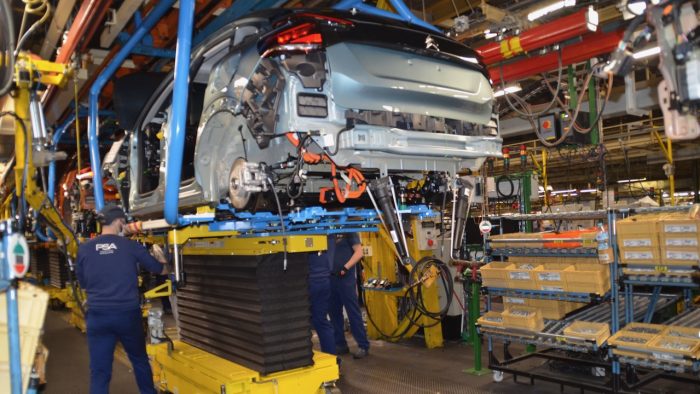
This coincides with the declarations of the CEO of Renault, Luca de Meo, who assured in the last Paris Motor Show that he did not see price parity between electric vehicles and vehicles with combustion engines in the short term, due to the price increases of raw materials. cousins. Eight years ago, a battery cost of $100 per kW was expected and has not yet been reached. “I can find better battery chemistry and better power electronics, but these gains will be wiped out when the price of cobalt doubles in just six months,” de Meo said.
Is there an alternative to lithium ion cell batteries? Yes, you could move to lithium sulfur or sodium ion battery cells, which could be up to two-thirds cheaper… but electrochemistry has yet to move forward. Also, with a further increase in production, costs per unit (especially in research and development) can be reduced.
High energy prices
In addition to the cost of raw materials, energy costs for industrial purposes have also skyrocketed. In the same report they indicate that 230% from January 2019 to September. The average cost of energy production per internal combustion vehicle in Europe increased $512 in the first half of 2022 from 2020. And in the futures market it seems that natural gas will increase its price 4.5 times in 2024 compared to 2020. They would be Additional $720 per vehicle. Any good news? Yes, less energy is consumed in the production process of an electric vehicle.

All this is going to translate into less car manufacturing. In 2022, 15 million cars will be assembled in Europe (the data includes Russia and Turkey), when in 2021 there were 16.8 million. It is expected, however, that in 2023 they will rise to 15.9 million and reach 17.7 million in 2025. In any case, well below the maximum reached at the end of the 2010s.
Source: AlixPartners

