

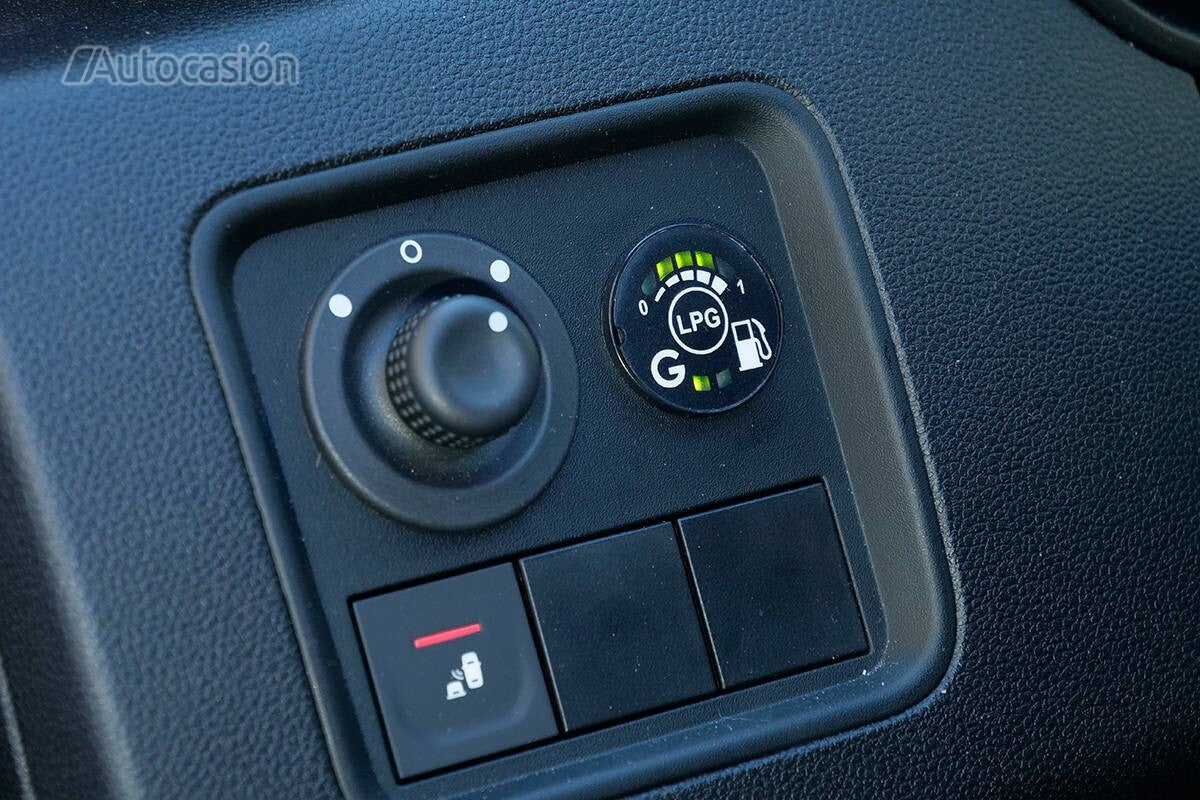
 Ruben Fidalgo
February 16, 2023
The imposition of Low Emission Zones in most Spanish cities is driving almost everyone crazy, but there is an open door for you to enter ZBE without having to change cars.
Since last January 1, and although for now many city councils do not fine before the elections, Low Emission Zones have been imposed in all Spanish cities with more than 50,000 inhabitants (ZBE) in which access is restricted to vehicles with ECO and ZERO labels (depending on the municipality). This leaves the vast majority of the fleet of cars that we have in Spain outside of the city centers, but many can skip this rule without having to go to the scrapyard.
On the website of the DGT you can see what are the requirements that vehicles must meet to be worthy of carrying the Eco label, and they are these:
passenger cars and light commercials
When they are classified in the Register of Vehicles classified within one of the following categories:
- Plug-in hybrid vehicles with autonomy <40km.
- Non-plug-in hybrid vehicles (HEV).
- Vehicles powered by natural gas.
- Vehicles powered by compressed natural gas (CNG) or liquefied petroleum gas (LPG).
- In any case, In addition, they must comply, depending on the fuel they use:
- Gasoline vehicles: EURO 4/IV, 5/V or 6/VI emission level.
- Diesel vehicles: EURO 6/VI emission level.
Vehicles with more than 8 seats and transport of goods
When they are classified in the Register of Vehicles classified within one of the following categories:
- Plug-in hybrids with autonomy <40km.
- Non-plug-in hybrids (HEV), powered by compressed natural gas (CNG), liquefied natural gas (LNG) or liquefied petroleum gas (LPG).
- In any case, regardless of the type of fuel used, they must also comply with the emission level of the vehicles being EURO 6/VI.
Light vehicles (category L)
When they are classified in the Register of Vehicles classified within one of the following categories:
- Plug-in hybrid vehicles (PHEV) with autonomy <40Km.
- Non-plug-in hybrid vehicles (HEV)
Well, according to this, any car that is at least Euro 4 compliant will get the ECO label if it is converted to be able to use LPG in addition to gasoline.
Not all gasoline cars converted to LPG are ECO
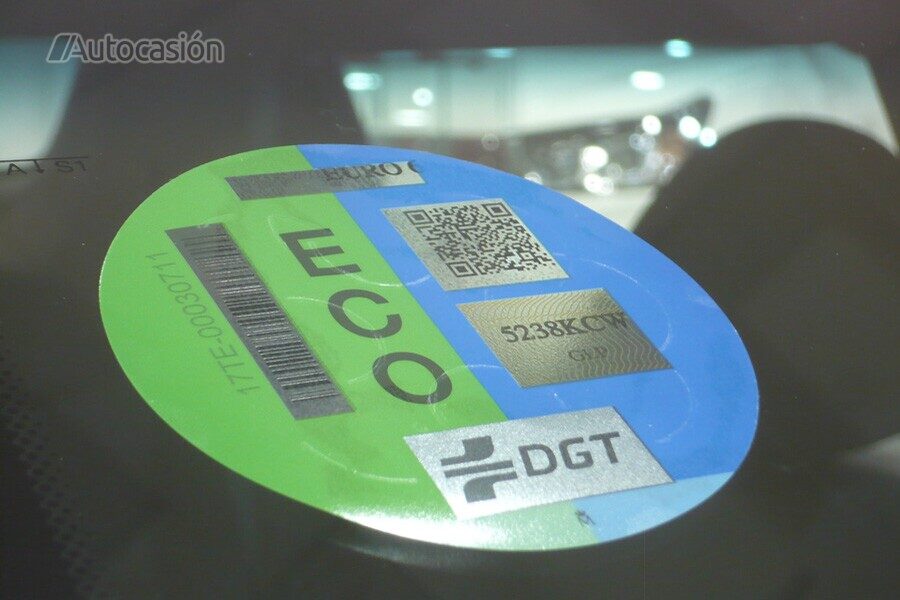
Only gasoline models after January 2005 get the Eco label when adapting to LPG.
Although technologically any gasoline engine can be adapted to run on LPG, Spanish legislation is quite restrictive in this regard. For many years, the trick of using LPG to pay less taxes on each liter of fuel and make more economical use of the vehicle was prohibited to individuals in Spain. Only taxi drivers and professionals could adapt their cars to LPG.
This changed when Europe forced the Spanish regulations to be equated with the rest of the countries. Anyway, here is a further requirement: Only engines that complied with the Euro 3 emission regulations and their power was less than 460 CV could be adapted.. The Euro 3 standard was imposed in 2001, so most gasoline cars before that date do not comply with the regulations and cannot be converted to LPG.
The problem is that, to obtain the ECO label, the DGT guideline requires that you at least comply with Euro 4, which was imposed on January 1, 2005. If your car was registered for the first time after that date, it has to be Euro 5 and, therefore, if you convert it to LPG they have to give you the Eco label. If your car was registered for the first time before January 1 from 2005, maybe it is Euro 5, since some manufacturers and models were ahead of the norm. To make sure, you have to verify the approval password of the model in question.
How much does it cost to convert a car to LPG to have an Eco label
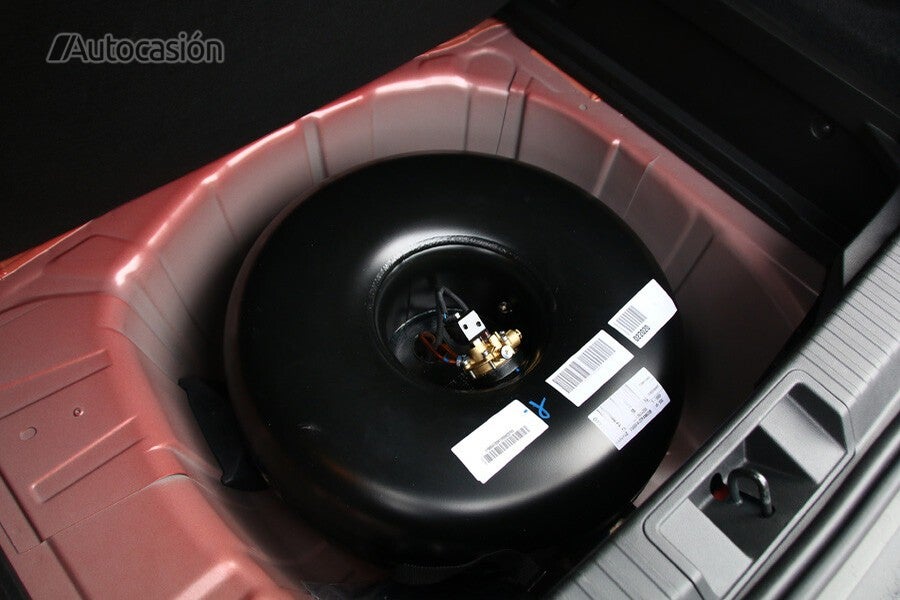
The spare wheel is replaced by the LPG tank.
The cost of converting a gasoline car to LPG is between 2,000 and 3,000 euros on average. It depends on factors such as the number of cylinders (the more cylinders, the more components the gas supply system needs), the type of gas tank that can be installed, if there is a standardized kit for the model in question, etc.
The transformation to LPG is usually carried out in just a couple of days and it is something so common that there is no reason to fear for the safety of the system since they have been well tested and there is a lot of experience in this regard.
Although the price of LPG has risen, for now it is still cheaper than gasolineso that in approximately 60,000 km the investment is amortized.
Be careful, not all cities allow ECO cars in their LEZs
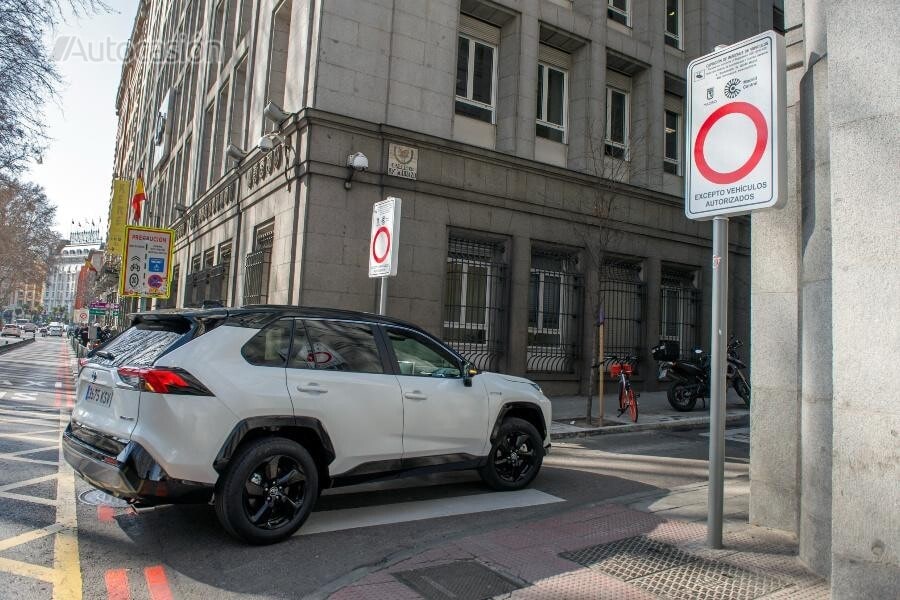
ZBE Madrid
In theory, Low Emission Zones are created to improve the quality of the air that citizens breathe and they should be imposed in the areas where it is worst, so that it meets the minimum health standards. The reality is that they are mainly applied to the center of cities, where air quality is often better than in other peripheral areas. The European standard establishes that the area occupied by the ZBEs must be proportional to the population of the city and in Spain it is each city council that has the power to establish what their ZBEs arewhich vehicles have access to them and the sanctions that can be imposed on those vehicles that access without permission.
To be sure if you can access your car in the city where you live or the city you are going to travel to, you should find out beforehand because each city council legislates in a different way and the sanctions are different and, as usual , not knowing the rule does not exempt you from compliance. Although currently vehicles with an ECO label have access to all of them, this may vary, since the LEZs are not something fixed and the restrictions will be progressively increased, for this reason It is important that you inform yourself before entering the city center.
As an example, here is the rule applied by the Madrid City Council in its LEZs.

