

 christian garcia
March 2, 2023
The employers’ association that includes all the official dealers in our country celebrates the 32nd edition of the Faconauto Congress, where they review the current situation of the sector, highlighting the distribution model they represent.
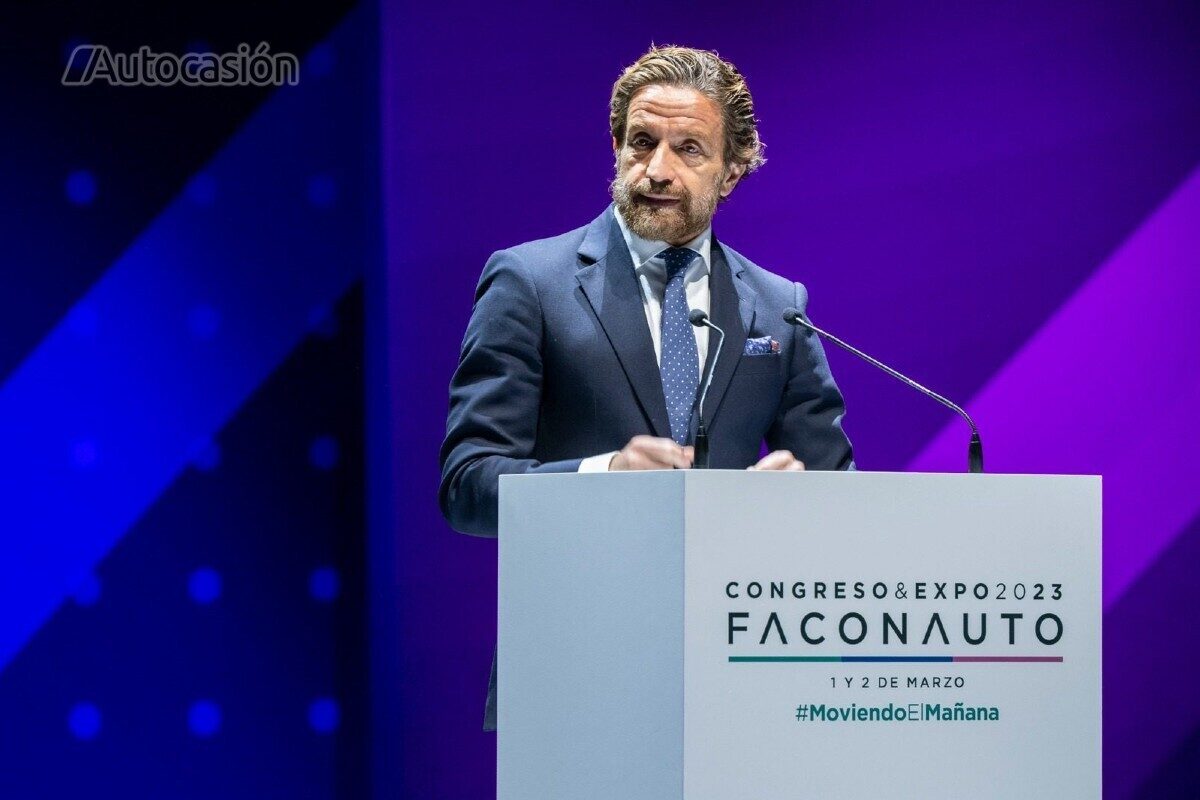
The Ifema Municipal Conference Center has once again hosted the Faconauto Congress 2023, which during the days of February 28 and March 1 has served to value the current vehicle distribution model and to warn of a series of problems that could arise in the sector in the coming years. The inauguration was carried out by Marta Blázquez, executive vice president of the employers’ association, who wanted to highlight the essential role that dealers have even in times that are somewhat turbulent due to the rapid and advanced evolution of technology.
Dealers have room to lower prices by 15% to be profitable and sell more
«We are talking about a business model that should be recognized by brands and social agents, even more so in the changing and transformational context in which we find ourselves. Faconauto is in favor of a pattern where brands and dealers maximize their value and experience to obtain an adequate return on their investments”, he comments. At the same time, he rejects any model for which the brand can make direct sales or services to customers, as well as any process that generates inefficiencies or transfers costs from the manufacturer to the distributor, as occurs in some online orders that already include brands such as Polestar or Tesla. To do this, it hides behind the powerful argument that such an important and sometimes complicated process is better and, above all, easier to carry out with the help of experts who attend in person.
In addition, Blázquez has censured before the more than 1,500 professionals of the sector present that they establish discriminatory conditions regarding data access or that the concessionaire is left out of the sale of connected services.
Electrification and combustion must coexist
The executive vice president also touched on issues such as the requirement of a fair regulatory framework for concessions and the need for the citizen to decide what is the best way to get aroundmatters in which Gerardo Pérez, president of Faconauto, delved into in relation to how electrification is taking place in Europe and what the new Euro 7 regulations could entail in the Spanish middle class.
What is needed in Spain to accelerate electrification?
«The artificial acceleration of decarbonisation that is being promoted by the European Union, supported by our Government, runs the risk of polarize the automotive market, with a minority that can access new technologies and a majority that, for income, has to settle for continuing to drive old and polluting vehicles. It is a transition that almost no one understands, because Europe is the only market in the world in which the prohibition is being chosen and not the choice of buyers to promote the electric vehicle, “says Pérez. In this regard, the president considers that, if the Euro 7 standard (scheduled for 2025) goes ahead, the polarization will go further and further reduce the automotive market, which, let us remember, accounts for more than 10% of the national GDP.
«Thus, in addition, we would accentuate the delay that we are already dragging in Spain to meet electrification targets and we would weaken an essential sector for economic activity and employment. For this reason, what we are asking from Faconauto is that the Government oppose the approval of the Euro 7 standard, that it design an improved Moves Plan so that it is perceived as a direct and faster aid to the acquisition of electric vehicles and that, in In summary, facilitate the processes to electrify the country, “comment from the employers’ association. All of this, of course, without ceasing to conceive combustion as necessary – at least today.

